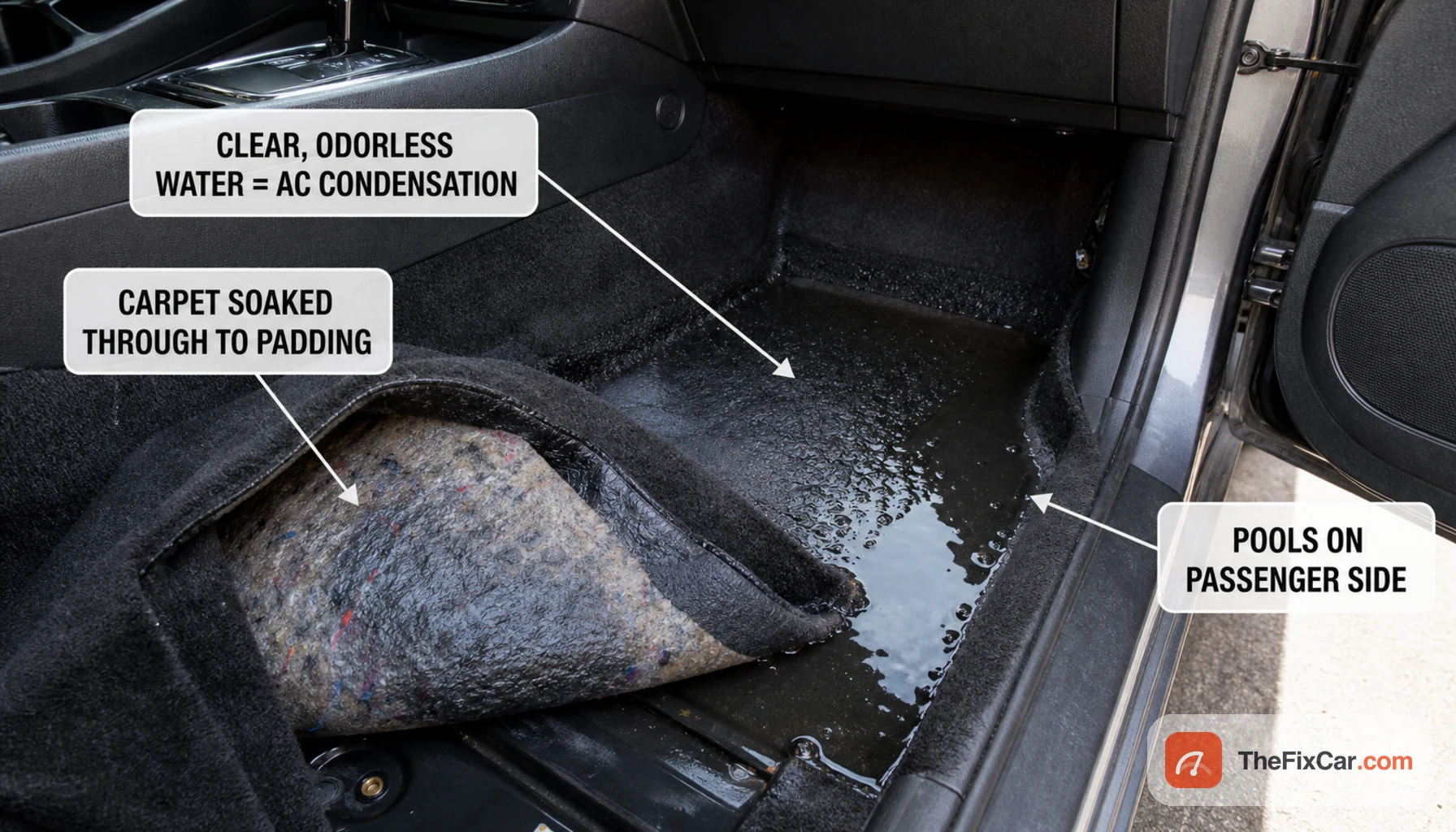
Wet carpet on the front passenger side, a musty smell when the fan kicks on, and sometimes a faint sloshing behind the dash on hard turns all point to the same place: water that should drip onto the road is collecting inside the cabin instead. Plenty of drivers chase this as a leaking windshield seal or a coolant problem, but clear, odorless water pooling on the passenger floor while the AC runs usually points first to one system: the air conditioning condensation drain.
Quick answer
The usual cause is a clogged AC condensate drain tube. The evaporator behind your dash pulls moisture out of the air, and that water is supposed to run down a small hose and drip under the car. When the hose plugs with dirt, mold, or leaf debris, the water backs up and spills into the footwell. A short drive is usually acceptable only if the liquid is clear and odorless, the engine temperature and coolant level are normal, and no electrical equipment is malfunctioning; wet carpet hides electronics and grows mold, so clear the drain soon. A DIY fix costs almost nothing; a shop typically charges around $80 to $150 to flush the line.
What the liquid tells you
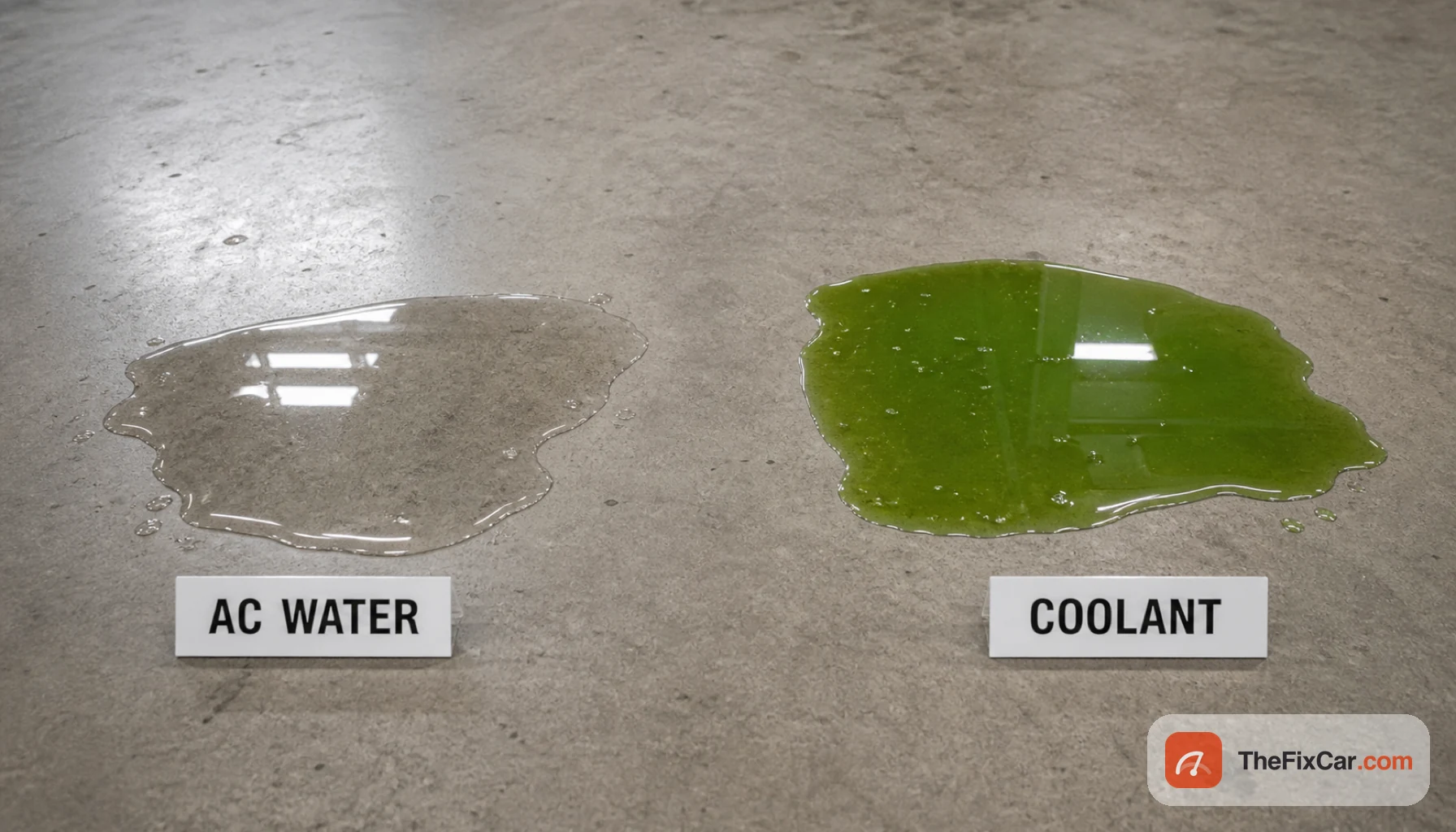
Before chasing the drain, identify what is actually on the floor. The color and smell narrow the source fast.
| What you see | Likely source | What it means |
|---|---|---|
| Clear, odorless water | AC condensation | Usually a clogged or disconnected condensate drain |
| Colored or oily liquid, often sweet-smelling | Coolant | Possible heater core leak; compare with the reservoir only when the engine is cold |
| Oily film on the windshield with a sweet smell | Coolant vapor | Urgent heater core sign |
| Wet carpet after rain with the AC off | Body leak: cowl or windshield | Not an AC drain issue |
| Musty smell with clear water | Evaporator moisture or drain clog | Drain and evaporator housing need attention |
Most common causes
- Clogged condensate drain tube: dirt, mold slime, and leaf bits block the hose so condensation cannot exit, and it overflows into the cabin.
- Cracked or disconnected drain hose: the tube splits or pops off its fitting at the firewall, dumping water inside the dash instead of under the car.
- Missing or pushed-out drain grommet: the rubber seal where the tube passes through the firewall falls out, letting water track back into the footwell.
- Partially restricted condensate drain: high humidity raises the volume of condensation and exposes a drain that is already partly blocked, so it overflows into the cabin instead of keeping up.
- Frozen evaporator: low refrigerant or restricted airflow from a clogged cabin filter, weak blower, or blocked evaporator can ice the core; when the drain is also restricted, the pan is cracked, or the housing seals leak, the meltwater ends up in the cabin instead of under the car.
- Heater core leak: not AC condensation at all, but often confused with it; the giveaway is colored, sweet-smelling coolant and a greasy film on the glass.
What to check first
- Touch the water and smell it. Clear and odorless points to AC condensation. A colored or oily, sweet-smelling liquid points to coolant and a heater core, which is a different repair.
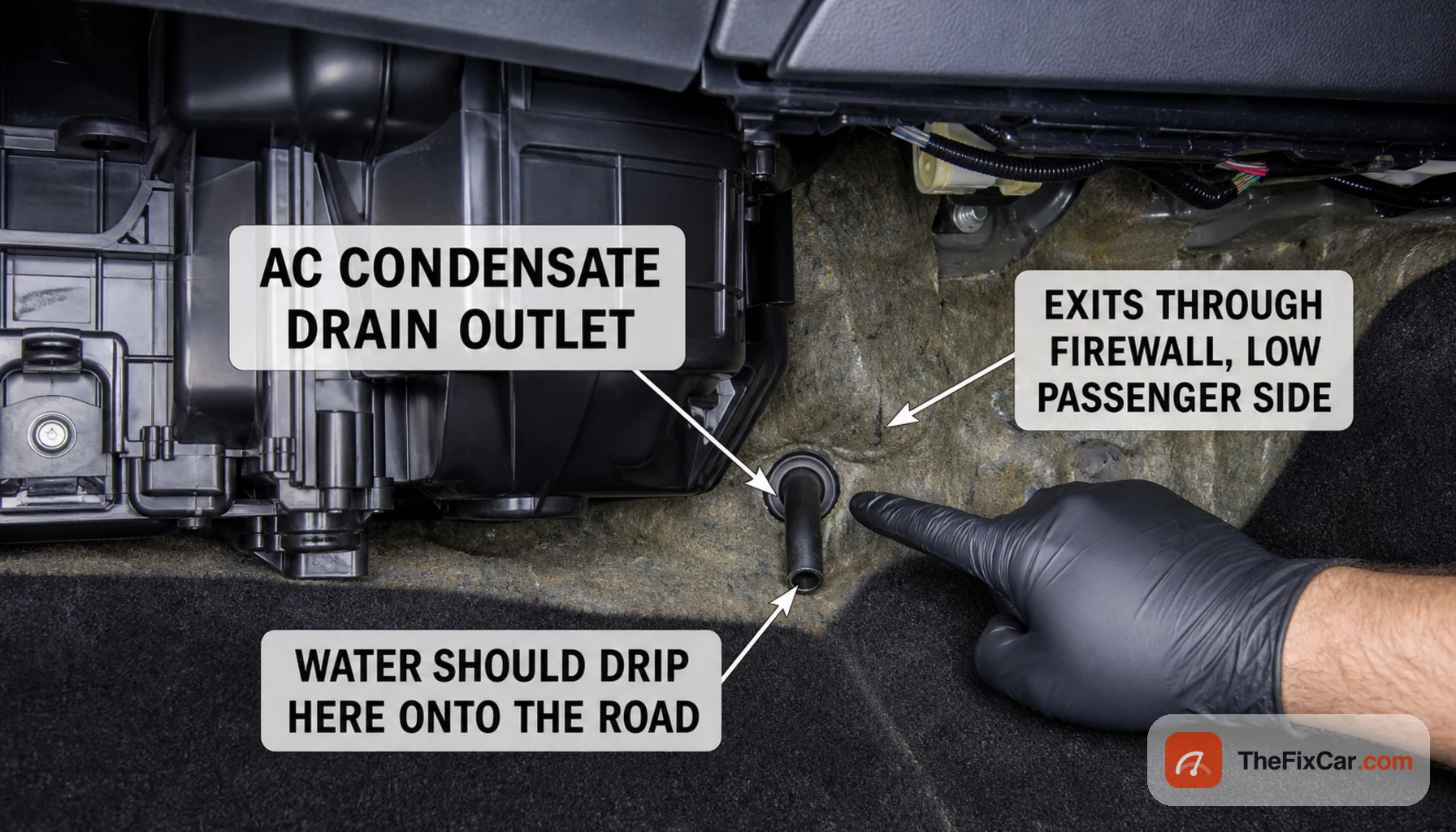
- Run the AC for 10 minutes, then look under the front passenger side of the car. A small puddle there is normal drainage. A dry spot under the car while the AC is running, combined with clear water inside, strongly suggests a blocked or disconnected condensate drain, but it does not prove the exact fault.
- On many vehicles, the drain exits low on the passenger side near the firewall or transmission tunnel, but the exact location varies by model. Feel for a stub of rubber hose pointing down.
- Check for a musty, sour smell from the vents, which signals mold in the drain and evaporator housing.
- Look at the cowl area under the wipers for packed leaves, which can flood the HVAC box from above and mimic a drain clog.
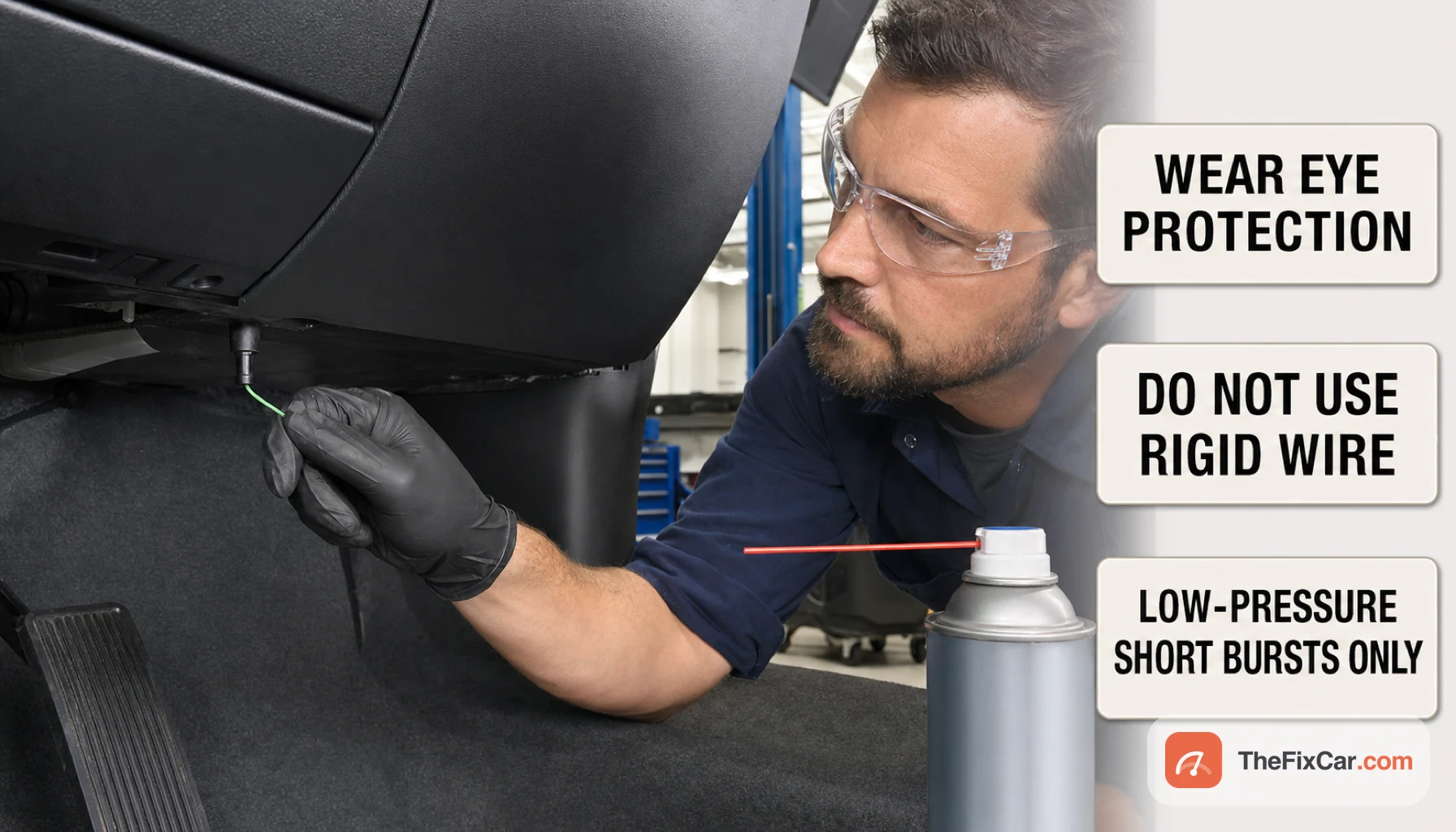
- With the engine off and the drain outlet accessible, wear eye protection and gently insert a flexible nylon trimmer line or zip tie a short distance into the outlet. Do not use rigid wire. If using compressed air, use low pressure in short bursts because high pressure can disconnect or damage the drain hose.
Is it safe to drive?
It is usually safe for a short drive only if the liquid is clear and odorless, the coolant level and engine temperature are normal, and no electrical systems are malfunctioning. The risk is what sits under that wet carpet. Many vehicles route the blower motor resistor and control modules low on the passenger side, and standing water leads to corrosion, electrical faults, and a mold smell that gets harder to remove the longer it sits. If those check out, you can keep driving, but clear the drain within a few days and dry the carpet and padding out before it sours.
Do not do this
- Do not ignore repeated wet carpet; water can reach wiring and modules under the floor.
- Do not use rigid wire in the drain tube.
- Do not blast high-pressure air into the drain outlet.
- Do not assume all passenger-side water is AC condensation; colored or sweet liquid points to coolant.
- Do not reinstall a soaked floor mat without drying the carpet and padding underneath.
When the problem is urgent
- The liquid is colored or oily, or it smells sweet, which means coolant from the heater core rather than AC condensation.
- Stop driving if the coolant level is low, the temperature gauge rises, or a temperature warning appears. Let the engine cool before checking the reservoir, and never open a hot radiator or pressurized coolant cap.
- The inside of the windshield fogs with an oily film and the cabin smells sweet, another heater core sign.
- Power windows, locks, or dash lights start glitching, which suggests water has reached a module or connector under the carpet.
- The blower motor whines, cuts to one speed, or stops, which can mean the resistor or motor is taking on water.
- The floor soaks through repeatedly even after you dry it, meaning water is still pouring in faster than it can evaporate.
Typical repair cost
These are rough planning ranges for U.S. independent shops, not a quote. Diagnostic time is usually billed separately, and vehicle design, local labor rates, and the amount of interior drying required can change the total. Heater core replacement in particular swings widely with how much of the dashboard has to come apart.
- Clear the drain yourself: $0 to $15 for a flexible nylon trimmer line, a long zip tie, or low-pressure compressed air. Avoid rigid wire because it can puncture or disconnect the drain hose.
- Shop drain line flush: commonly $80 to $150 in labor to clear and test the line.
- Replace a cracked drain hose or grommet: typically $100 to $200 depending on access.
- Dry out and treat soaked carpet and padding: workshop estimates run $150 to $400 if padding must come out and the mold is treated.
- Heater core replacement: if the real cause is coolant, expect $500 to $1,200 or more, since the dash often has to come apart.