A smell from the AC vents often appears the moment the button is pressed, then fades after a few minutes of running. The smell type matters more than the smell intensity: it determines what to check next and whether the car should be driven.
Quick answer
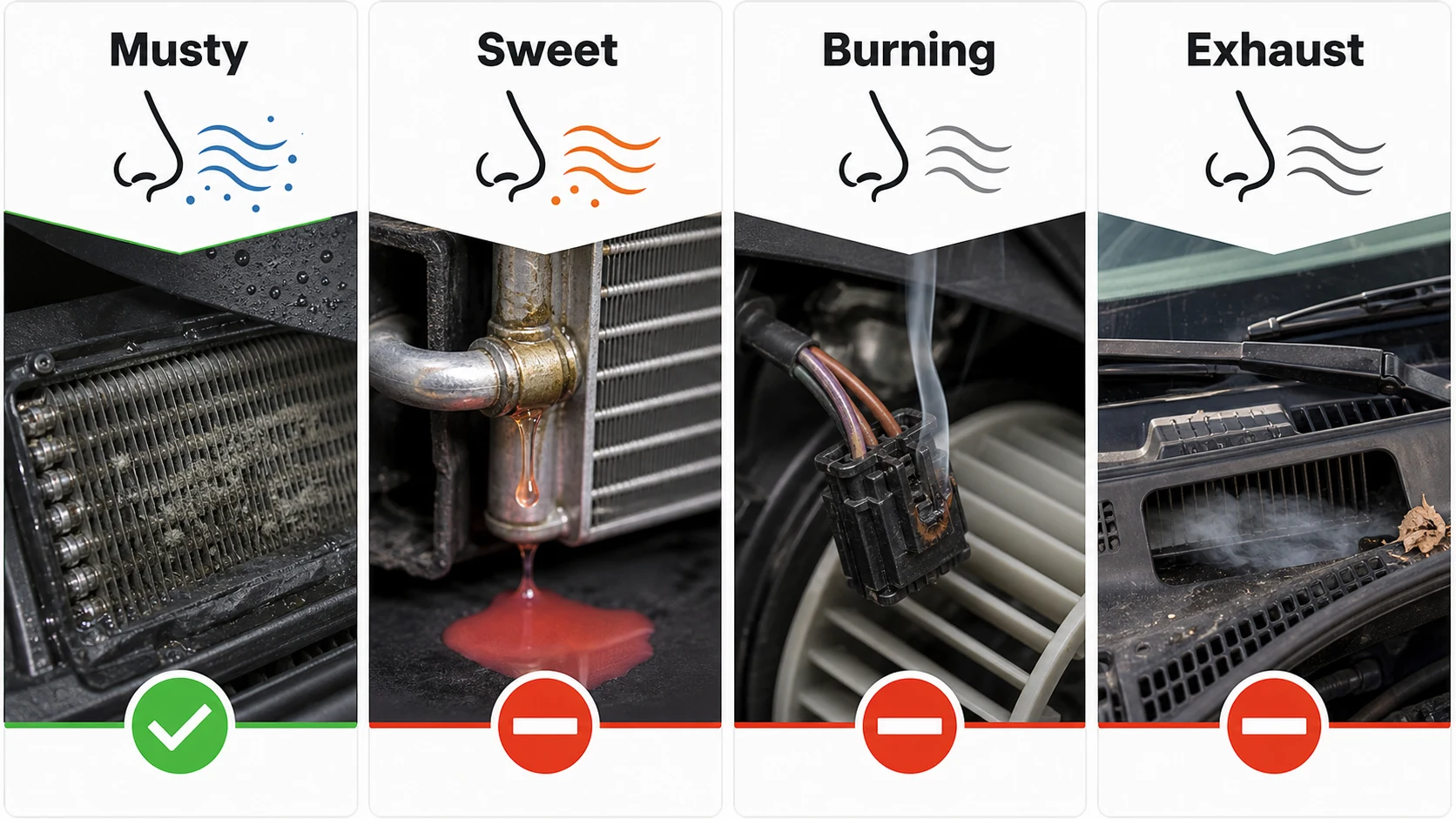
Musty odor is the most common AC smell and commonly points to moisture or microbial growth around the evaporator or cabin filter. A sweet smell warrants checking the coolant level before the next drive. A burning smell with the AC compressor engaged means switch the AC off and drive to a shop. The comparison table below covers all smell types and their most likely sources.
Most common causes
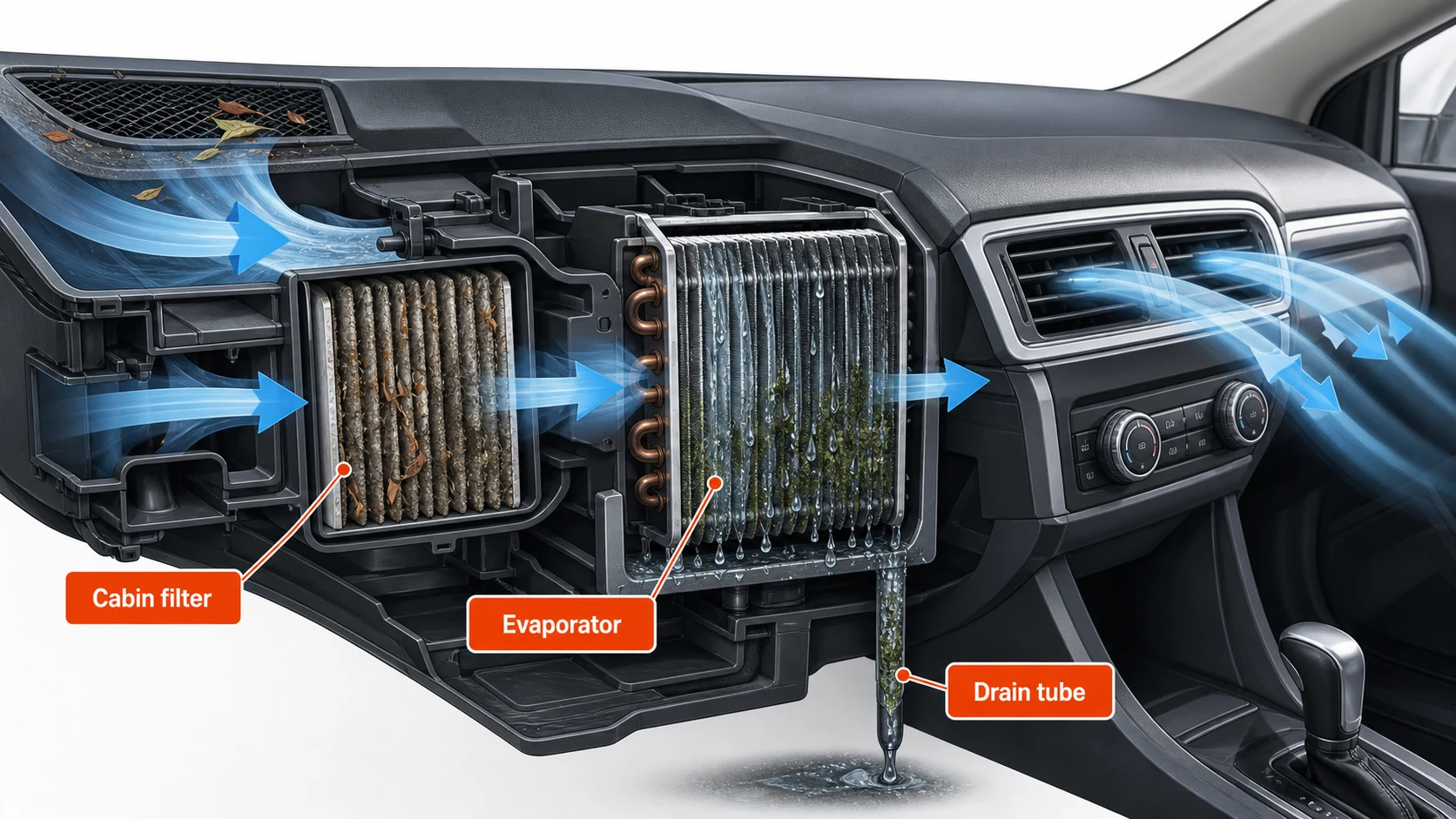
- Mold and bacteria on the evaporator core: moisture left on the evaporator after shutdown feeds mold and mildew; the result is the dirty-sock or musty smell that appears at the next startup and fades after several minutes of running
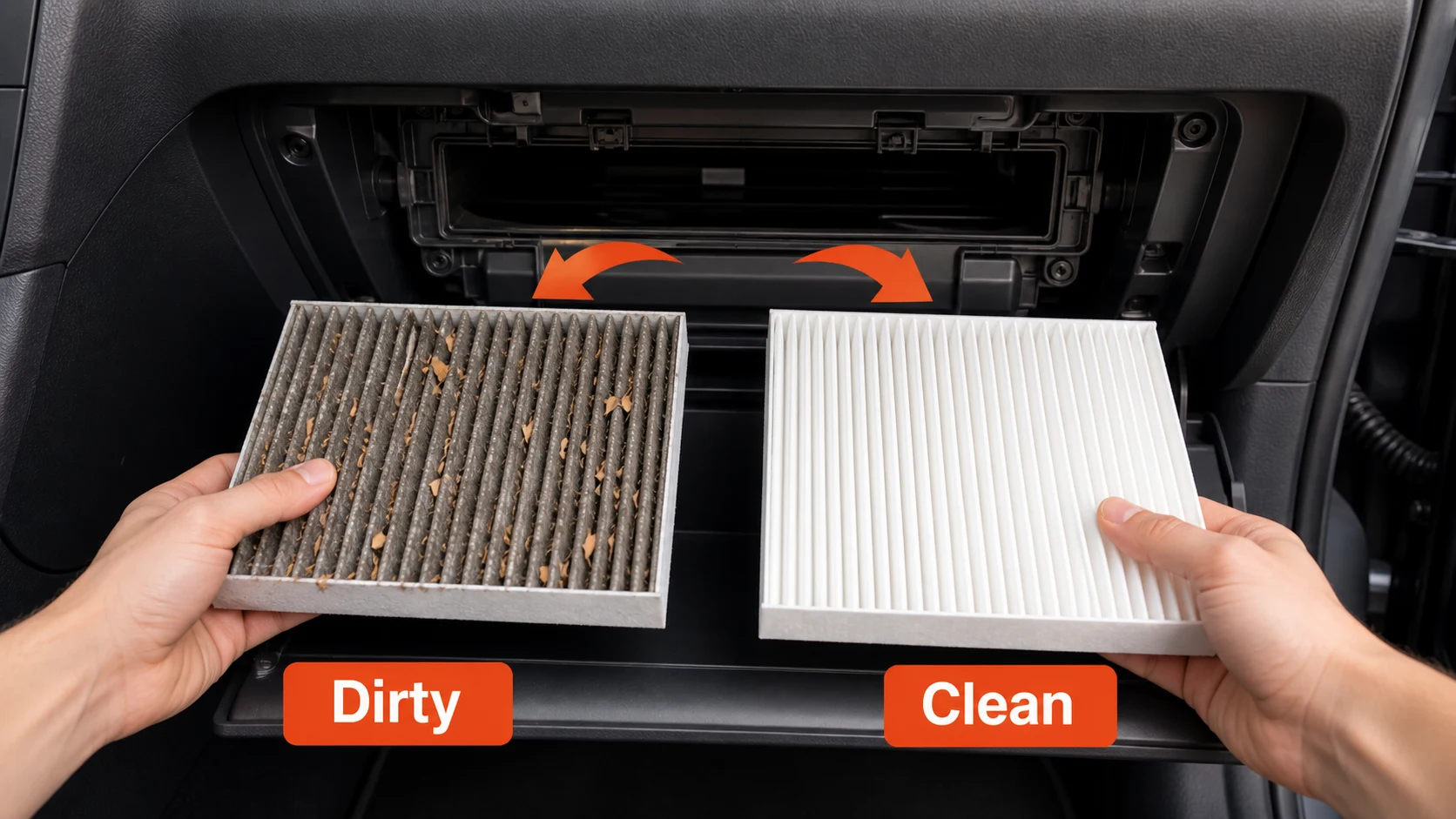
- Contaminated or mold-soaked cabin air filter: a filter that absorbed moisture or sat in a humid housing grows its own mold and distributes the smell through every vent; replacing it without treating the evaporator means the odor may return if contamination remains on the evaporator
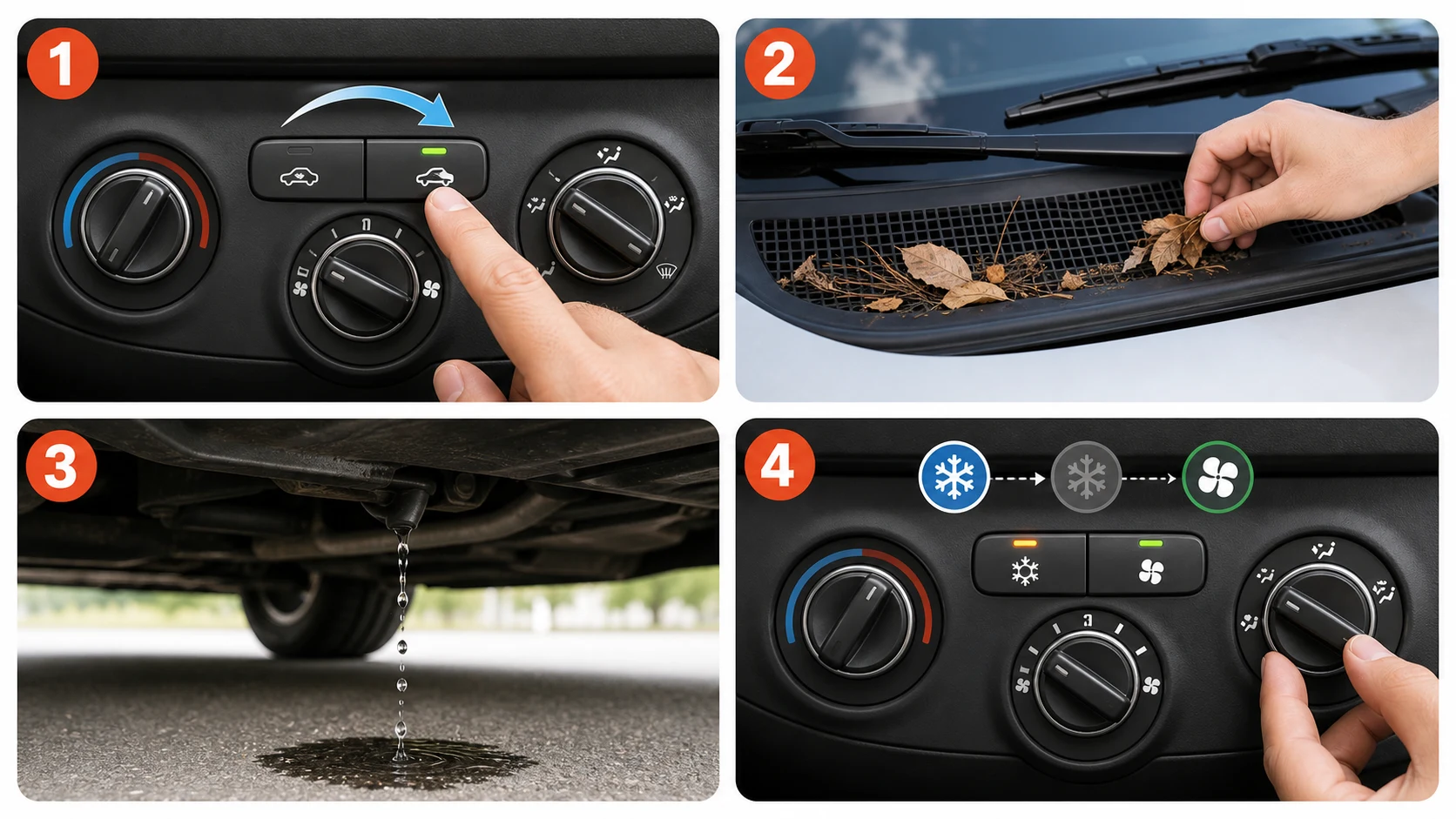
- Blocked evaporator drain tube: pooled condensate grows bacteria and a sour smell; a fully blocked drain backs water into the passenger-side carpet and can reach electrical components
- Heater core leak: a pinhole in the heater core allows coolant vapor to enter the cabin through the blend door; the three signs that appear together are a sweet coolant smell inside the car, a slightly oily film on the inside of the windshield, and a slow unexplained drop in coolant reservoir level
- Slipping serpentine belt at the compressor pulley: when the compressor clutch engages, a worn or misaligned belt can slip against the pulley and produce a burning rubber smell when the AC runs that disappears immediately when AC is switched off
- Overheating blower motor or resistor pack: a blower motor with worn bearings or a resistor drawing excess current produces a sharp electrical or hot-plastic smell, most noticeable at fan speeds 3 and 4 and present regardless of whether AC is active
- Failing catalytic converter: a degraded catalyst fails to oxidize hydrogen sulfide, which the ventilation system then pulls into the cabin; the rotten-egg smell intensifies under hard acceleration and is not limited to when AC runs
| Smell | When it appears | Most likely source |
|---|---|---|
| Musty / dirty sock / mildew | First few minutes after AC starts, fades with runtime | Evaporator mold, cabin filter |
| Sweet / antifreeze | Anytime fan runs; stronger with heat selected | Heater core coolant leak |
| Burning rubber | Only when compressor clutch is engaged | Slipping belt on compressor pulley |
| Burning plastic / electrical | Higher fan speeds; not tied to AC button | Blower motor, resistor pack, wiring |
| Rotten egg / sulfur | Under acceleration; not limited to AC use | Catalytic converter, aging battery |
| Wet carpet / stale water | After extended AC use or heavy rain | Blocked evaporator drain tube |
| Smell pattern | What it suggests |
|---|---|
| Only when AC compressor is on | Belt slip, compressor clutch, evaporator moisture |
| With fan only, AC button off | Cabin filter, blower motor, resistor, HVAC box contamination |
| Stronger when heat is selected | Heater core coolant leak |
| Under acceleration, not only with AC | Catalytic converter, fuel mixture, battery venting |
| After rain or extended AC use | Evaporator drain blocked, water entering cabin |
What to check first
- Identify the smell type before opening anything: musty, sweet, burning, and sulfur each point to a different system. Sit in the car with the AC running for two minutes with windows up and note whether the smell fades, stays constant, or intensifies. A musty smell that is strongest at startup and fades as the system runs commonly points to moisture or microbial growth around the evaporator or cabin filter.
- Pull and inspect the cabin air filter: a wet, mold-spotted, or heavily contaminated filter may contribute to the odor and should be replaced; leaving a contaminated filter in place reseeds a cleaned evaporator
- Check the coolant reservoir level (sweet smell only): mark the current level and recheck after a 20-minute drive. Check the level only when the engine is cold and compare readings over several drives. A continuing drop, sweet cabin odor, greasy windshield film, or damp carpet makes a heater core leak more likely and warrants inspection.
- Press the passenger-side floor carpet near the center console: moisture near the HVAC housing may indicate a blocked evaporator drain, but rainwater leaks and heater-core leaks must also be ruled out. A blocked drain also creates a gurgling sound from behind the dashboard when cornering.
- Switch AC off and hold fan on with the same smell present: if the burning odor stops after the compressor is switched off, inspect the belt, tensioner, compressor clutch, and pulley bearings. The test narrows the source but does not identify the failed part.
- If the smell continues on fan-only regardless of the AC button, the blower motor or a downstream electrical component is involved. A compressor or belt issue may also cause the AC to stop blowing cold air.
- Run a finger across the center of the windshield interior (sweet smell only): coolant vapor deposits a faint greasy film that drags slightly under light pressure; this residue is most visible in direct sunlight and easiest to detect where the windshield wiper does not reach
Is it safe to drive?
A brief musty smell usually does not require stopping the car, but persistent odor, wet carpet, breathing irritation, or water near electrical modules should be investigated. A sweet coolant smell inside the car can indicate a heater-core leak. Check the coolant level only when the engine is cold. Do not continue driving if the level is dropping, the engine temperature starts rising, coolant appears on the floor, or vapor begins fogging the windshield. Even with a normal level, arrange an inspection soon because a small leak can worsen. A burning-rubber smell that appears when the AC engages may come from a slipping belt, weak tensioner, damaged pulley bearing, or compressor problem. Switch the AC off until the belt drive can be inspected. A burning electrical smell from the blower means a component is overheating in an enclosed space; switch the fan off and do not drive until the source is found.
Do not do this
- Do not spray air freshener into the vents to mask a musty smell: fragrance products do not kill mold; the colony continues growing, the smell returns within days, and the mixed chemical-mold smell that follows is harder to diagnose at a shop
- Do not ignore a sweet smell and assume it resolved on its own: heater core leaks do not self-seal, and contamination from a slow leak can increase cleaning and replacement labor once the HVAC insulation is affected
- Do not run recirculation mode full-time after evaporator treatment: before shutting the car off, switch the AC compressor off and leave the fan running for a few minutes to help dry moisture from the evaporator; fresh-air mode can help in dry weather, but in humid weather the main goal is simply reducing moisture left on the evaporator core before shutdown
- Do not assume rotten-egg smell is always the catalytic converter: a 12-volt lead-acid battery with a failing cell vents hydrogen sulfide that is indistinguishable by smell; check battery age and state of charge if the catalytic converter on the vehicle is under three years old or recently replaced
When the problem is urgent
- Sweet smell plus coolant level dropping between drives: the heater core is actively leaking; continued driving risks engine overheating if the reservoir reaches the low threshold, and a large coolant vapor cloud inside the cabin can fog the windshield while moving
- Any burning smell with visible smoke or haze from a vent: a component inside the HVAC box is overheating severely; switch the blower off immediately and do not drive until the source is identified
- Wet passenger carpet plus repeated musty smell after rain: water backing up through the evaporator drain can reach electrical components on vehicles where modules are mounted under the passenger-side floor; addressing a blocked drain early prevents more complex repairs if moisture contacts wiring or control modules
- Rotten egg plus a check engine light: catalytic converter efficiency codes (P0420 or P0430) together with a sulfur smell can indicate reduced catalyst efficiency, but exhaust leaks, sensor faults, fuel mixture problems, or sulfur-rich fuel must also be ruled out; a failing converter also affects fuel economy and will cause an OBD-II emissions test failure
- Burning rubber plus belt squeal at startup or under AC load: the compressor has seized or the clutch has failed mechanically; a locked compressor can snap the serpentine belt and cut power steering and battery charging at the same moment
Typical repair cost
- Cabin air filter replacement: $15 to $50 parts to replace the cabin air filter; most glove-box access points require no tools
- Evaporator cleaner spray, DIY: $15 to $25. Use only an automotive HVAC cleaner approved for the vehicle and follow its application instructions. Depending on the product, access may be through the drain tube, filter housing, or a dedicated probe point. Avoid breathing cleaner mist.
- Evaporator drain tube cleaning: workshop estimates $50 to $150; drain access varies by platform and may require removing interior trim on some vehicles
- Evaporator core cleaning, shop procedure: workshop estimates $100 to $250 including disinfectant foam application and drain flush
- Serpentine or compressor belt replacement: workshop estimates $100 to $250 parts and labor depending on belt routing and whether the tensioner is replaced at the same time
- Blower motor replacement: workshop estimates $200 to $450; the motor itself runs $40 to $120, but some platforms require removing the glove box or lower dash panel for access
- Heater core replacement: workshop estimates $800 to $2,000 parts and labor; labor time ranges from three hours on older body-on-frame trucks to ten or more hours on compact platforms where the entire dashboard must be removed
- Catalytic converter replacement: workshop estimates $1,000 to $2,500 parts and labor; OEM converters for V6 and V8 platforms sit at the higher end; aftermarket units are less expensive but may trigger P0420 readiness codes on vehicles with tight sensor calibration