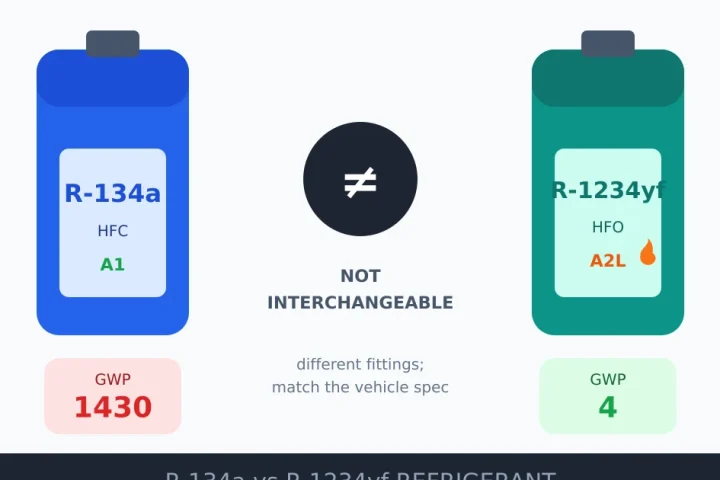
R-134a vs R-1234yf: Refrigerant Differences and How to Tell Which Your Car Uses
R-134a vs R-1234yf: the chemistry, GWP, flammability, cost, and service-fitting differences, why cars switched, and how to tell which refrigerant your car needs.
Owner of a five-bay shop in Denver focused on European imports. Spent a decade as lead technician under the same roof before buying the business from his mentor in 2018 — a shop built on Volkswagens, BMWs, and the kind of repeated failures that teach you more than any training course. ASE Master Technician across eight categories, with an L1 Advanced Engine Performance certification earned after a methodical second attempt. European drivetrain diagnostics follows different logic than domestic work, and most of the generic advice you'll find online misses that. The content here doesn't.

R-134a vs R-1234yf: the chemistry, GWP, flammability, cost, and service-fitting differences, why cars switched, and how to tell which refrigerant your car needs.
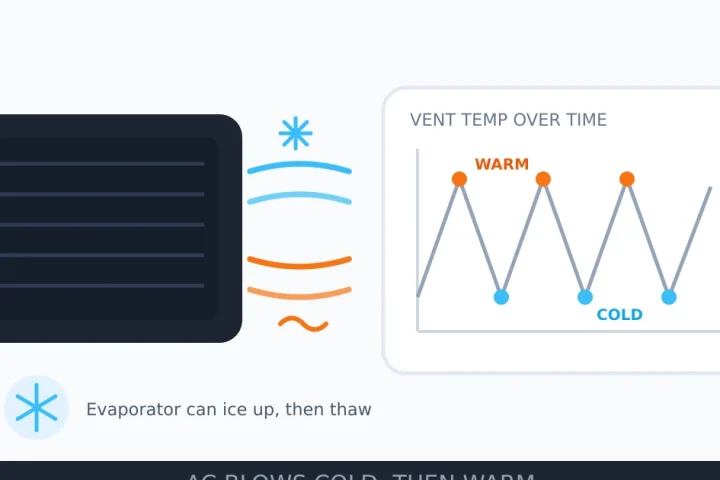
Why a car AC blows cold then warm: how the timing points to evaporator icing, a low charge, a weak condenser fan, or a failing clutch, what to check first, and repair costs.
How to recharge a car AC the right way: pick the correct refrigerant, connect only to the low-side port, hit the target pressure without overcharging, and know when a leak means you should skip the can.
Why your car AC leaks water onto the passenger floor, how to tell condensation from a coolant leak, how to clear a clogged drain tube, and what repairs cost.
Car AC cold while driving, warm at idle: a failed condenser fan is the most common cause. Inspection steps, fault codes, and repair costs.
Learn what musty, sweet, burning, and rotten-egg smells from car vents can mean, what to check first, when to stop driving, and typical repair costs.
AC running but blowing hot air points to refrigerant loss, a failed compressor clutch, a blocked condenser, or a clogged cabin filter. Here is what to check first and what repairs cost.
An oil warning light that flickers at idle with a full oil level usually points to low actual oil pressure, a failing pressure sensor, or oil too thin for the engine specification. A mechanical pressure test is needed before driving further.
A tread puncture up to 6mm wide can be permanently fixed with a mushroom plug-patch from inside the tire. Here is the full process, what cannot be repaired, and what it costs.
Bubbled or purple tint needs to come off before it gets worse. Heat gun, plastic scraper, adhesive remover. The film is not the hard part. Here is the full procedure.