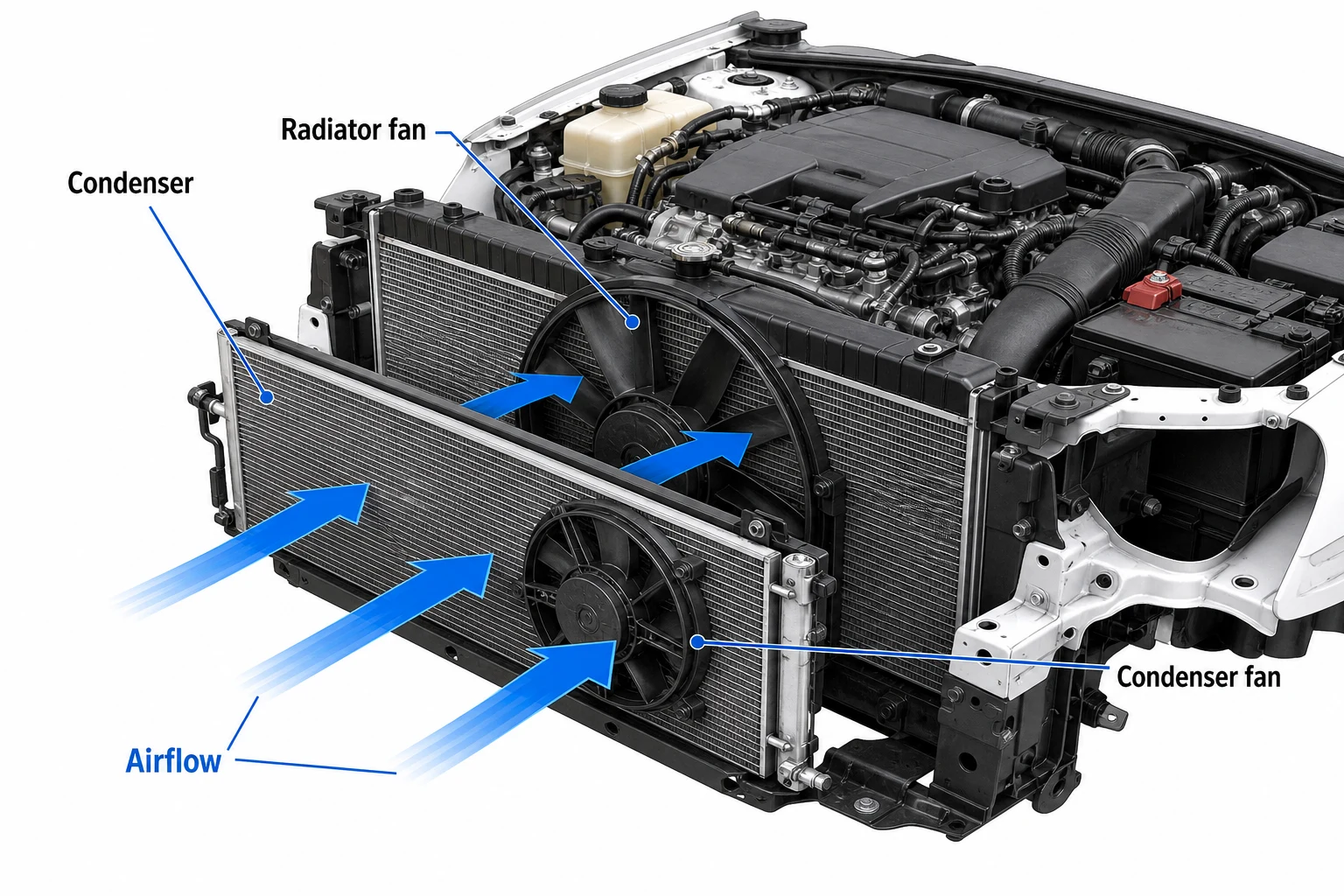
Cold air at highway speed, warm air the moment you stop: the pattern narrows the problem to one part of the AC circuit. The condenser sits behind the front grille and releases heat from refrigerant into passing air. At speed, forward motion provides that airflow for free. At idle, a dedicated electric fan takes over. When that fan is weak or dead, refrigerant pressure climbs until a protection switch cuts the compressor off. Once the car moves again and ram air resumes, the system resets and blows cold.
Quick answer
On most vehicles, a failed or underperforming condenser cooling fan is the most common cause. With AC on at idle, open the hood and look for a fan running directly in front of or behind the condenser: if it is still or running slowly, that is a strong lead worth pursuing before checking refrigerant charge or the compressor. Fan motor replacement typically costs $150–$350 at a shop. Safe to drive in most situations, but monitor the engine temperature gauge, since the same fan may also cool the radiator.
Most common causes
- Condenser cooling fan failure — on most vehicles with a dedicated condenser fan, the electric motor or its relay stops working; without it, airflow through the condenser drops sharply at idle, refrigerant pressure builds, and the high-pressure switch cuts the compressor off; at speed, ram air provides enough cooling to keep the system running
- Low refrigerant charge — a borderline charge still allows the compressor to maintain adequate pressure at higher engine RPM; at idle, lower compression output tips the system below the cooling threshold
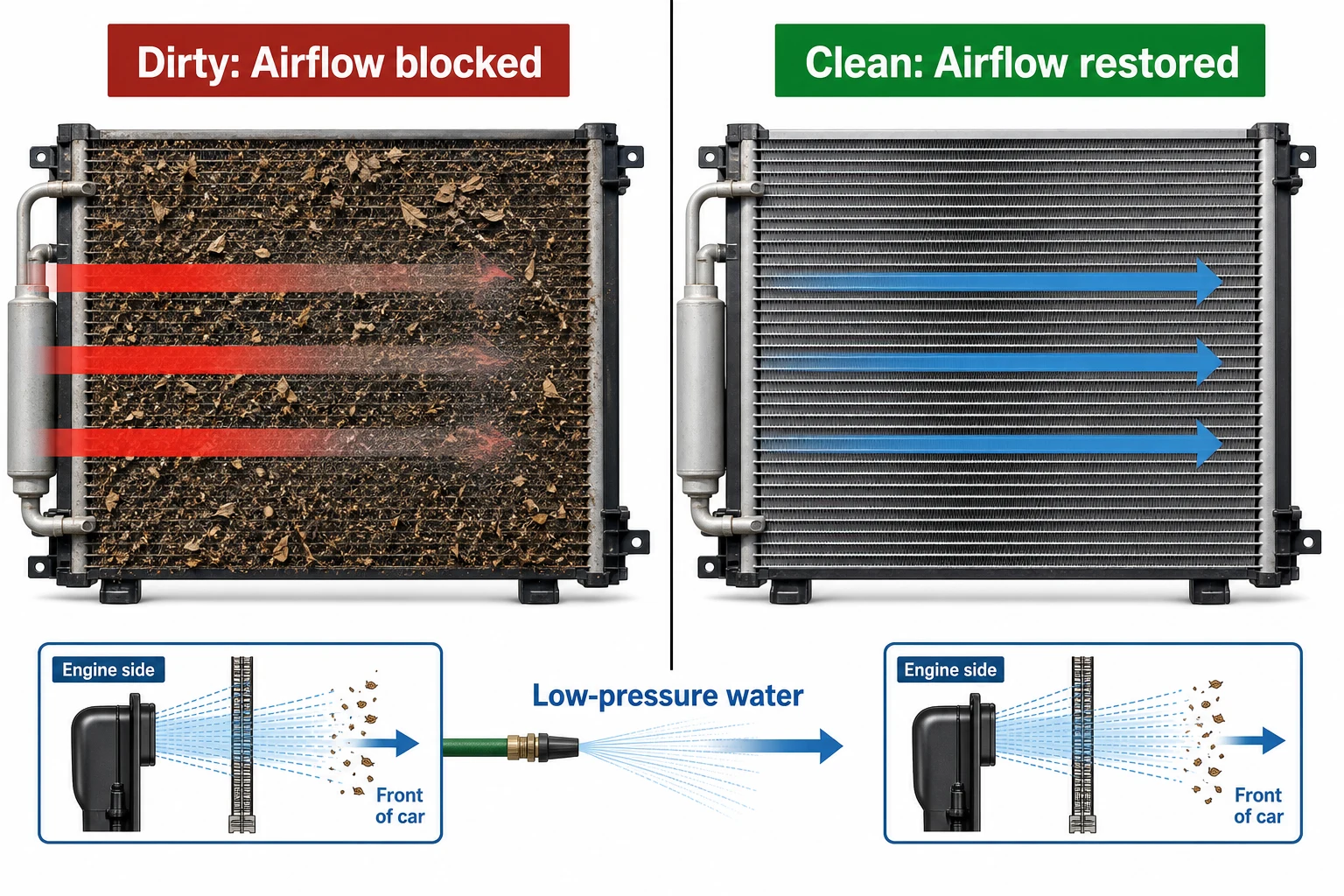
- Blocked or dirty condenser — bugs, leaves, and road debris pack between condenser fins; the system keeps up when ram air supplements restricted airflow at speed but fails at idle
- AC compressor clutch slipping — a worn electromagnetic clutch plate makes intermittent contact; at idle the compressor may not engage reliably, while at higher RPM the symptom may be less noticeable or temporarily masked by system pressure dynamics
- High-pressure cutout cycling at idle — without condenser cooling, refrigerant pressure exceeds the switch threshold; the compressor shuts off until pressure drops, then cycles back on; driving stops the cycle
- Partially failed shared fan module — some vehicles use one fan assembly for both the radiator and condenser; a partial failure affects AC first before engine temperature rises
What to check first
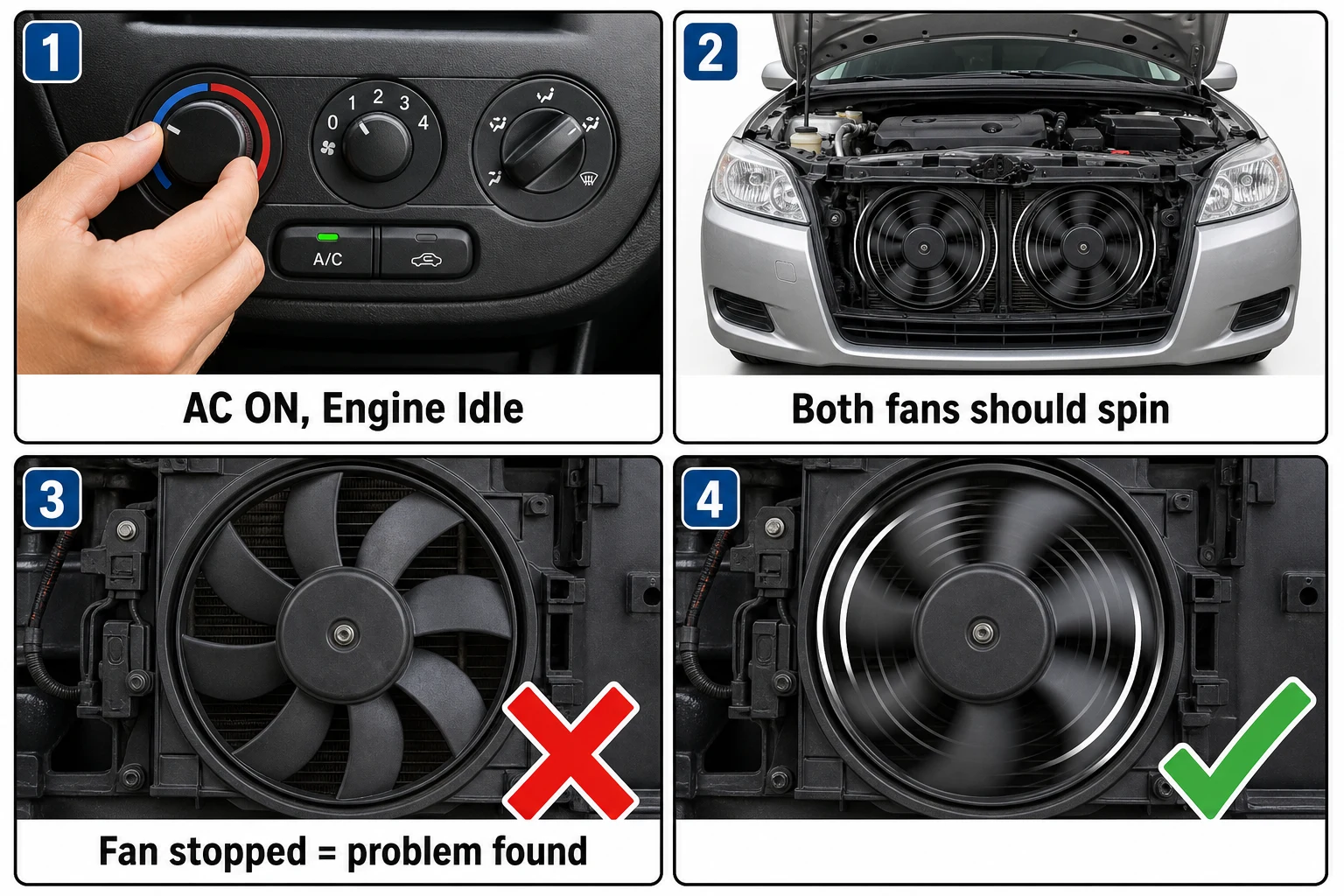
- Park on level ground, set AC to full cold, let the engine idle two minutes, then open the hood: on vehicles with a dedicated condenser fan, it should be spinning along with the radiator fan; a completely still fan, or one running noticeably slower than normal, is a strong indicator of the problem — but confirm your vehicle’s fan layout in the owner’s manual or a repair database, since some use a single fan for both
- Listen for grinding, rattling, or intermittent speed changes from either fan; a worn bearing runs but fails under thermal load after a few minutes
- Pull diagnostic codes from the OBD-II port: P0480, P0481, and P0482 indicate cooling fan circuit faults; most parts stores read codes free
- Inspect the condenser face through the grille for packed insect debris or leaves; heavy fouling restricts airflow independent of fan condition
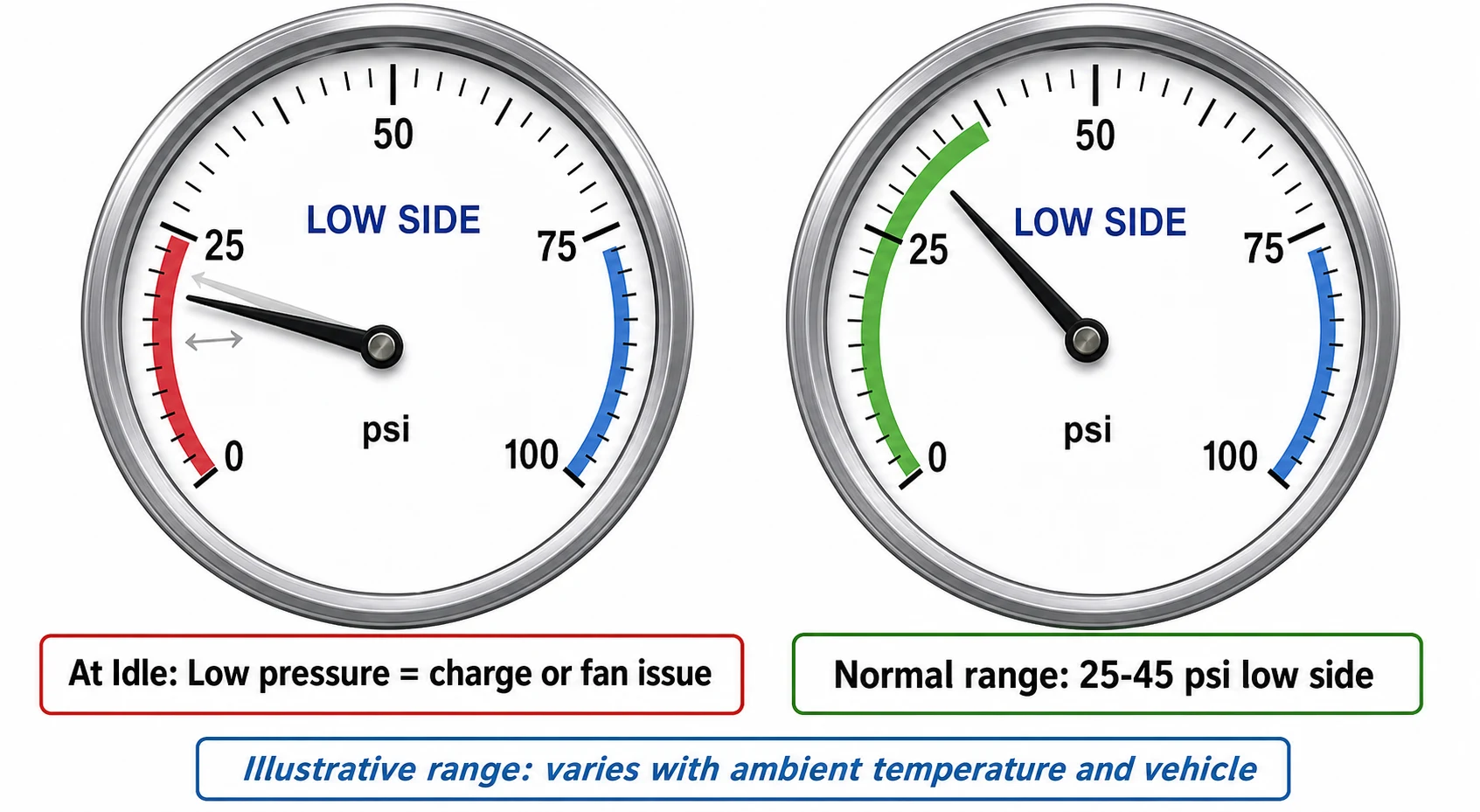
- Ask a shop to check refrigerant pressures with proper manifold gauges: low-side readings vary with ambient temperature, refrigerant type (R-134a vs R-1234yf), and engine speed, so there is no universal number; the technician should compare against the vehicle-specific spec and look for pressure that is abnormally low, flat, or fluctuating under load — not against a single generic threshold
Is it safe to drive?
Generally yes, as long as the engine temperature gauge stays in the normal range. A failed condenser fan alone rarely threatens the engine on short highway trips where ram air keeps the condenser working. The risk increases in slow traffic or during extended idling, particularly when one fan serves both the condenser and the radiator. If the temperature gauge climbs toward the red while idling with AC on, turn the AC off and address the fan before the next trip.
Do not do this
- Do not keep recharging refrigerant without confirming the fan works first: if low refrigerant is the real cause, a leak exists and a recharge is a temporary fix, not a repair
- Do not assume the problem is fully resolved after one cold drive: a fan that spins slowly or intermittently often fails completely within days or weeks of the first symptom
- Do not bypass or disable the high-pressure protection switch to keep the compressor running: the switch prevents compressor destruction and refrigerant line rupture
- Do not vent refrigerant into the atmosphere: intentional venting is prohibited under the Clean Air Act for anyone, not just technicians; if you pay someone to service the AC, they are required under EPA Section 609 to be certified and use approved recovery equipment — ask to confirm before authorizing the work
When the problem is urgent
- Engine temperature gauge rises while idling with AC on: the cooling fan likely serves both the condenser and radiator; continued idling risks overheating
- AC compressor makes grinding or rattling noise at any vehicle speed: the clutch or compressor bearings are failing; continued use risks metal debris contaminating the refrigerant circuit
- AC stops blowing cold even while driving: pressure switch, refrigerant loss, or compressor failure; the speed-dependent pattern is gone
- Burning smell from the engine bay at idle: a seized fan motor can overheat its wiring before failing completely
- Coolant warning light or overheat warning activates: turn AC off immediately and find a safe place to stop
Typical repair cost
- Condenser fan relay replacement — typically $10–$30 for the part; $50–$100 at a shop including diagnosis
- Condenser fan motor replacement — parts commonly run $80–$200; total shop cost typically $150–$350 including labor
- Condenser cleaning — shop labor typically $50–$120; a DIY rinse with low-pressure water from the engine bay side is possible on most vehicles
- Refrigerant recharge with leak check — workshop estimates run $150–$300 at a certified shop; a recharge without a leak repair is a short-term fix on any system that has lost charge
- AC compressor clutch replacement — typically $200–$500 parts and labor, depending on whether the clutch alone or the full compressor needs replacement