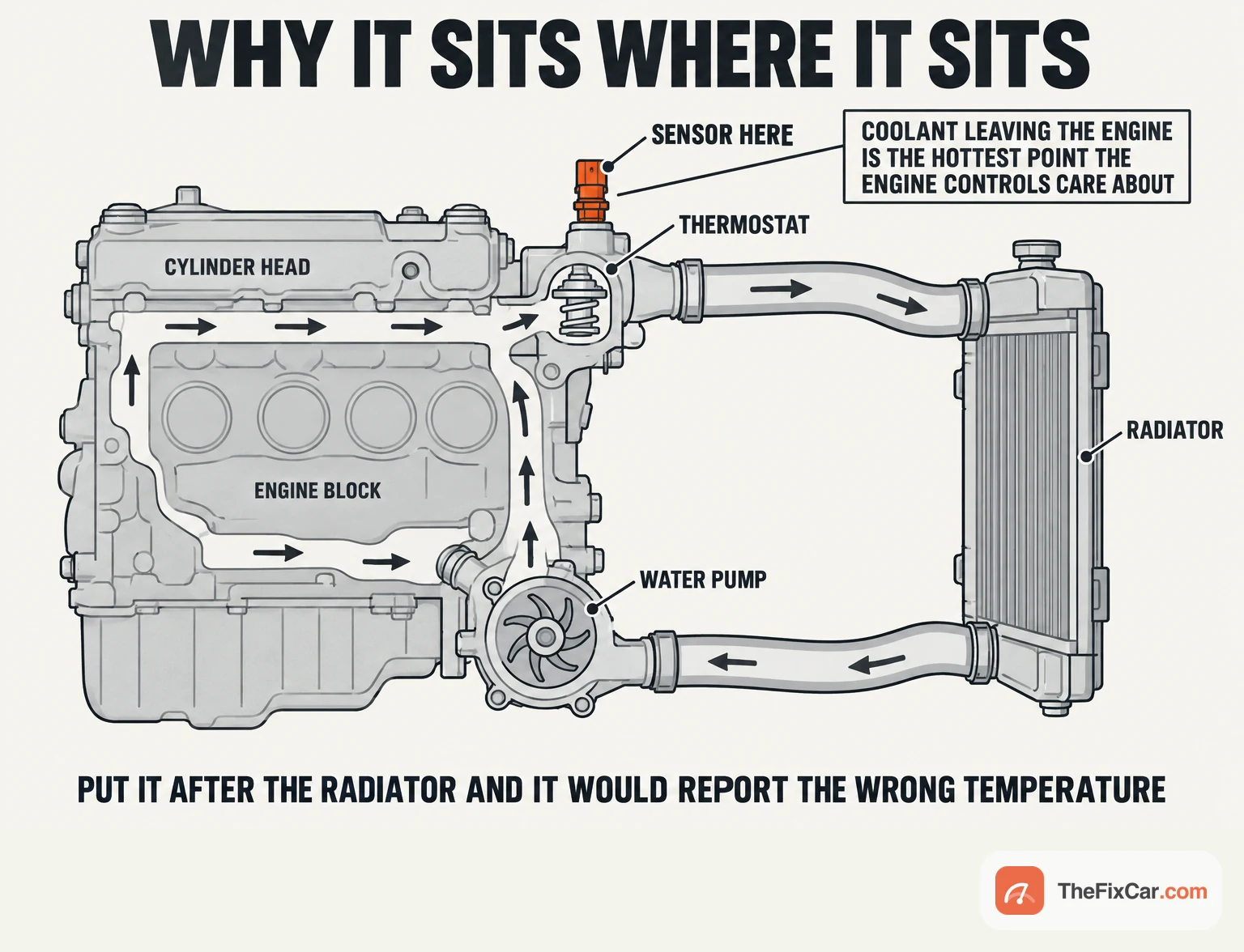
There is no single place to look. On one engine the coolant temperature sensor screws into the thermostat housing, on another it sits in the cylinder head, on others it is hidden under the intake manifold, and on the MINI applications covered by service action SI M17 09 12 the factory position was abandoned entirely and the sensor relocated[1].
What stays constant is the job: the sensor sits in an engine-side coolant passage, where it reads the coolant the control strategy is calibrated against, most often near the thermostat or in the cylinder head. Below is where to look, how to tell the right sensor from the three things next to it, and the documented exceptions that explain why a photograph from another car is not an answer.
Quick answer
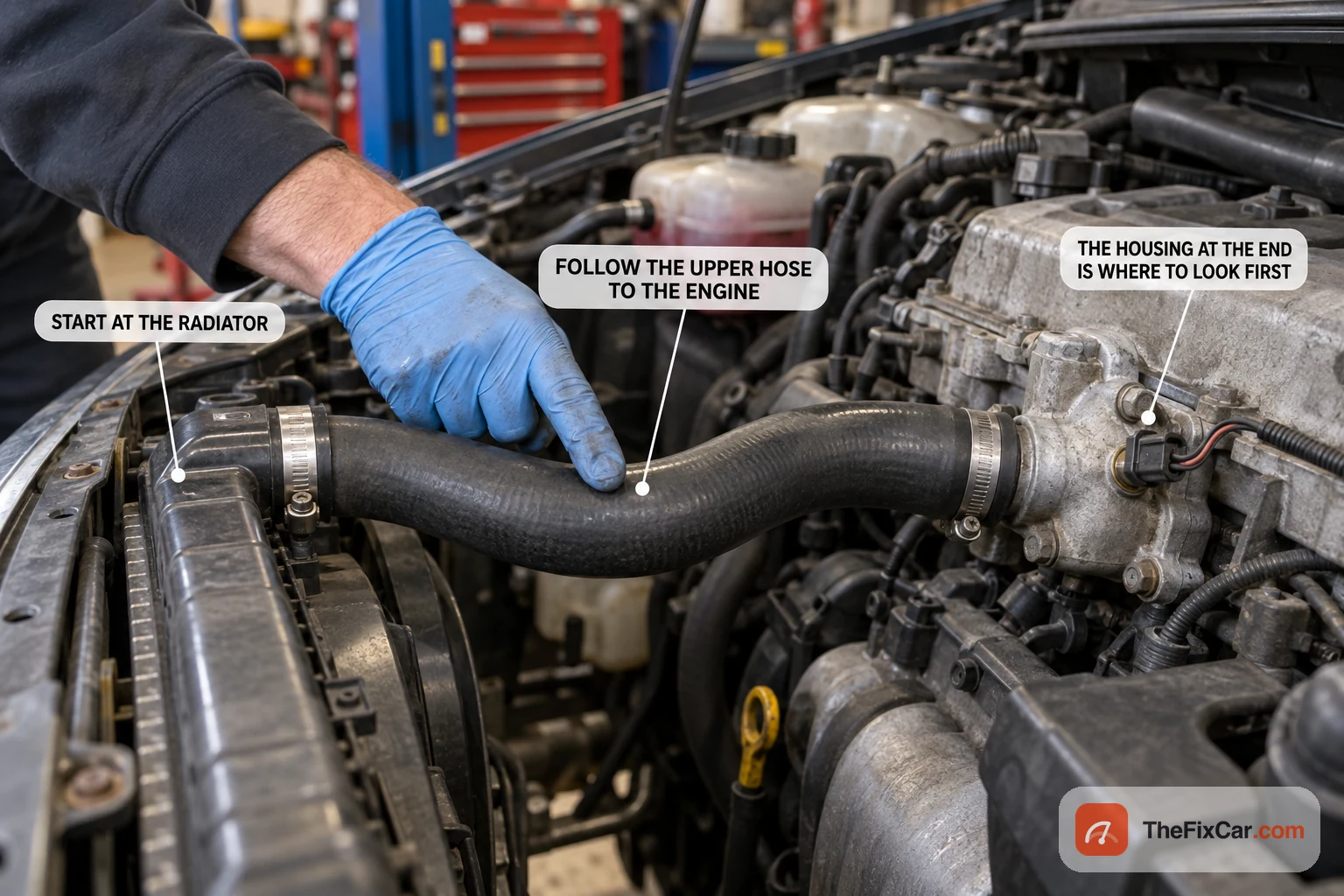
Follow the upper radiator hose from the radiator back to the engine, then look around the housing where it clamps on. You are looking for a small sensor threaded into that housing or into the cylinder head beside it, typically with a two-wire connector and a brass or steel hex body. If nothing is threaded into the housing, the sensor is either further along the head or underneath the intake manifold. A scan tool confirms it: watch the live coolant reading while the connector is disconnected.
Where it usually sits
| Common location | What to look for | Typical access |
|---|---|---|
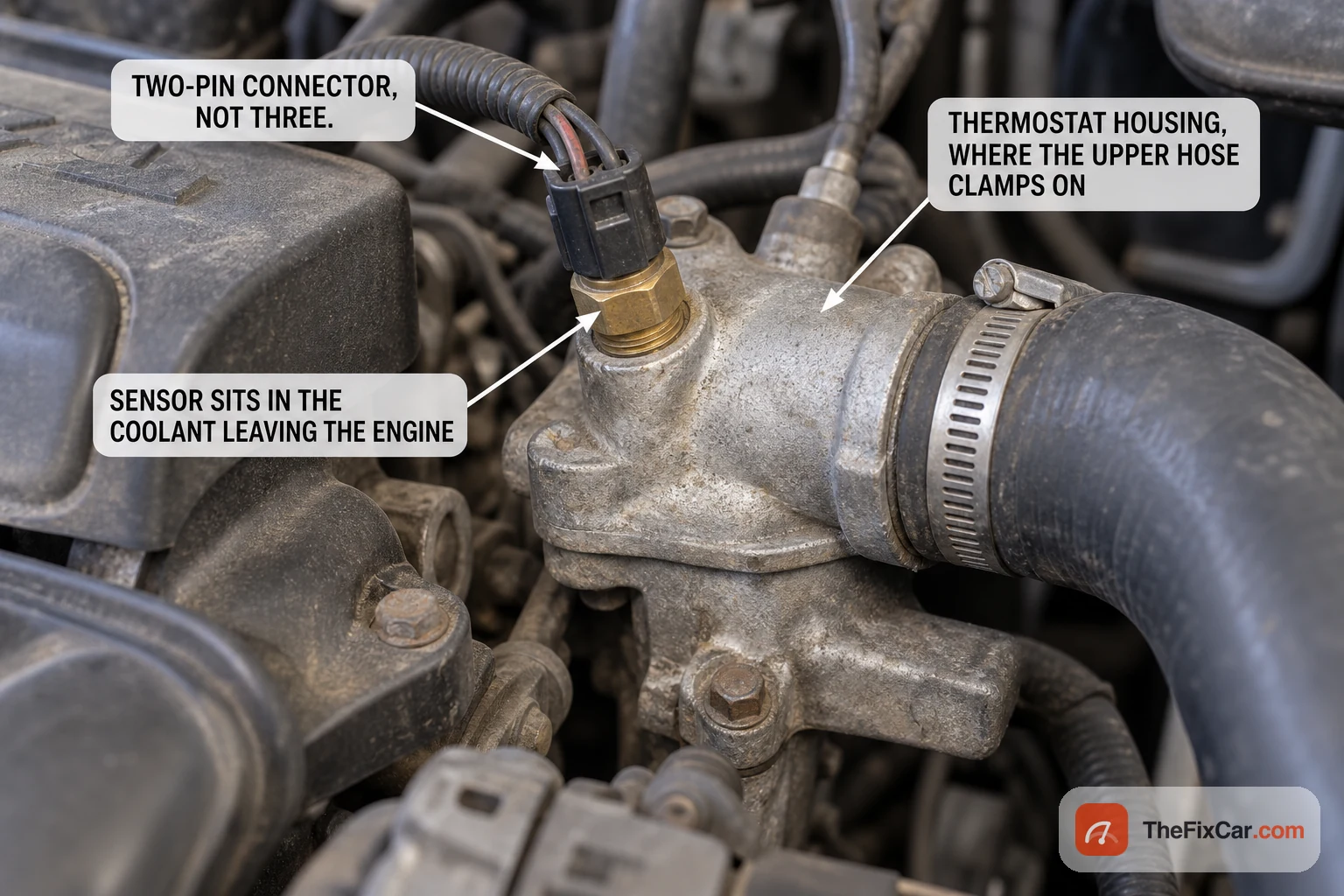
| Thermostat housing or water outlet | Sensor threaded in beside the upper radiator hose connection, two-wire connector | Usually visible and reachable from above |
| Cylinder head coolant passage | Sensor threaded directly into the head, often near the outlet end | Top or side of the engine, sometimes behind other pipework |
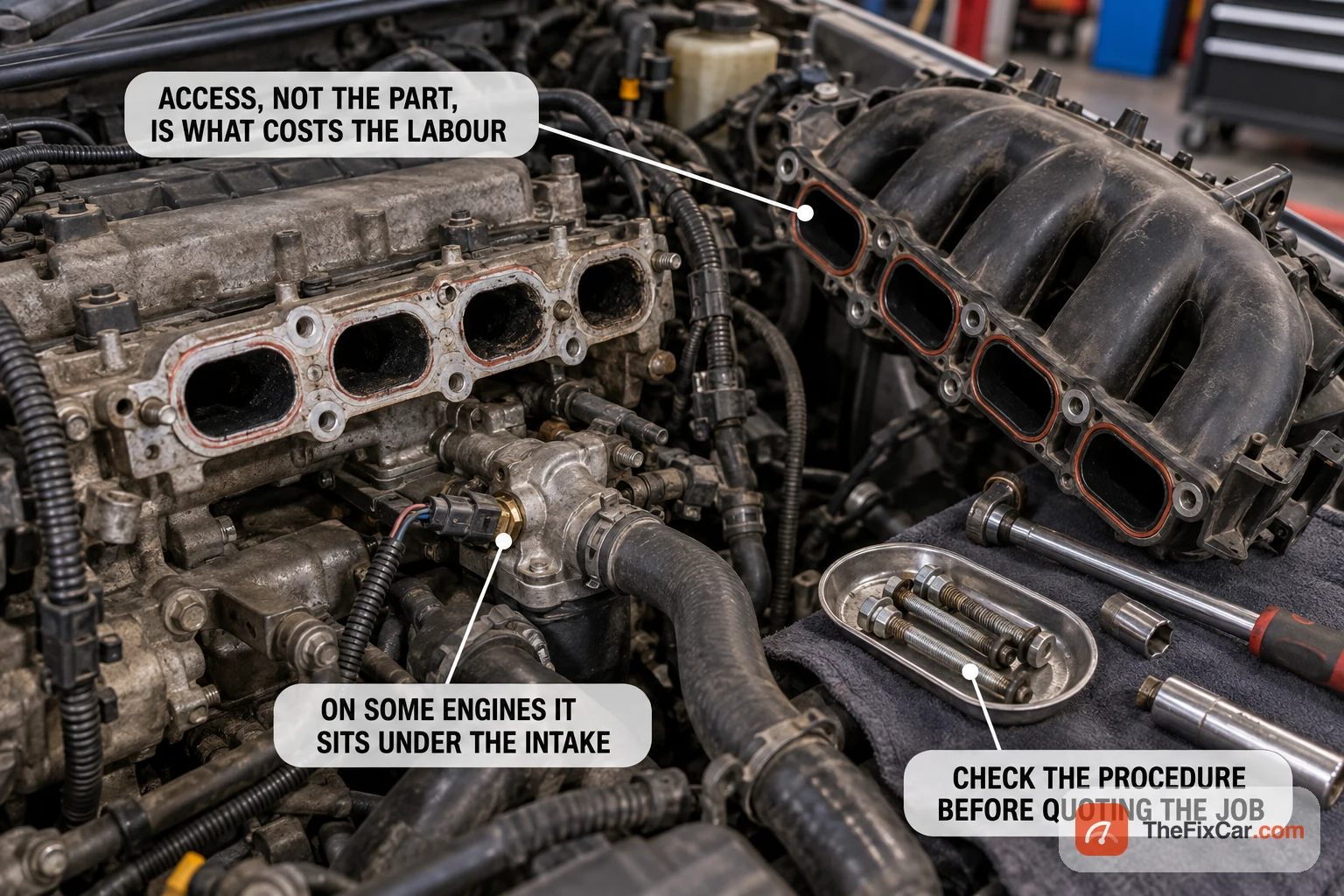
| Under the intake manifold | The connector and its harness are often visible before the sensor body is | Intake components obstruct it; the manifold may have to come off |
| Coolant hose or a remote housing | Sensor fitted into the hose itself or into a separate outlet away from the engine | Follow the hose and the wiring rather than searching the engine |
A map of where to start, not a specification. The position is set per engine, and the exceptions below show it can even change on cars already built.
Documented exceptions
Three published cases show why a picture from someone else’s engine is not an answer for yours.
MINI moved the sensor after the cars were built. On R55, R56, R57 and R58 models with automatic transmission and the N16 or N18 engine, the sensor was integrated in the thermostat housing. Both approved repairs in the service action fit a sensor remotely instead and wire it into the engine harness: one replaces the upper coolant hose with a modified hose that houses the sensor, the other puts a sensor with an integrated harness in place of the thermostat bleeder screw[1].
Audi puts it in the cylinder head, and the seal is what fails. On 2021 A8, S8, Q7, SQ7, Q8, SQ8 and RS Q8 within the stated VIN ranges, the coolant temperature sender G407 is the cylinder head temperature sensor. Damage to its O-ring lets water into the plastic housing and damages the element, with a loss of function that can be sporadic rather than permanent[2].
Some manufacturers publish a drawing rather than a description. GM’s component location document for the 6.0 L gasoline engine shows the coolant temperature sensor in the left-hand engine view, next to the camshaft and knock sensors[3]. That is the kind of source worth finding before anything is removed.
Why it sits there
The engine controls need coolant temperature from the engine side of the circuit, because that is what the warm-up strategy, the fuelling correction and the fan logic are calibrated against. That puts the sensor at or near the outlet: the thermostat housing, the water outlet, or the head just before it. The same sensor placed after the radiator would report coolant that has already been cooled, which answers a different question.
The position also explains a failure mode. A sensor that seals against coolant with an O-ring lives in a wet joint, which is exactly the joint Audi documents failing first[2].
How to find it on your car
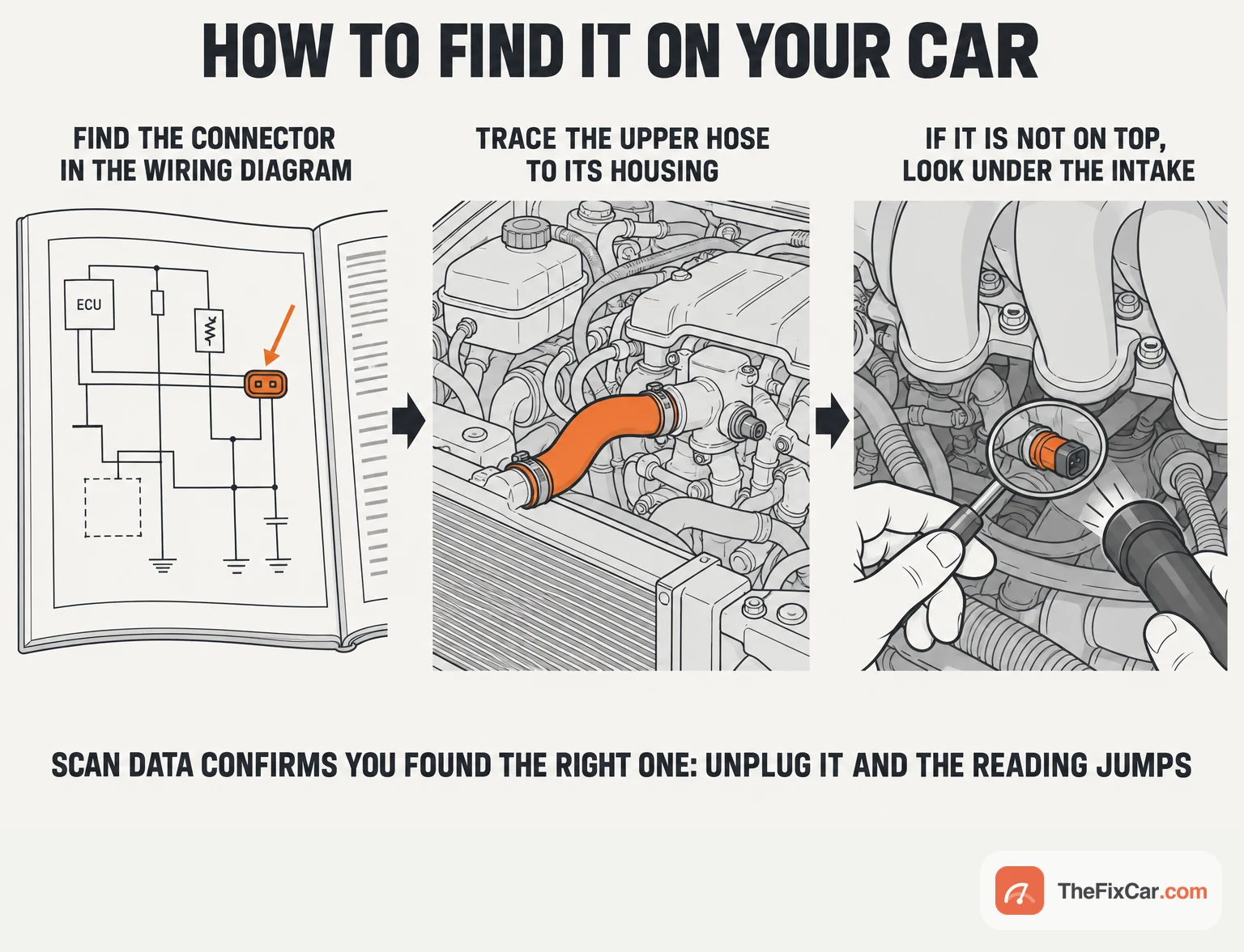
- Start with the wiring diagram, not with photographs. It names the connector and tells you how many pins the sensor has, which is what separates it from everything else threaded into the same area.
- Follow the upper radiator hose. Trace it from the radiator to the engine. The housing it clamps to is the first place to look, and it is where Lexus tells technicians to take a temperature measurement when a gauge reads high without other symptoms[5].
- If it is not on top, look underneath. Where the intake manifold covers the outlet area, the sensor is reached from below or with the manifold off. That is a procedure question rather than a guessing question.
How to identify the correct sensor
Finding something threaded into a coolant passage is not the same as finding the sensor you are after. Three checks settle it.
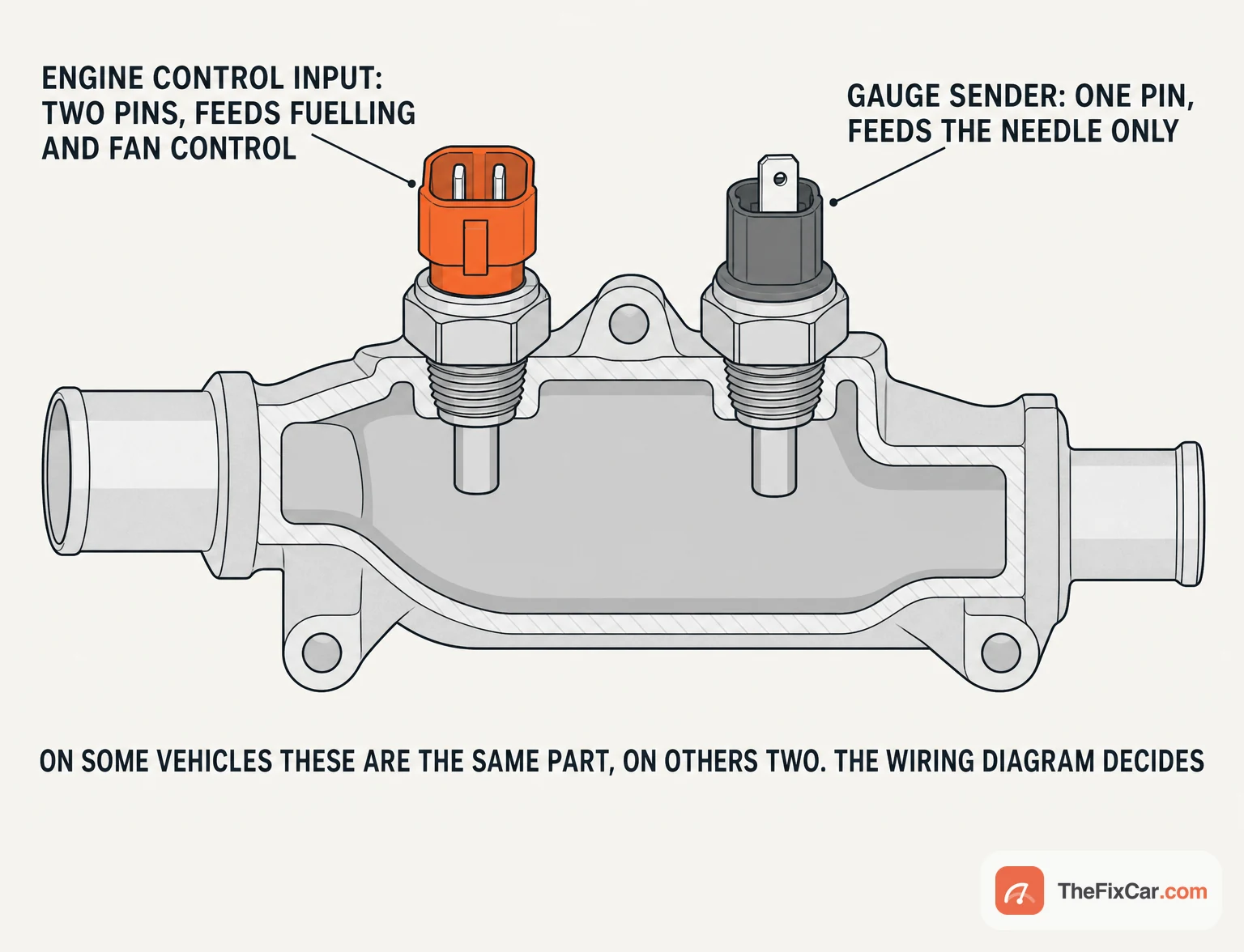
- Count the pins. The engine control input normally has two. A single-pin unit in the same housing is usually a gauge sender or a switch, and it feeds the needle rather than the fuelling.
- Check the wiring diagram. It says whether your car shares one input between the cluster and the engine controls or carries two separate senders. General Motors documents how much processing can sit in between on the 2014 Corvette: the analog gauge runs a dampening program, and the digital display does not begin to read until coolant reaches 100 °F[6].
- Unplug it and watch the scan data. With the ignition on, the reported coolant temperature jumps to the end of its range, which is proof you have the engine control input in your hand. Expect this to set a fault code: the module sees an open circuit while the connector is off, so clear the code afterwards rather than assuming you broke something.
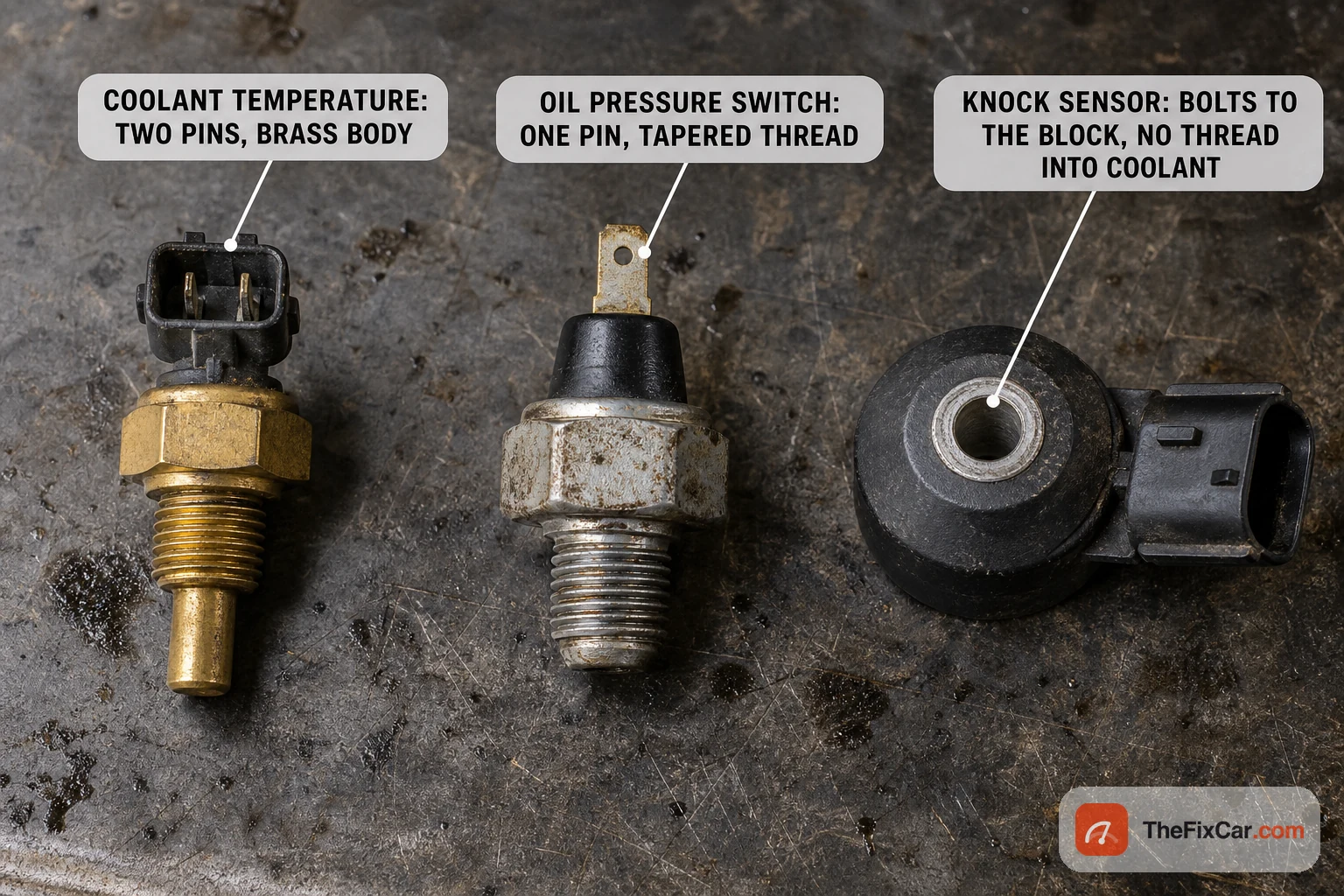
Three neighbours look similar at a glance and are not it: an oil pressure switch threads into an oil gallery rather than coolant and usually has one pin, a knock sensor bolts to the block with no thread into a coolant passage at all, and a single-wire gauge sender sits in the same housing doing only the dial.
What the location changes about the job
Access, not the part, is what moves the bill. A sensor in an exposed thermostat housing is a short job; one under an intake assembly turns into a much larger one, and two sensors in the same nominal position can differ by an afternoon depending on what sits above them. The Mitsubishi procedure for its own engine drains the coolant before the sensor is removed at all[4], which tells you the position sits low enough in the system that opening it loses fluid.
One more consequence follows from where the sensor sits: a tip that ends up above the coolant level after a refill reports the air pocket around it rather than the coolant, which is why bleeding matters more on some layouts than others.
FAQ
Where is the coolant temperature sensor located? Most often in or near the housing where the upper radiator hose meets the engine, or in the cylinder head beside it. Documented exceptions exist: Audi places the sender in the cylinder head on the applications above[2], and MINI moved it into the upper hose or the bleeder screw port on the models its service action covers[1].
How do I know which sender is which? Count the pins and check the wiring diagram. Two pins usually means the engine control input; one pin usually means a gauge sender or a switch. Unplugging the connector with the ignition on and watching the scan value settles it.
Why is mine under the intake manifold? Because the outlet side of that engine sits there. It is a packaging decision, and it changes the labour rather than the diagnosis.
Can the sensor be in the radiator? A temperature switch for the cooling fan can live in or near the radiator on older designs, but the input the engine controls use is on the engine side. Reading coolant that has already passed through the radiator would answer a different question.
Do I have to drain the coolant to reach it? Usually some of it, and how much depends on where the sensor sits relative to the coolant level. The Mitsubishi procedure drains before removal[4]; follow the procedure for your own vehicle rather than guessing.
Sources & verification
Last technically reviewed: Sep 2026
Reviewed by: Derek Winslow, ASE Master Technician
Primary references: manufacturer service bulletins and service actions filed with NHTSA, OEM component location documents, OEM service information pages
Suggested citation: TheFixCar, “Engine Coolant Temperature Sensor Location: Where It Sits and How to Find It,” updated Sep 2026. https://thefixcar.com/specs/engine-coolant-temperature-sensor-location/