Check the EPA range on a small EV and the number looks tight. Then check your actual daily mileage. US commuters average around 27 miles a day round-trip. The shortest-range small EV on sale in America right now is the Mini Cooper SE at 114 miles. That covers the average commute four times over.
What actually trips people up is home charging access, how often they leave the city, and whether the car fits the rest of their life. Those three things predict satisfaction more reliably than any range comparison.
Where the charging question actually gets decided

If you can plug in at home overnight, a small EV is almost always cheaper and more convenient for city use than a gas car. You start every morning at whatever charge you set the night before. No gas stations, no detours.
Apartment dwellers with no dedicated parking get a different calculation. Public Level 2 chargers add around 25 miles per hour at 7 kW. Fine for topping off while you run errands. Not a reliable substitute for overnight charging if you’re doing 50-plus miles a day.
Workplace charging closes the gap if you have access to it. Six hours plugged in at a Level 2 charger adds roughly 150 miles. That’s enough for most commuters to never think about charging at home at all.
What changes day-to-day that most buyers don’t anticipate
One-pedal driving. This sounds like a marketing talking point but it genuinely changes the city experience. You use regenerative braking to slow the car almost to a stop, barely touching the friction brakes. In traffic, stop signs, parking garages, you do this constantly. Nissan says Leaf brake pads routinely last past 100,000 miles. That’s not a coincidence.
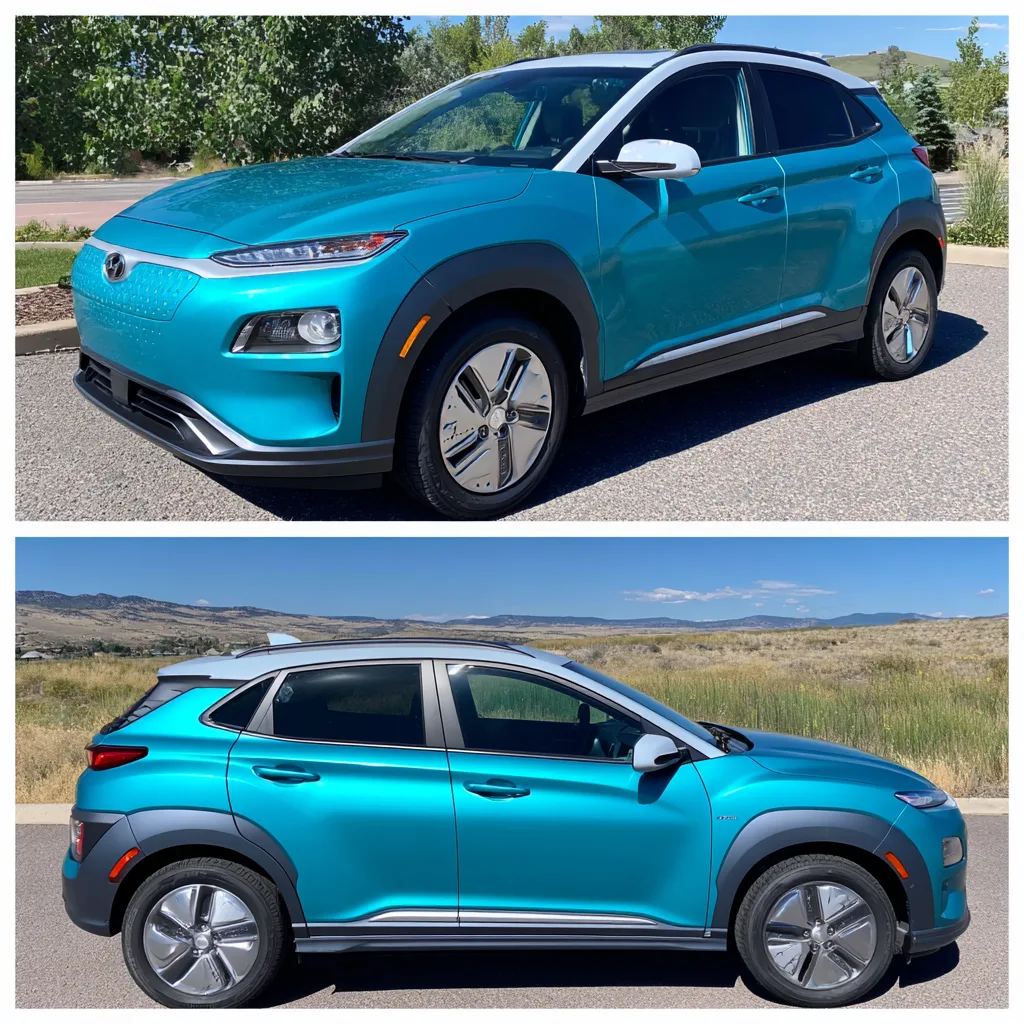
Climate preconditioning is the other one. A gas car needs 5-10 minutes to warm up from engine heat on a cold morning. An EV with a heat pump and a scheduled departure time is already at temperature when you get in. It draws from the grid, not the battery. The 2024 Hyundai Kona Electric includes a heat pump standard. The Bolt EUV does not.
Cargo capacity varies more than the size of the cars suggests. The Nissan Leaf has 23.6 cubic feet behind the rear seats. The Mini Cooper SE has 8.7. If you do a weekly family grocery run, that difference is real and weekly.
Where small EVs actually come up short
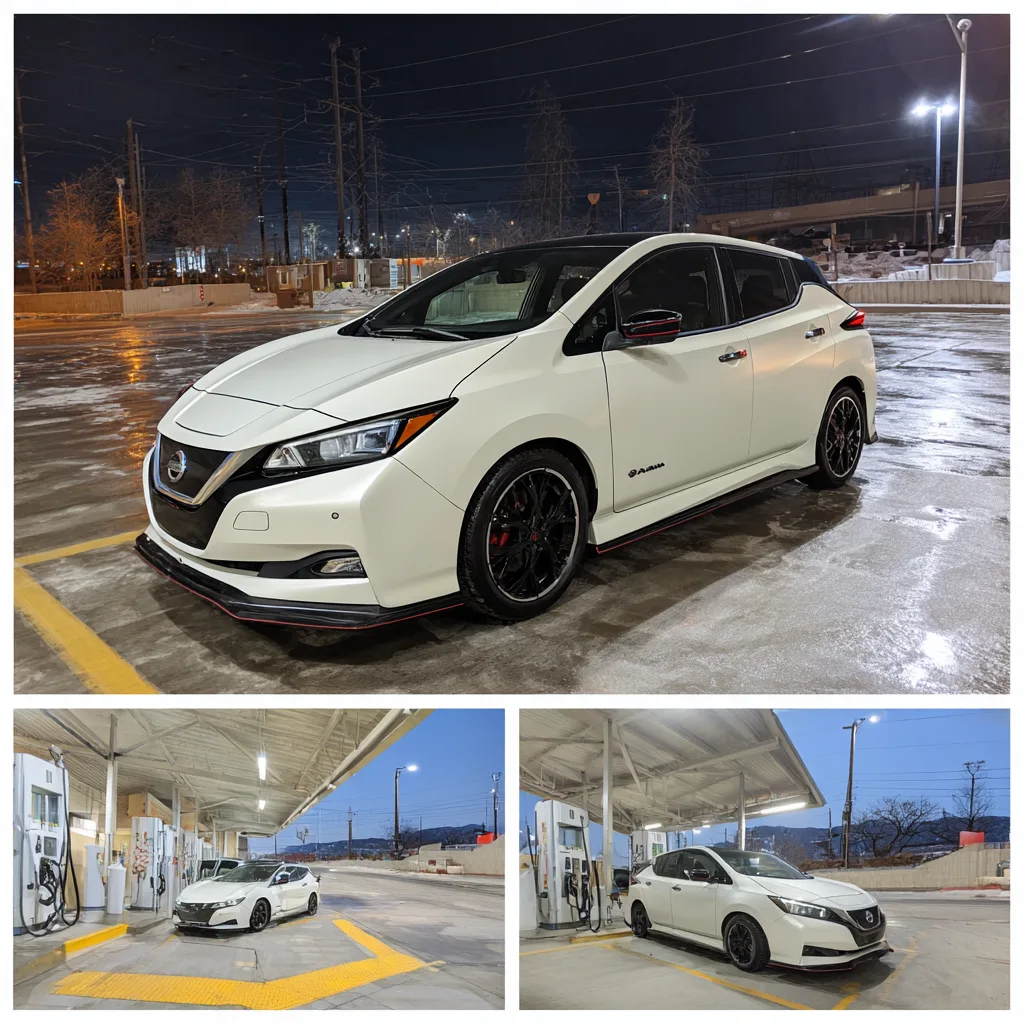
Road trips expose the limits fast. Not because small EVs can’t do them, but because the DC fast charging speeds on budget models are slow. The Bolt EUV and base Nissan Leaf both cap at 55 kW. A 20-to-80% charge takes around 50 minutes. The Kona Electric at 100 kW does the same charge in about 30. For one trip a month, that’s manageable. If you’re on the highway every other weekend it’ll start to grind on you.
Towing is basically off the table. Most small EVs carry no tow rating at all. The Kona Electric lists 1,500 lbs, but pulling any real load cuts range 40-50%. That’s just physics, not a software fix.
One thing that catches EV owners off guard: every EV still has a conventional 12V battery running the computers and low-voltage systems. It ages the same way a gas car’s battery does and can leave you stranded just as suddenly. See the EV 12V battery symptoms guide if you’re already seeing warning signs.
Cold weather hits harder than EPA numbers suggest. At 20 degrees Fahrenheit, expect 20-40% range reduction depending on the model and how much cabin heat you’re running. Models with heat pumps handle this noticeably better than ones relying on resistive heaters. If you’re in Minnesota or somewhere with actual winters, this is worth checking before you buy.
| Model | Range (EPA) | Max DC charge | Cargo (cu ft) | Heat pump |
|---|---|---|---|---|
| Hyundai Kona Electric 2024 | 261 mi | 100 kW | 19.2 | Standard |
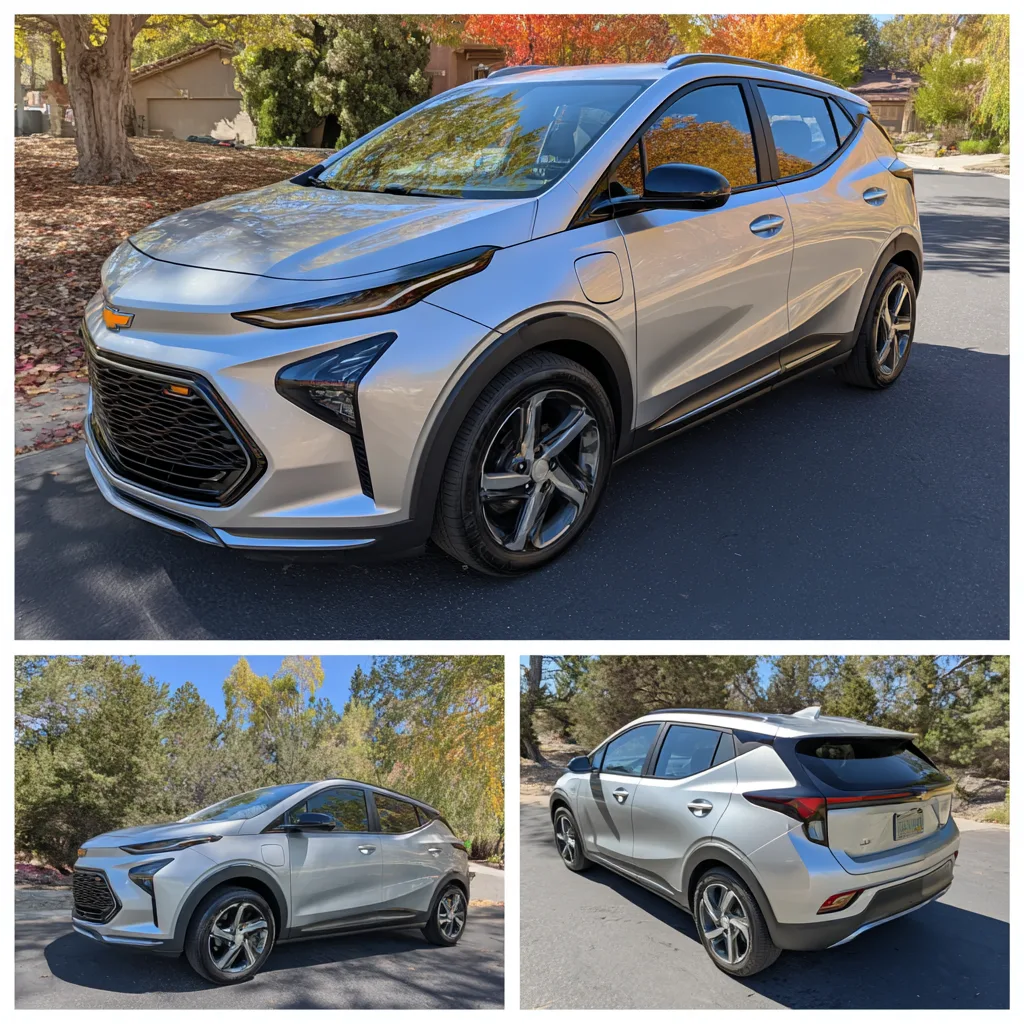
| Chevy Bolt EUV 2023 | 247 mi | 55 kW | 16.3 | No |
| Nissan Leaf Plus (62 kWh) | 212 mi | 100 kW* | 23.6 | Optional |
| Nissan Leaf (40 kWh) | 149 mi | 50 kW | 23.6 | Optional |
| Mini Cooper SE | 114 mi | 50 kW | 8.7 | No |
When a small EV makes clear financial sense
Daily driving under 80 miles, charged at home or work. That’s the profile. At the current national average of roughly $0.16 per kWh, you’re paying around $0.03-0.05 per mile in electricity. Gas at $3.50 per gallon in a 30-mpg car costs $0.12 per mile. Over 12,000 miles a year, that’s about $840 saved annually, before factoring in fewer oil changes and brake jobs. EVs with fewer moving parts also tend to age better past 100,000 miles than comparable gas cars.
Multi-car households often use a small EV as the daily driver and keep a gas car for longer trips. You get the operating cost savings without betting everything on one vehicle.
Urban parking is a real advantage that doesn’t show up in spec sheets. A Leaf or Bolt EUV fits spaces that cause genuine stress in a full-size crossover. In dense neighborhoods that matters every single day.
When you should probably look elsewhere
No home charging and a commute over 60 miles round-trip. You’ll make it work with public fast charging, but the cost advantage mostly disappears. Public DC charging often runs $0.30-0.45 per kWh, and the logistics add friction that gets old quickly.
Frequent highway trips, more than once or twice a month. The slower DC charging on most budget small EVs turns a 30-minute highway stop into 50 minutes. A slightly larger EV with faster charging (Kia EV6, Hyundai Ioniq 6) handles road trips with a lot less aggravation.
Regular hauling: bikes, lumber runs, camping gear. Most small EVs don’t have roof rails on standard trims, towing is out, and cargo volume is genuinely tight. The Leaf is the exception on cargo, but it has its own tradeoffs.
Questions people actually search before buying
Bolt EUV or Nissan Leaf?
For most people, the Bolt. The range difference alone is significant: 247 miles versus 149 on the base Leaf. The Leaf does have more cargo room (23.6 vs 16.3 cu ft), and higher Leaf trims offer an optional heat pump that matters in cold climates. But that base range is a real constraint if you occasionally need to drive outside your city without planning around charging stops.
One thing worth noting: used Leafs have gotten remarkably cheap. A 2021 SV Plus with under 30k miles is consistently under $14,000 right now. At that price, even with the range limitation, the per-mile cost math is hard to beat.
What does charging at home actually cost per month?
Less than most people expect. At the national average of $0.16 per kWh, topping off 35 miles worth of range costs roughly $1.80. Figure $50-60 a month for typical city driving. In California or New York, closer to $90-110. Still cheaper than gas.
How bad is the range drop in cold weather, really?
Pretty bad. Real-world data from Recurrent puts the Bolt EUV at roughly 160-175 miles at 20 degrees F, down from 247 EPA. That’s a 30% drop without even trying hard. The Kona Electric with its heat pump holds up better in the cold, but it still loses range.
The practical rule: if you regularly see temps below 15 degrees F, plan around 60-65% of the EPA figure. The car will still work fine. You just don’t want to be surprised by it the first time it happens.
Do small EVs lose value fast?
Bolts and first-gen Leafs depreciate steeply. A 2022 Bolt EUV that stickered at $34,000 regularly sells for $17,000-21,000 used. If you bought one new in 2021, that’s painful. If you’re in the market today, it means you can get a capable city EV for under $20,000 and the economics get very favorable very fast.
If your daily driving fits the profile, under 80 miles and charged at home or work, a small EV is hard to argue against on cost alone. The city driving experience genuinely improves too. But if the profile doesn’t fit, don’t force it. A hybrid or a slightly larger EV with faster charging will serve you better without the daily friction.
Sources
EPA Fuel Economy Guide, 2023-2024 model year data
Recurrent: Real-world EV range in cold weather
U.S. EIA: Average retail electricity price by state