Car AC Smells Bad: What Each Smell Means and How to Fix It
Learn what musty, sweet, burning, and rotten-egg smells from car vents can mean, what to check first, when to stop driving, and typical repair costs.
Not sure what your car is trying to tell you? This section helps you understand common warning signs like strange noises, rough idle, shaking, dashboard lights, leaks, smells, and starting issues. Each guide explains what the symptom may mean, how serious it is, what to check first, and when it is time to stop driving and get help.
Learn what musty, sweet, burning, and rotten-egg smells from car vents can mean, what to check first, when to stop driving, and typical repair costs.
AC running but blowing hot air points to refrigerant loss, a failed compressor clutch, a blocked condenser, or a clogged cabin filter. Here is what to check first and what repairs cost.
An oil warning light that flickers at idle with a full oil level usually points to low actual oil pressure, a failing pressure sensor, or oil too thin for the engine specification. A mechanical pressure test is needed before driving further.
A car that starts with a jump then dies shortly after almost always has a failed alternator, not a dead battery. Here is how to tell the difference and what to do next.
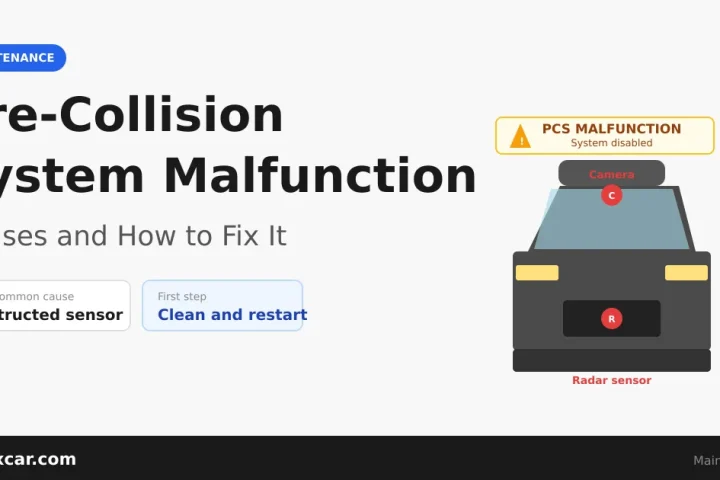
A pre-collision system malfunction disables forward collision warning and automatic emergency braking. Learn the common causes and how to diagnose them before visiting a dealer.
EV 12V battery not charging is usually a DC-DC converter or ICCU fault, not a simple swap. Here is what causes it, what to check, and when it becomes urgent.
A rough idle that smooths out after warm-up is usually a stuck IAC valve, dirty MAF, or worn spark plugs. Here’s how to tell which without a scanner.
Coolant disappearing with no puddle under the car means a head gasket, intake manifold leak, or cracked reservoir. Here’s how to narrow it down fast.
Battery light while driving means the alternator stopped charging. You have 20-40 minutes of power left before the engine dies. Here’s what to do next.
A flashing check engine light means active misfires are sending unburned fuel into the catalytic converter. Don’t drive at speed. Here’s what’s happening.