A road trip parks your car in a different lot every night, often in a town you have never seen, next to a room full of everything you packed. Hotel and motel lots can be attractive targets for break-ins, because thieves know travelers leave bags, chargers, and gifts in the car overnight.
The risk is not just a smashed window. A stolen catalytic converter can strand you 400 miles from home. A grabbed backpack can take your laptop, passport, and spare keys in one reach. Most of it is preventable with a two-minute parking routine and a walk-around before you pull out in the morning.
This checklist covers where to park at an overnight stop, how to make the car a poor target, and what to look at before you drive off.
Quick Safety Answer
Park where a thief feels watched and finds nothing worth the risk. In practice:
| Step | What to do |
|---|---|
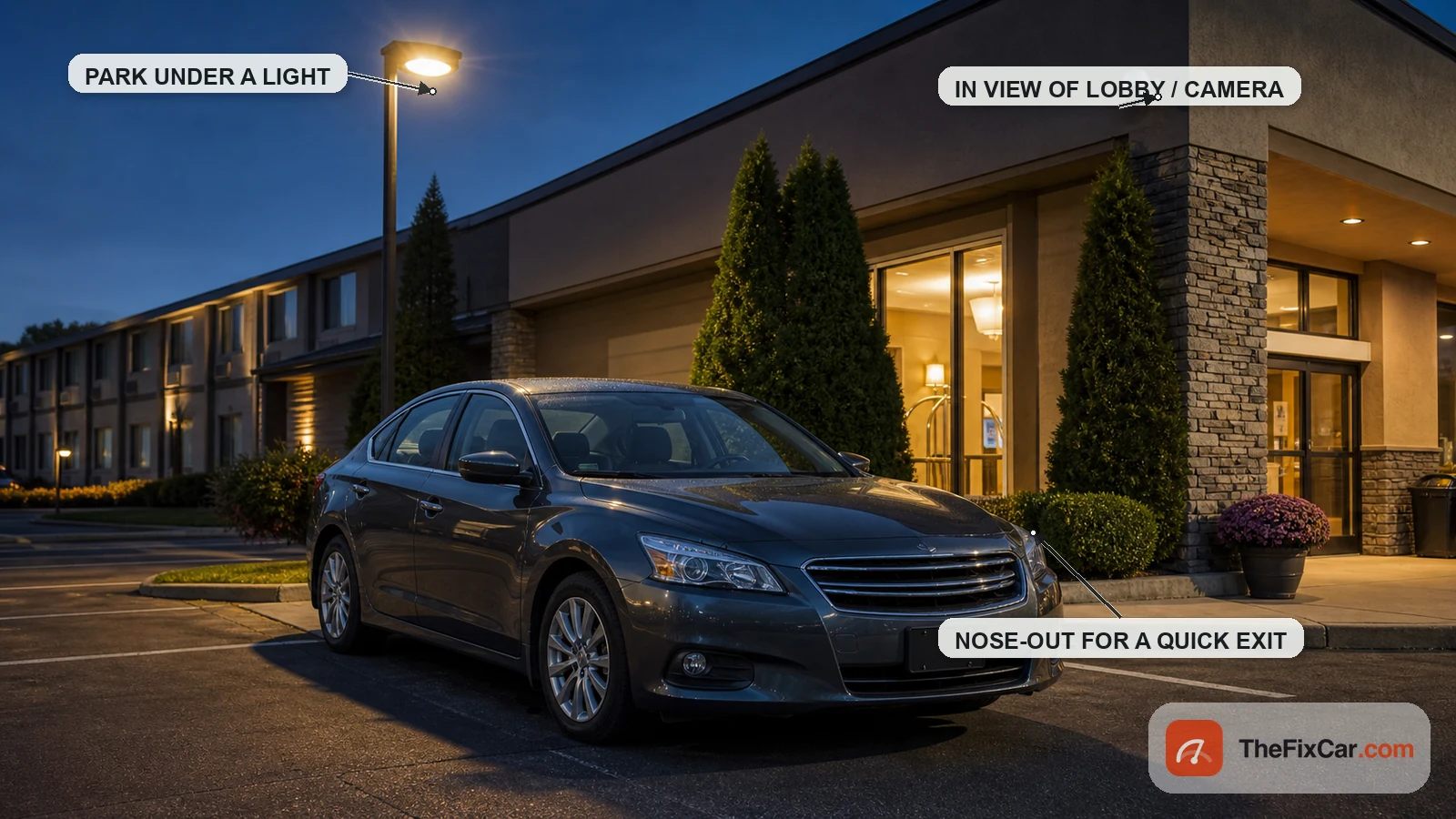
| 1. Pick the spot | Lit area within view of the lobby, a camera, or your room window |
| 2. Clear the cabin | Move bags and electronics to the trunk before you pull in, not in the lot |
| 3. Lock up | Doors locked, windows fully up, key fob with you |
| 4. Add a deterrent | A visible steering wheel lock or an active alarm |
| 5. Check before you go | Walk around the car in the morning: doors, glass, tires, under the car |
If a lot looks dark or isolated when you arrive, ask the front desk for a spot near the entrance. Staff would rather move you than file a report.
Where To Park: Condition and Safer Choice
| Situation | Safer choice |
|---|---|
| Lot is dark or out of camera view | Ask the desk for a spot near the entrance or under a light pole |
| Only street parking is available | Pick a busy, lit stretch and carry everything inside |
| Ground-floor room faces the lot | Park where you can see the car from your window |
| Truck, SUV, or hybrid with a high-value converter | Park against a wall or tight between cars to block underbody access |
| You arrive after dark in an unfamiliar area | Park near other cars and foot traffic, not in an empty far corner |
| Valet only | Hand over the valet key, take garage remotes, documents, and house keys |
Why This Matters
Overnight is when a parked car is least watched and most loaded. A traveler’s car often holds a week of luggage, a laptop bag, a phone mount, and a charging cable in plain view. Visible cords, mounts, bags, and boxes tell a thief there may be valuables inside. AAA’s theft-prevention guidance notes that many vehicle thefts involve cars that were left unlocked, so the cheapest fix is also the one people skip when they are tired after a long drive.
Converter theft raises the stakes on a trip. A thief with a battery saw can be gone in a couple of minutes, and you find out at 6 a.m. when the engine roars like a race car and you are nowhere near your own mechanic. Trucks, vans, and hybrids sit higher or carry pricier converters, so they get targeted more often, according to the National Insurance Crime Bureau.
Parking safety is not only a driver problem. Hotels, campuses, and city police departments treat it as a shared preparedness habit. The “9 PM Routine” (remove valuables, lock the car, turn on lights) spread across so many towns for that reason. A pre-trip checklist turns that local advice into a few decisions you make at every stop.
Safety Checklist
| Level | Items |
|---|---|
| Essential | Lit spot, empty cabin, locked doors, windows up, key fob with you |
| Better | View of a camera or your window, a visible wheel lock, a morning walk-around |
| Optional | Dash cam parking mode, converter shield or VIN etch, a slip of paper with the plate and VIN |
- Choose a lit, visible spot. Aim for a space under a working light and within sight of the lobby, a camera, or your room window. A space looks fine when the light actually reaches the car and people walk past.
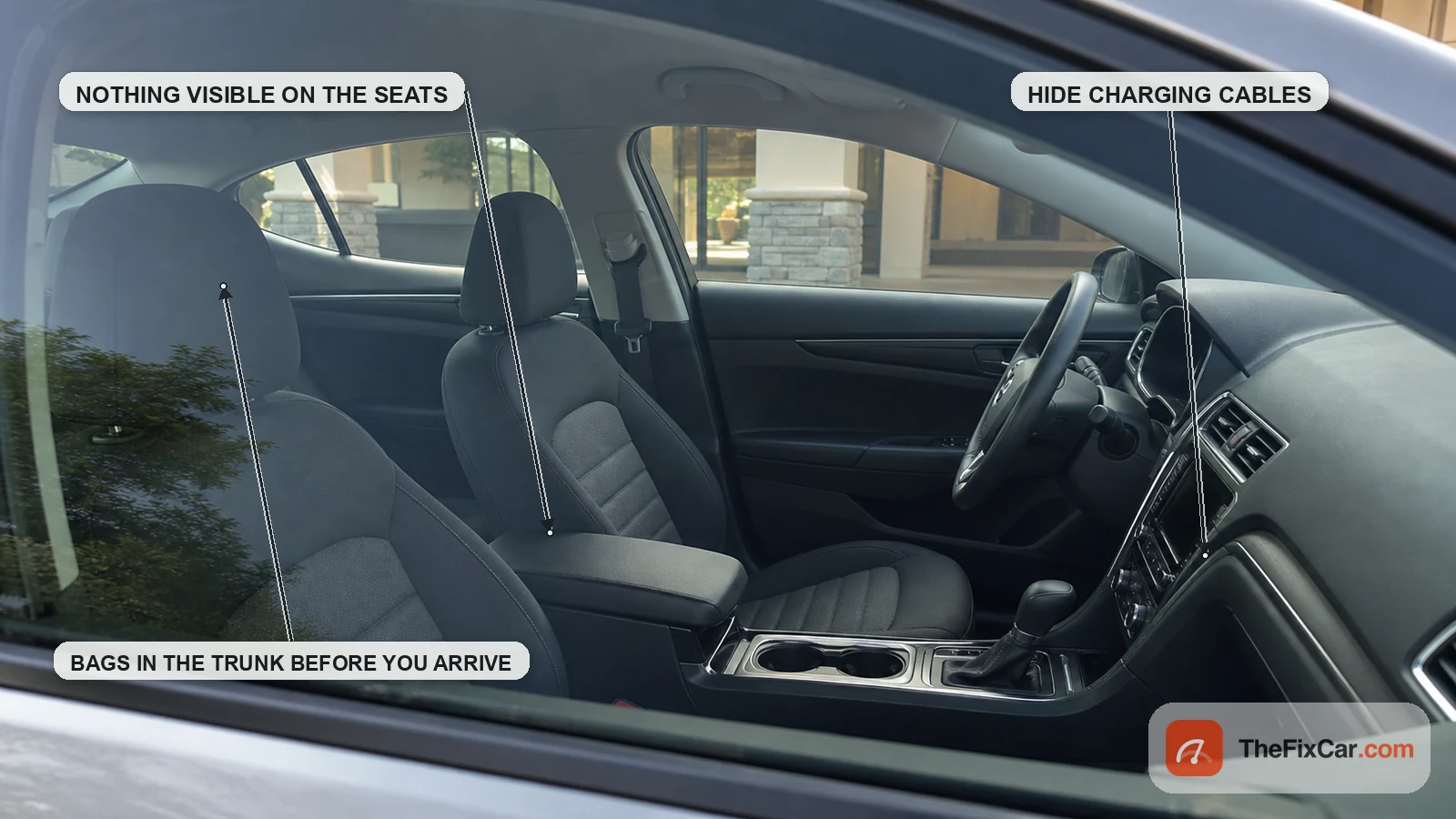
- Clear the cabin before you arrive. Move bags, laptops, and gifts to the trunk while you are still at a gas station or rest stop. Rearranging valuables in the hotel lot tells anyone watching exactly what is inside.
- Leave nothing on the seats. A jacket over a bag still reads as “something to grab.” Take the small high-value items to the room: phone, laptop, camera, documents, spare keys.
- Hide the cords. A dangling charger or a phone mount signals electronics even when the device is gone. Tuck cables into the glovebox or center console.
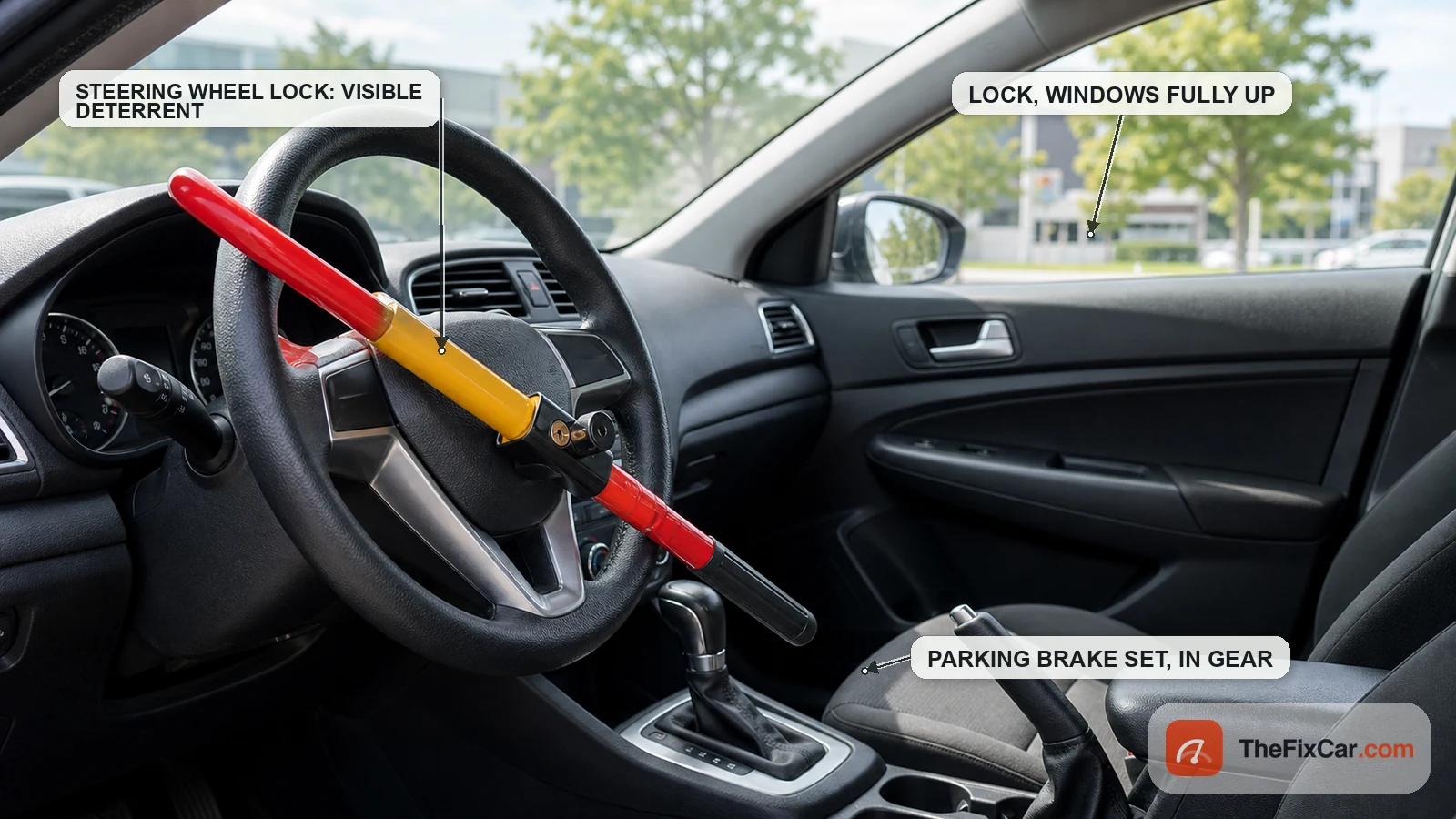
- Lock every door and close the windows. Confirm the locks with the handle, not just the fob chirp. A window cracked for air is an open invitation.
- Keep the key fob with you. Never leave a fob in the car or hidden on a tire. Store it away from the hotel room door in a metal tin or a signal-blocking pouch to reduce the chance of a relay attack.
- Add one visible deterrent. A steering wheel lock, a lit alarm LED, or a window decal all push a thief toward the easier car next to yours. Pick what you will actually use every night.
- Protect the converter when you can. On a truck, van, or hybrid, park tight against a wall or between vehicles so no one can slide under. A shield or an etched VIN adds a longer-term layer, per NICB guidance.
- Point the nose out. Backing in or pulling through lets you leave fast in the morning and gives a camera a clear plate view. It also keeps the trunk, a common target, away from the open lane.
- Note the plate and VIN. Keep a photo or a slip with your plate, VIN, and insurance number in your phone and your bag, not only in the glovebox that a thief empties.
- Use dash cam parking mode if you have it. A camera that records on impact or motion can catch a hit-and-run or a break-in. Confirm it will not drain the battery overnight before you rely on it.
What To Do Before Driving
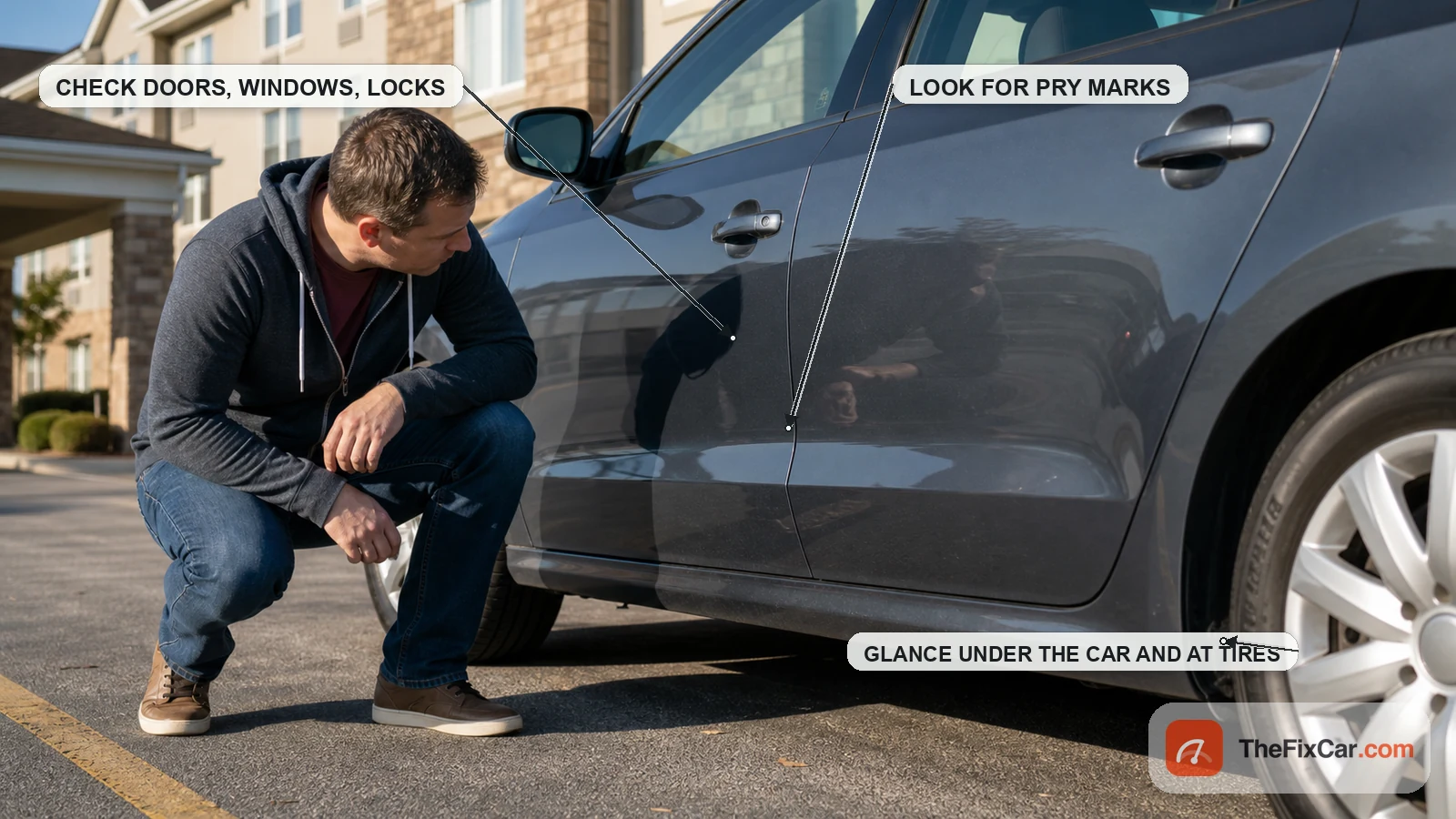
Give the car one slow lap in daylight before you load up and pull out.
- Walk around the whole car and look at every window and the windshield for cracks or pry marks near the seams.
- Check that all doors are still locked and nothing has been forced. A door that opens without the fob is a sign someone was in the car.
- Look into the cabin for anything moved, opened, or missing before you touch the handles.
- Glance under the car for fresh cuts, a hanging pipe, or a puddle. A missing catalytic converter shows up as a loud, deep exhaust the moment you start the engine.
- Scan the tires and wheels for a soft tire, missing valve caps, or loose lug nuts, which can happen in a lot overnight.
- Start the engine and listen. A sudden roar, a new rattle, or a warning light means stop and check before you merge onto the highway.
When Not To Drive Off
Some morning discoveries mean you should stop and deal with it, not just get in and go.
- Do not drive off if the exhaust suddenly roars or drones. That often means a stolen or cut catalytic converter. Driving without part of the exhaust can be loud, may expose occupants to exhaust fumes, and can trigger emissions or sensor faults; call roadside assistance if the exhaust is hanging, dragging, or fumes enter the cabin.
- Do not leave immediately if a window is broken or a door was forced. Photograph it, report it to the front desk and police, and file the insurance claim before you disturb the scene.
- Do not drive on a tire that went flat overnight until you know why. A slash or a pulled valve is different from a slow leak.
- Do not leave with loose or missing lug nuts. Re-torque to the owner’s manual spec or get it checked before highway speed.
- Do not continue the trip if you are too tired to drive safely. A theft scare plus a short night is a bad way to start a long day behind the wheel.
- Do not ignore a new warning light that appears at startup after the car sat all night. Read the code or have it scanned first.
Common Mistakes
- Sorting valuables in the hotel lot. Shifting bags to the trunk after you park shows watchers what is inside and where. Do it before you arrive.
- Trusting the fob chirp. A weak battery or a nearby jammer can stop the lock from engaging. Pull a handle to confirm every door.
- Parking in the quiet far corner. The empty end of the lot feels convenient, but it hands a thief privacy and no witnesses. A busy, lit row is safer even if it is a longer walk.
- Leaving the garage remote and registration in the car. Together they can point a thief at your empty house. Take the remote and keep documents on you.
- Assuming a covered garage is automatically safe. Enclosed hotel garages still see converter thefts and break-ins. The same rules apply: lit level, camera view, nothing visible.
- Skipping the morning check because you are in a hurry. Two minutes now beats a breakdown or a claim you learn about at 70 mph.
What To Keep In The Car
- A steering wheel lock. A visible deterrent that may make another car look easier.
- A small flashlight or headlamp. For the morning walk-around and for finding your row in a dark lot.
- A signal-blocking fob pouch. Blocks relay attacks that copy your key’s signal from inside the hotel.
- A written plate, VIN, and insurance card. Kept on you, not in the glovebox, so a report is fast if the car is hit.
- A basic road kit. A tire gauge, gloves, and a phone charger cover most morning surprises without adding a target to the seats.
Notes for Long Road Trips and EV Owners
On a multi-day trip, match the routine to the stop rather than the calendar. A busy interstate motel, a downtown garage, and a rural inn each call for a different spot, but the same three habits hold: light, visibility, and an empty cabin. If you tow a trailer or carry roof gear, lock the hitch and cables and take detachable electronics inside.
EV drivers who charge overnight should plug in at a lit, camera-covered station near the hotel entrance when possible, and lock the charge port if the car supports it. Keep the cabin screen from showing your home address or saved chargers on an unlocked car. Check your owner’s manual for the parking or sentry style camera mode and whether it is safe to leave on while the car charges.
Notes for Hotels and Property Owners
Hotel operators can reduce confusion by making parking details clear before guests arrive. Useful arrival information includes whether parking is on-site or off-site, paid or free, gated or open, lit at night, monitored by cameras, suitable for late check-in, and close enough for safe luggage unloading.
Frequently Asked Questions
Is hotel parking safe overnight?
It depends on the lot and how you park. Most hotel lots are reasonably safe, but overnight is when a loaded car is least watched, so treat any lot as a place to make your car a poor target. A lit spot near the entrance, an empty cabin, and locked doors handle most of the risk.
Where is the safest place to park at a hotel?
Under a working light and within view of the lobby, a security camera, or your own room window. Avoid the dark far corner even if it sits closer to your door. If the only open spaces are isolated, ask the front desk for a spot near the entrance.
Should I leave luggage in my car at a hotel?
Take small high-value items inside: laptops, cameras, documents, and spare keys. If you must leave larger bags, move them to the trunk before you arrive so no one watches you load them, and keep nothing visible on the seats. A bag left in view, even an empty one, is enough to invite a smash-and-grab.
How can I reduce catalytic converter theft risk at a hotel?
Park tight against a wall or between vehicles so no one can slide underneath, and pick a lit, camera-covered spot. Trucks, vans, and hybrids get targeted more often because they sit higher or carry pricier converters. A converter shield or an etched VIN adds a longer-term layer, per NICB guidance.