A failed inspection is one of the more avoidable reasons a registration renewal stalls. Most of what gets flagged is small: a burned-out bulb, a wiper that smears, a gas cap that never clicked shut. Those items are cheap to fix at home and expensive in wasted trips when a shop turns you away.
Inspection rules are not the same everywhere. Some states run an annual safety inspection, some require an emissions or smog test tied to registration, and some do neither for ordinary passenger cars. This checklist helps you get a car ready for whichever one applies to you, or for a used-car check before you buy.
It is a preparation checklist, not a state law guide. The point is to find obvious problems before inspection day and reduce the chance of a failed visit.
Quick Safety Answer
Before an inspection or emissions test, check the items a technician checks first:
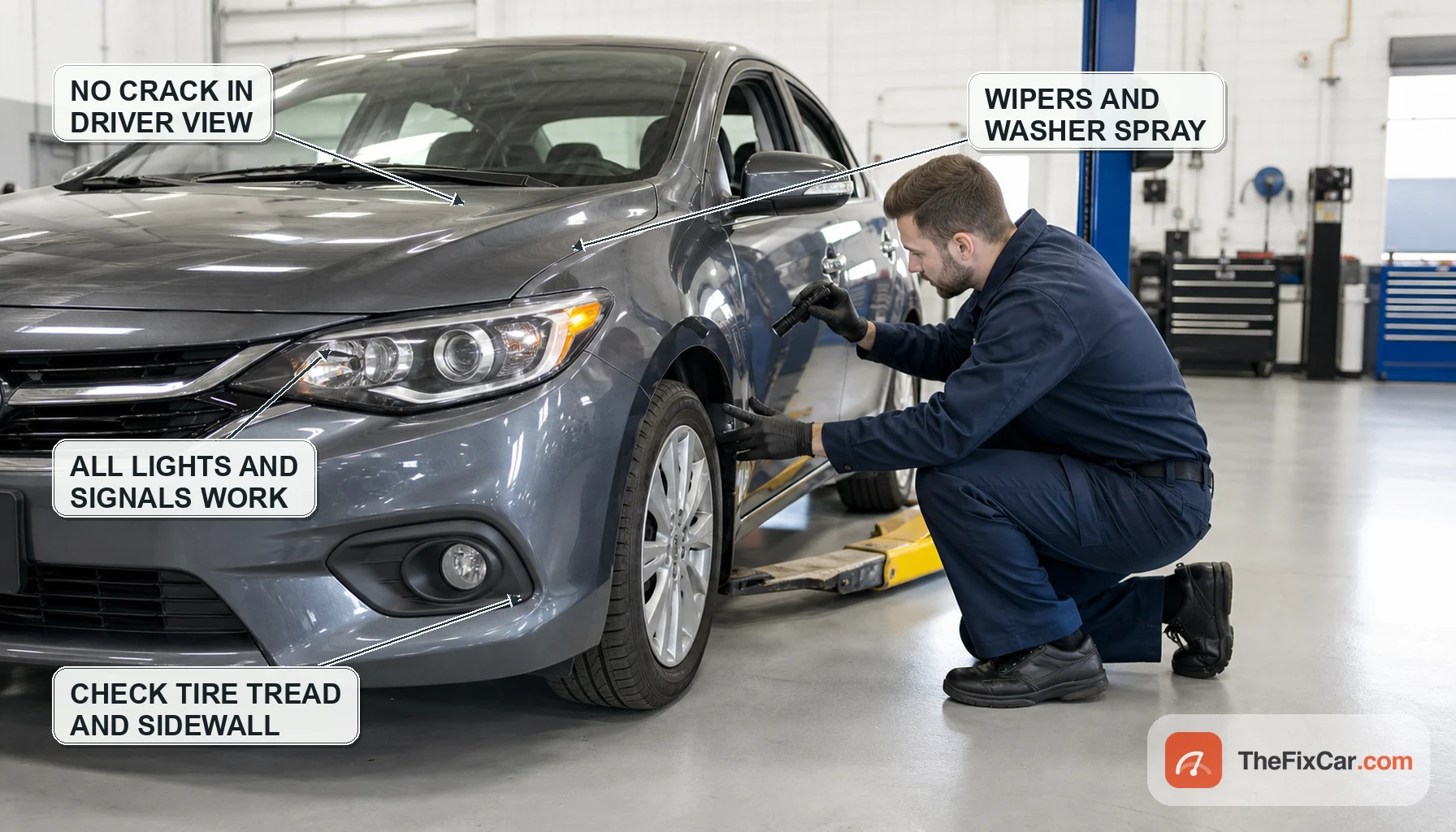
- Lights and signals: headlights, brake lights, turn signals, reverse, and plate light all working.
- Tires and brakes: legal tread depth, no cord showing, no grinding or pulling.
- Glass and wipers: no crack in the driver’s view, wipers that clear cleanly, washer fluid that sprays.
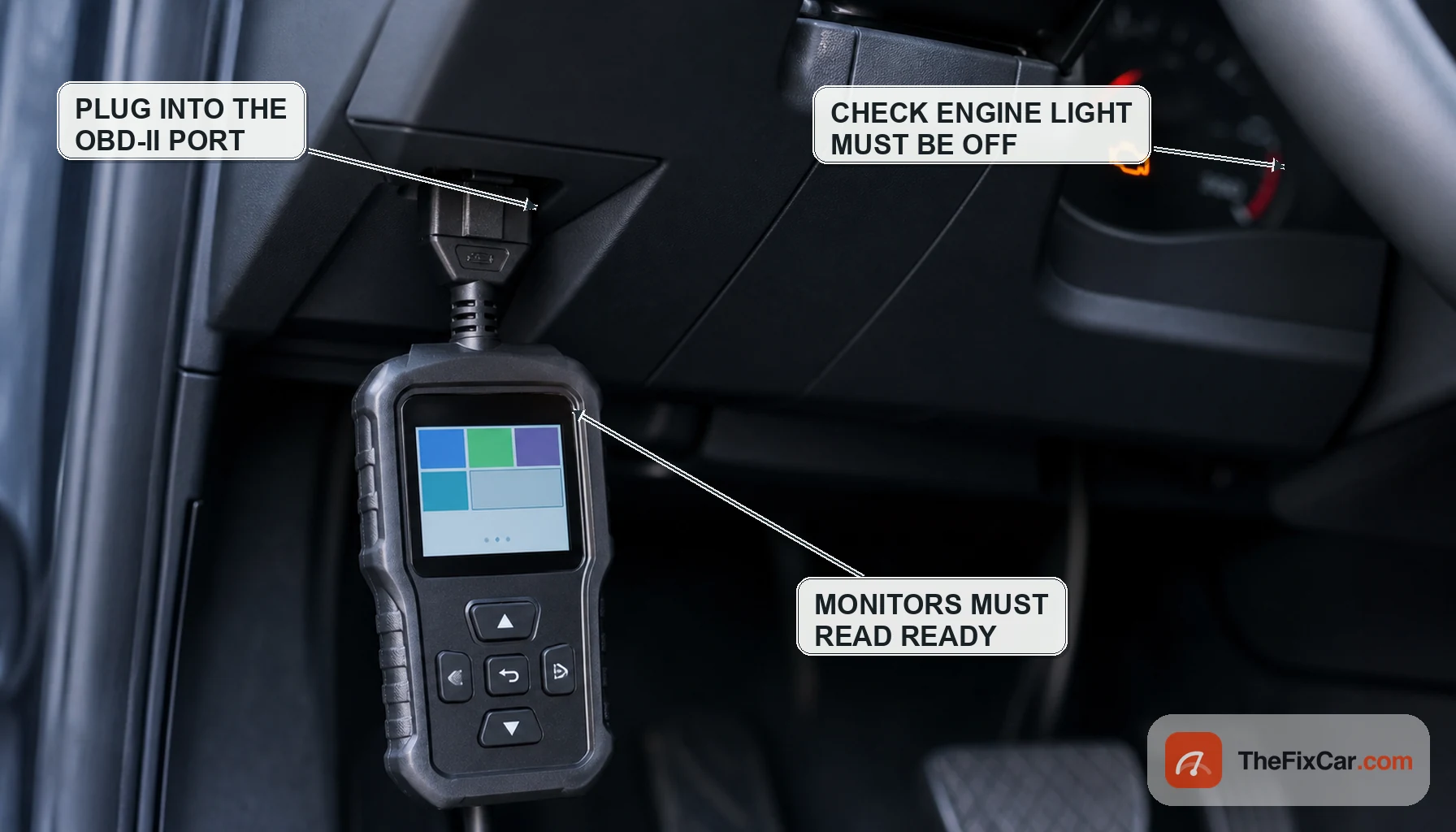
- Warning lights: no check engine light on, and OBD readiness monitors set to ready.
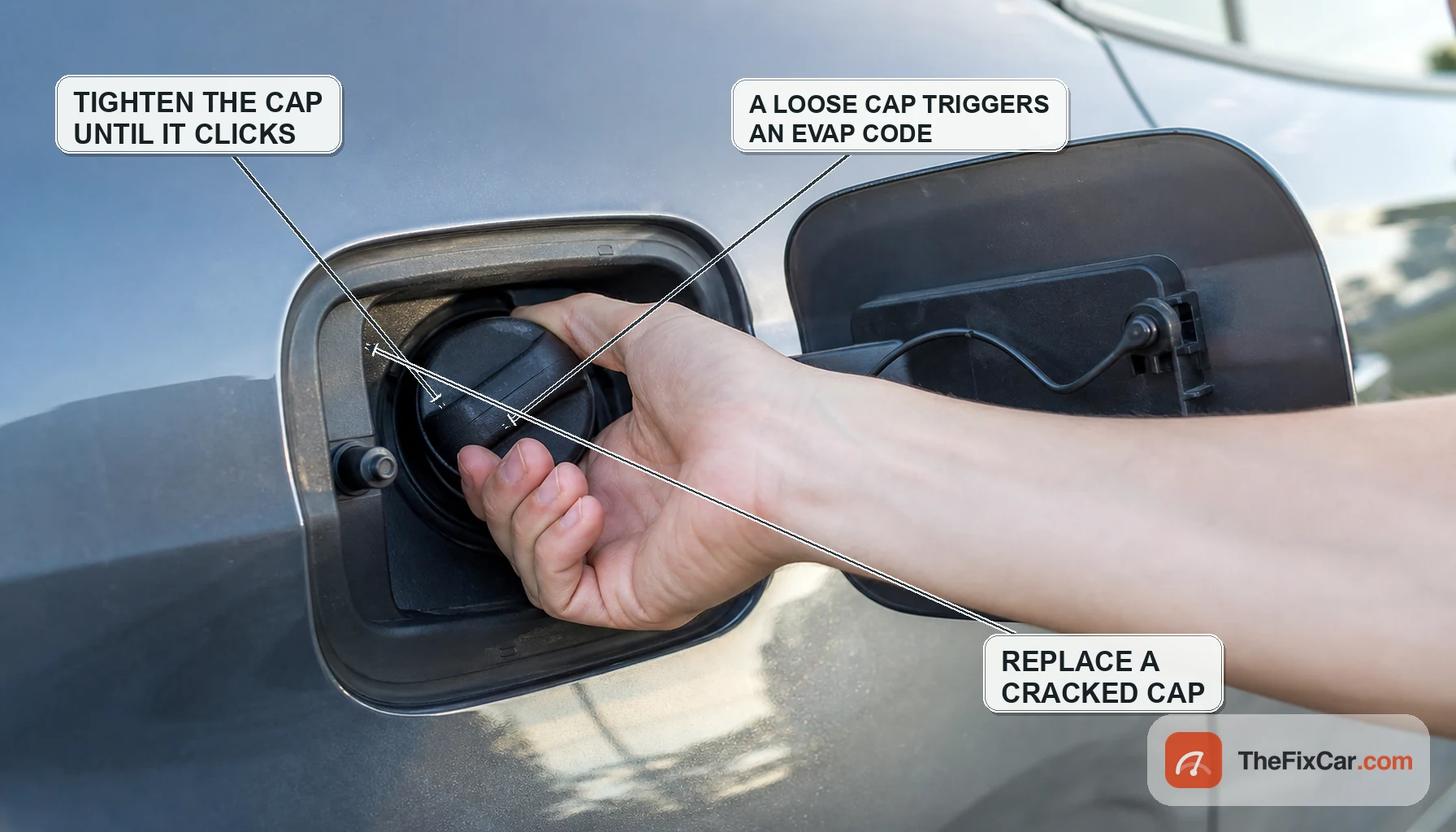
- Gas cap: tightened until it clicks, not cracked.
The U.S. has no single national inspection rule, so confirm what your state requires with your local DMV or inspection program before you go. A safety inspection and an emissions test are separate checks and a car can pass one and fail the other.
Does Every State Require a Vehicle Inspection?
No. Requirements vary by state, and sometimes by county, vehicle age, and fuel type. Some states require a periodic safety inspection, many require an emissions or smog check in certain metro areas, and several require nothing periodic for a standard gasoline car. For example, New York requires an annual safety inspection for every vehicle plus an emissions inspection in most counties, while other states require neither for an ordinary passenger car. New registrations, out-of-state transfers, and older or modified vehicles often follow different rules than a routine renewal.
Because programs change and differ by location, treat this as a preparation checklist, not a state law guide. Inspection rules vary by state, county, vehicle age, fuel type, and registration status. Always check your local DMV or inspection program before registration renewal so you know which test applies and what documents to bring.
Safety Inspection vs Emissions Test
These are two different checks with two different goals. Some states run one, some run both, and they can happen at separate locations.
| Safety inspection | Emissions / smog test |
|---|---|
| Confirms the car is roadworthy | Confirms the car meets emissions limits |
| Brakes, tires, and steering | Check engine light status |
| Lights, signals, and horn | OBD readiness monitors |
| Windshield, wipers, and mirrors | Catalytic converter and oxygen sensors |
| Seat belts and exhaust security | EVAP system and gas cap seal |
| Suspension and body condition | Exhaust leaks and emissions equipment present |
What Usually Fails a Safety Inspection
Most safety rejections come from a short list of worn or broken parts. Check these before you go.
- Worn tires. Tread below the legal limit, uneven wear, cord or belts showing, or cracked sidewalls. Old tires can fail on age and condition even with tread left, so check the DOT date code and overall tire age.
- Worn brakes. Thin pads, grinding, a low or soft pedal, or a car that pulls when stopping. If you are near the wear limit, handle it before the test: see the signs it is time to replace brake pads.
- Burned-out lights. A dead headlight, brake light, turn signal, reverse light, or plate light. This is the single most common easy fail.
- Cracked windshield. A crack or chip in the driver’s line of sight, or wiper-swept area, usually fails even when the rest of the glass is fine.
- Bad wipers. Blades that streak, skip, or leave the driver’s view smeared, plus washer fluid that does not spray.
- Horn not working. Small, easy to forget, and a required item in many programs.
- Loose steering or suspension. Play in the steering, worn ball joints or tie rod ends, or clunks over bumps.
- Missing or damaged mirrors. A missing side mirror or a broken rear-view mirror.
- Seat belt problems. A belt that will not latch, retract, or is frayed.
- Exhaust leaks. A loud or leaking exhaust, or parts hanging loose.
What Usually Fails an Emissions Test
An emissions or smog test reads the car’s own systems, so the failures look different from a safety inspection.
- Check engine light on. An illuminated light is an automatic fail in most programs, no matter how the car runs. Fix the cause first: a flashing light in particular means stop and diagnose, as explained in our guide to a flashing check engine light.
- OBD readiness monitors not ready. After a battery disconnect or a cleared code, the car needs a normal drive cycle to reset its self-tests. Show up too soon and the tester cannot verify the systems.
- Failed oxygen sensor. A worn sensor throws codes and can push emissions out of range.
- EVAP leak or loose gas cap. A cap that is loose, worn, or cracked commonly sets an evaporative-system code.
- Catalytic converter efficiency code. A catalyst-efficiency code means the exhaust cleanup system is not passing its self-test. The converter is one possible cause, but exhaust leaks, sensor faults, or engine problems should be diagnosed before replacing it.
- Engine misfire codes. Misfires raise emissions and can trigger a failure, sometimes with a flashing warning light.
- Modified or missing emissions equipment. A removed converter, deleted components, or tampered equipment fails on inspection of the hardware itself.
What to Check Before You Go
Run this walk-through a day or two before your appointment, so there is time to fix anything small. Sort it into three tiers.
| Level | Items |
|---|---|
| Essential | Items that fail the most inspections and are quick to check |
| Better | Items worth confirming so nothing surprises you at the lane |
| Optional | Extra steps for older cars, used-car buys, or emissions areas |
Essential
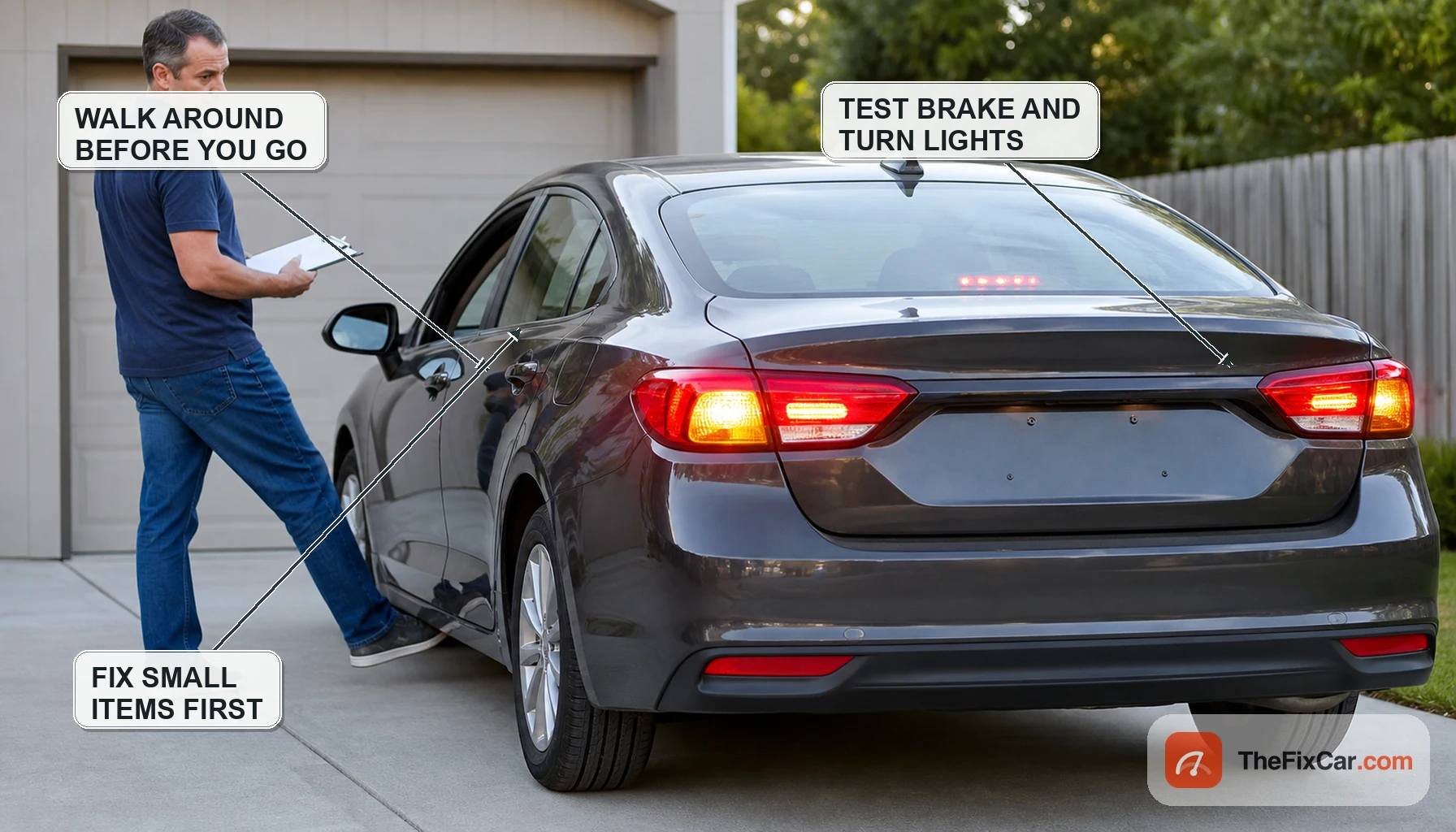
- Walk around every light. With a helper or against a wall or window, test headlights (low and high), brake lights, all turn signals, reverse, and the plate light. Replace any dead bulb.
- Check tire tread and condition. Use the penny or tread-wear-bar check, look for uneven wear, and check the sidewalls for cracks or bulges. Many U.S. inspections use 2/32 inch as the minimum legal tread depth, but replace tires before they reach the wear bars. Set tire pressure to the door-jamb sticker value.
- Diagnose the check engine light. If it is on, have the code read and the cause fixed before the test. Do not just clear the code and drive in, since the readiness monitors will not be set.
- Tighten the gas cap. Turn it until it clicks, and replace it if the seal is cracked or worn.
- Test the wipers and washer. Confirm the blades clear the glass without streaking and the washer sprays. Swap worn blades.
Better
- Confirm OBD readiness. If the battery was recently disconnected or a code was cleared, drive a mix of city and highway for a few days so the monitors reset. A cheap OBD-II reader can confirm they show ready. If a monitor stays incomplete after several normal trips, look up the model-specific drive cycle or diagnose the fault instead of continuing to clear codes.
- Listen to the brakes. Grinding, squealing, a soft pedal, or pulling to one side all point to work needed before the test.
- Check the horn, mirrors, and seat belts. Sound the horn, confirm both side mirrors and the rear-view are present and solid, and latch every belt.
- Look for a cracked windshield. A chip or crack in the driver’s view is a common fail. A repair or replacement may be needed first.
Optional
- Older or high-mileage cars. Check for exhaust leaks and any loose underbody parts, which are more likely with age.
- Used-car buy. Use the same checklist as a buyer, and treat a car that cannot pass inspection as a price and safety issue, not a formality.
What to Bring
Before you leave, gather the documents your inspection program requires. Depending on the state and station that can include your registration, proof of insurance, the renewal notice, prior inspection paperwork, a payment method, and any emissions notice you were mailed. Requirements vary, so check the appointment page or your DMV instructions before you drive over.
When to Fix It Before You Drive, Not Just Before the Test
Some failing items are safety problems the moment you notice them, not only when a shop stamps the form. Do not keep driving normally, and get the car repaired first, if:
- The brakes grind, the pedal sinks to the floor, or the car pulls hard when stopping.
- A tire shows cord or steel belts, has a bulge, or is losing pressure fast.
- The check engine light is flashing, which points to an active misfire that can damage the catalytic converter.
- Steering feels loose or a wheel clunks, which can signal a worn suspension part.
- Headlights or brake lights are out at night, leaving you hard to see and hard to predict.
Common Mistakes
- Clearing the code right before the test. Erasing a check engine code resets the readiness monitors, and the car fails for “not ready” instead. Fix the fault, then drive enough to let the monitors set.
- Assuming a safety pass covers emissions. They are separate checks. A car with perfect brakes and lights can still fail on a converter code or a loose gas cap.
- Ignoring the gas cap. A cap left loose after fueling is one of the most common and cheapest emissions fails, and it can turn on the check engine light on its own.
- Waiting until the renewal deadline. Booking on the last day leaves no room to fix a burned-out bulb or a worn wiper and retest in time.
- Guessing at the rules. Programs differ by state and county. Confirm what applies before you drive across town to the wrong kind of station.
Typical Fix Costs Before Inspection
Costs vary by vehicle, labor rate, and state program, but the common pre-inspection fixes usually fall into these ranges (U.S. estimates):
| Fix | Typical cost |
|---|---|
| Bulb replacement | $5 to $40 DIY, $30 to $100 installed |
| Wiper blades | $15 to $60 per pair |
| Gas cap | $10 to $35 |
| OBD code scan | $0 to $150 |
| Brake pads and rotors | $250 to $700 per axle |
| One tire, installed | $100 to $300 |
| Windshield chip repair | $50 to $150 |
| Windshield replacement | $250 to $1,000 or more |
Many auto parts stores read OBD codes for free, and a chip repair is far cheaper than a full windshield, so handle the small items early.
Common Questions
Can you pass an emissions test with the check engine light on? Usually no. An illuminated check engine light is an automatic fail in most emissions programs, regardless of how the car drives. Diagnose and fix the cause, then let the readiness monitors reset before testing.
Will bad tires fail a safety inspection? Yes. Tread below the legal limit, exposed cord or belts, bulges, or deep sidewall cracks are common safety rejections. Tire age and condition can matter even with tread remaining.
Will a cracked windshield fail inspection? Often, if the crack or chip is in the driver’s line of sight or the wiper-swept area. Damage low in the passenger corner is more likely to pass, but rules vary by state.
What lights are checked during an inspection? Typically headlights (low and high beam), brake lights, turn signals, hazard lights, reverse lights, and the license plate light. A single dead bulb can fail the check.
How do I prepare for an emissions test after replacing the battery? A battery disconnect clears the OBD readiness monitors. Drive a normal mix of city and highway trips for several days so the monitors reset to ready, then test.
What are OBD readiness monitors? They are the car’s own self-tests for emissions systems. The tester checks that enough of them show “ready,” which is why a recently cleared or disconnected car can fail even with no light on.
Driver education programs, fleet and campus safety offices, and community groups can share this as a plain-language reference for getting a car ready to pass inspection.