A first aid kit is the one piece of car safety gear you hope never to open, and the one that matters most when you do. Roadside injuries, small cuts during a trip, a scraped knee at a rest stop, or the minutes before an ambulance arrives after a crash all call for supplies you either have on hand or do not.
Most drivers either carry no kit at all or carry a gas-station box of assorted bandages that has been baking in the trunk for three summers. Neither helps much in a real situation. A useful kit is chosen on purpose, checked twice a year, and stored where you can reach it without unloading the cargo area.
This checklist covers what to pack, how to sort essentials from nice-to-haves, where to keep the kit, and the situations where a kit is not the answer and calling 911 is.
Quick Safety Answer
A car first aid kit should cover bleeding, wounds, and minor burns for two to four people. At a minimum pack: adhesive bandages in several sizes, sterile gauze pads, a roller bandage, medical tape, antiseptic wipes, nitrile gloves, trauma shears, tweezers, and a foil emergency blanket. Add any personal medications your household depends on. Check expiry dates and restock used items twice a year, and store the kit in the cabin or an easy-reach part of the trunk, not buried under luggage. A kit handles minor injuries and buys time in serious ones. It does not replace emergency medical care: for heavy bleeding, chest pain, head injury, or an unresponsive person, call 911 or your local emergency number first.
What to Pack: The Full Checklist
Here is what belongs in a car first aid kit. Sort it into three tiers: build the Essential layer first, then add the others based on how far you drive and who rides with you.
| Level | Items |
|---|---|
| Essential | Bleeding, wound, and burn basics every car should carry |
| Better | Items that cover more injuries and more people |
| Optional | Worth adding for long trips, rural driving, or specific medical needs |
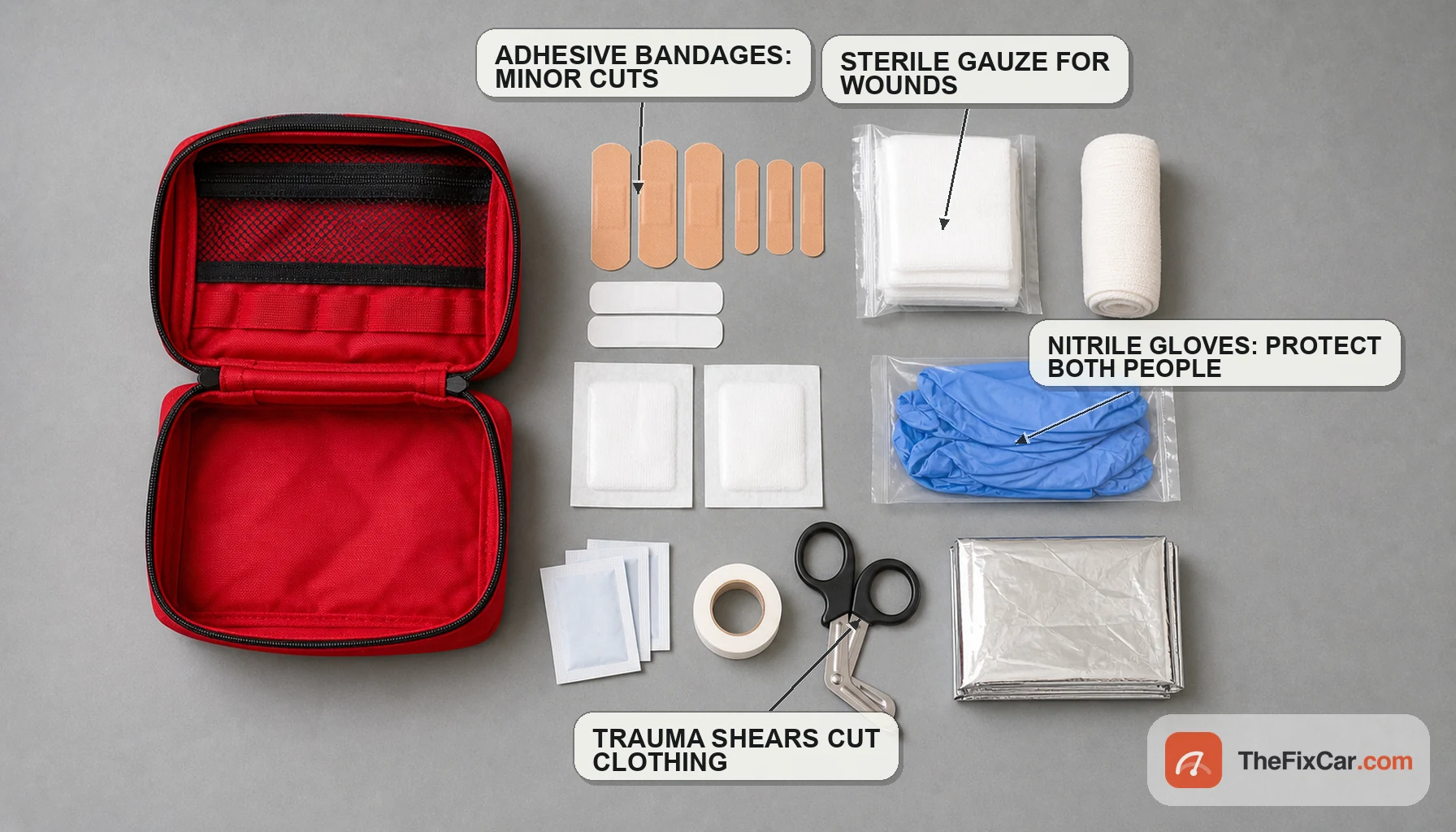
Essential
- Adhesive bandages, assorted sizes. For minor cuts and blisters. Pack a mix of small, large, and knuckle shapes. If the box is yellowed or the adhesive is stiff, replace it.
- Sterile gauze pads and a roller bandage. Gauze covers larger wounds and soaks up blood; the roller bandage holds it in place or adds pressure. Look for individually sealed packs, not a loose roll.
- Medical tape. Holds gauze and dressings. A pass looks like tape that still sticks firmly to itself when you unroll a bit.
- Antiseptic wipes or solution. To clean around a wound before covering it. Sealed single-use packets survive car storage better than a bottle. If a packet feels dry through the wrapper, toss it.
- Nitrile gloves. One or two pairs. They protect both you and the injured person. Nitrile avoids the latex allergy problem.
- Trauma shears and tweezers. Shears cut away clothing to reach an injury; tweezers remove splinters and debris. Blunt-tip shears are safer to keep loose in a kit.
- Foil emergency blanket. Helps hold body heat for someone in shock or stranded in the cold. It weighs almost nothing and packs flat.
Better
- Burn gel or burn dressing. Useful after cooling a minor burn with water. Do not use butter, ice, or ointment on a fresh burn.
- Elastic (compression) bandage. For a sprained ankle or wrist, common on rest-stop stairs and hikes.
- Instant cold pack. Reduces swelling for bumps and sprains without needing a freezer.
- Antibiotic ointment packets. A thin layer helps keep a cleaned minor wound from drying out. Check the expiry, since these degrade.
- Pain and allergy medication. Basic pain relievers and antihistamines. Keep medications in original labeled containers, check storage temperatures on the label, and do not leave heat-sensitive medicine in a hot car. Confirm dosing for anyone who might take them.
- A small first aid guide card. A printed reference for steps you may not remember under stress.
Optional
- Tourniquet and hemostatic (bleeding-control) dressing. For severe bleeding on long or remote drives. Get brief training before you rely on either, since misuse can cause harm.
- Personal prescription supplies. A spare inhaler, an epinephrine auto-injector, or glucose tablets if someone in the household needs them. Follow the storage temperature on the label. For epinephrine auto-injectors, inhalers, insulin, and similar medicines, carry them with you when the parked car may get hot or cold.
- Extra items for children. Smaller bandages, a digital thermometer, and any pediatric medication doses your family uses.
- Hand sanitizer and a resealable bag. For cleaning up and for sealing used or soiled supplies until you can dispose of them.
When a Kit Handles It and When to Call for Help
| Situation | Safer response |
|---|---|
| Small cut, scrape, or blister | Clean, cover, and monitor with kit supplies |
| Minor burn from a hot engine part or spilled coffee | Cool under running water for 20 minutes, remove tight jewelry or clothing near the burn if it is not stuck, then cover loosely |
| Nosebleed or splinter | Manage with gauze, tweezers, and pressure |
| Bleeding that soaks through a dressing | Apply firm pressure and call 911 |
| Head injury, confusion, or fainting | Call 911, do not drive the person yourself |
| Chest pain, trouble breathing, or an unresponsive person | Call 911 immediately. Start CPR only if the person is unresponsive and not breathing normally, or if a dispatcher tells you to |
Why This Matters
Help is rarely instant. In a city an ambulance may reach you in several minutes, and on a rural highway it can take much longer. Those minutes are when direct pressure on a wound, a clean dressing, or simply keeping someone warm and calm makes the biggest difference. A kit does not turn a driver into a paramedic, but it turns “I have nothing” into “I can do something useful right now.”
The cost of skipping it is not always dramatic. More often it is a long road trip with a crying child and no way to clean and cover a scraped knee, a blister that turns a hike sour, or an allergic reaction with the antihistamine sitting at home. A first aid kit is a household and community preparedness item as much as a driving one: keeping one in the car turns a general intention to “be ready” into supplies that are actually with you when and where something happens.
How To Build and Maintain the Kit
- Start with a sealed, purpose-made first aid kit or a durable zip case. A red case with a cross is easy to spot in a hurry.
- Add the Essential items above, then the Better and Optional items that match your trips and passengers.
- Add any personal medications and a small card listing them, plus emergency contacts and allergies.
- Write the current date and your next check date on tape inside the lid.
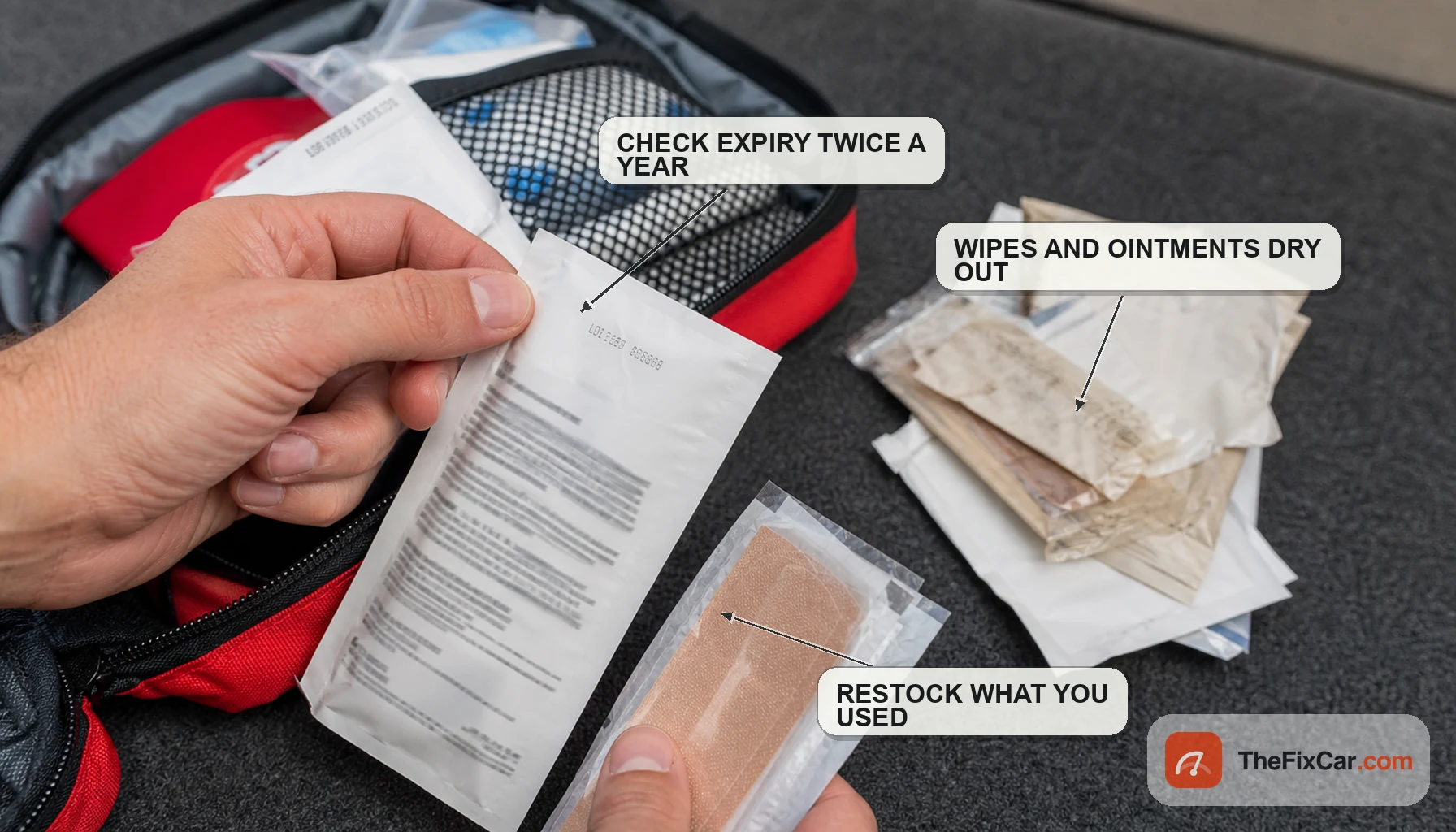
- Twice a year, open the kit, check every expiry date, and replace anything expired, dried out, or used. A good time to do it is when you change your clocks.
- After using anything from the kit, restock it that week rather than “later,” which usually means never.
When Not To Drive: Call 911 Instead
A first aid kit is for stabilizing minor injuries and buying time, not for deciding to skip professional care. When any of the conditions below apply, call 911 or your local emergency number before anything else. Do not load an injured person into your car and drive to a hospital when the situation calls for trained responders and equipment you do not have.
- Do not drive someone with a suspected spine, neck, or serious head injury. Moving them can make it worse. Call 911 and keep them still.
- Do not drive a person with chest pain, sudden weakness on one side, slurred speech, or trouble breathing. These need an ambulance, not a passenger seat.
- Do not try to drive yourself if you are the one injured, dizzy, or in shock. Pull over, call for help, and stay put.
- Do not drive to “save time” when bleeding will not stop with firm pressure. Call 911 and keep applying pressure.
- Do not move a crash victim who is not in immediate danger where they are. Let responders assess and move them unless there is fire or another urgent threat.
- Do not delay the call to search for supplies. Call first or have someone else call while you begin first aid.
Common Mistakes
- Buying once and forgetting it. Antiseptic wipes dry out, ointments expire, and adhesive fails with heat. A kit you never check can be full of items that no longer work when you open it.
- Storing it where you cannot reach it. A kit under the spare tire or beneath a loaded trunk is useless in the seconds you need it. Keep at least a small kit in the cabin.
- Packing gadgets instead of basics. A fancy multi-tool does not stop bleeding. Prioritize gloves, gauze, tape, and bandages over novelty items.
- Skipping gloves. Many people leave gloves out to save space, then hesitate to help because of blood contact. Gloves protect everyone and cost almost nothing.
- Assuming one kit fits everyone. A kit sized for one adult falls short for a family road trip. Match the quantity to how many people usually ride with you.
For Fleet, Campus, and Field Vehicles
For shared cars, campus vehicles, outreach vans, field trucks, and any fleet vehicle used by more than one driver, treat the first aid kit as part of the vehicle readiness check. Keep the kit in the same location in every vehicle, mark the outside of the case clearly, and add a short inventory card inside the lid so any driver can see what belongs there.
Assign one person or team to check expiry dates, restock used items, and replace heat-damaged supplies on a set schedule. For field or rural work, add extra gloves, gauze, a foil blanket, hand sanitizer, a resealable waste bag, and a printed emergency contact card. Temperature-sensitive personal medications should not be left permanently in a parked vehicle unless the label allows that storage condition.
What Not to Leave in a Hot Car
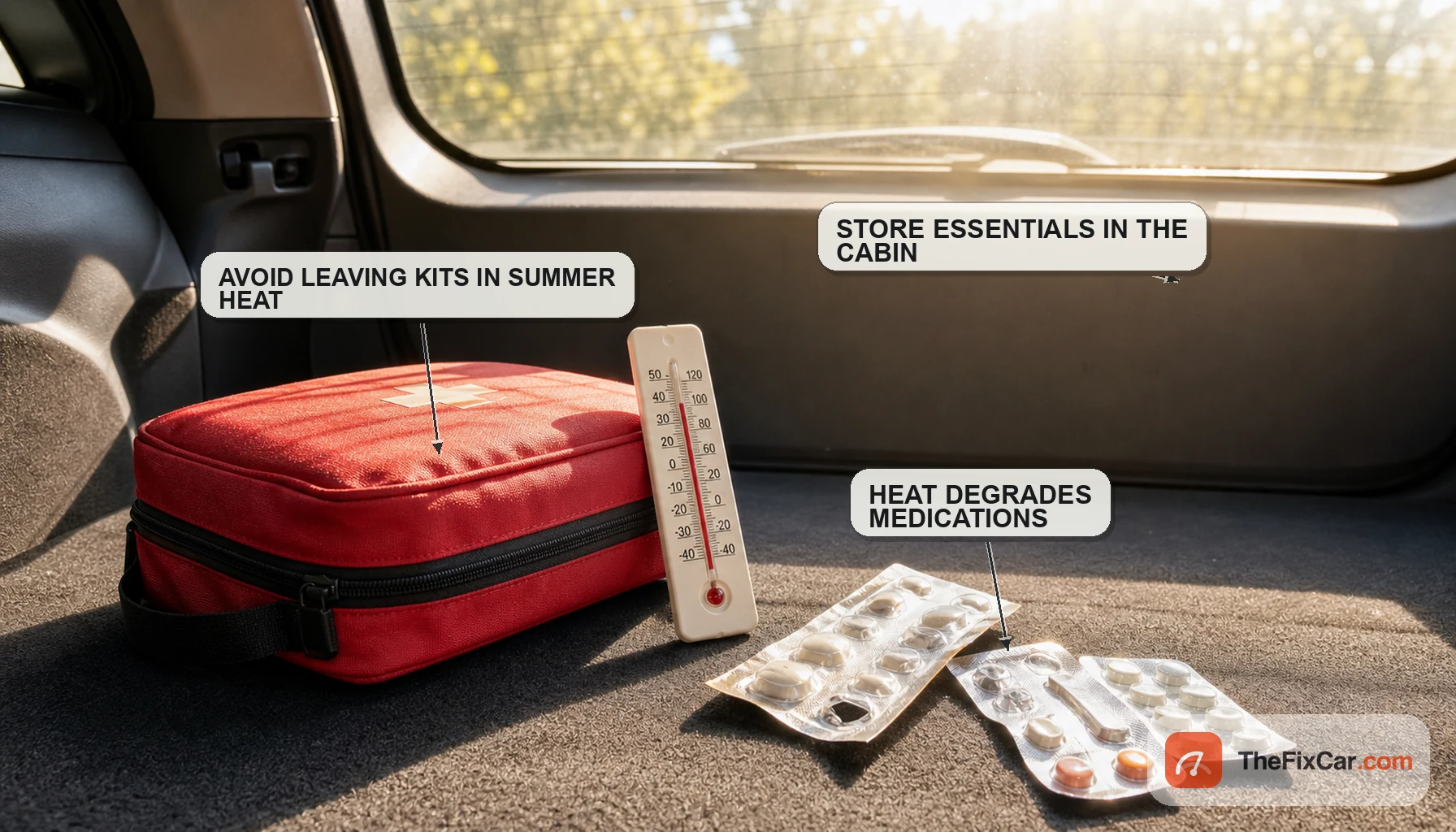
Do not treat the trunk as a medicine cabinet. Heat degrades adhesives, dries out wipes, and shortens the useful life of ointments and some medications. Keep the durable basics such as bandages, gauze, gloves, shears, and a foil blanket in the vehicle year round, but carry heat-sensitive prescriptions, epinephrine auto-injectors, inhalers, insulin, and similar items with you unless the label allows in-vehicle storage. In summer a parked trunk runs far hotter than the cabin, so move antiseptic and medications to the passenger area or take them inside.
Where to Keep the Kit
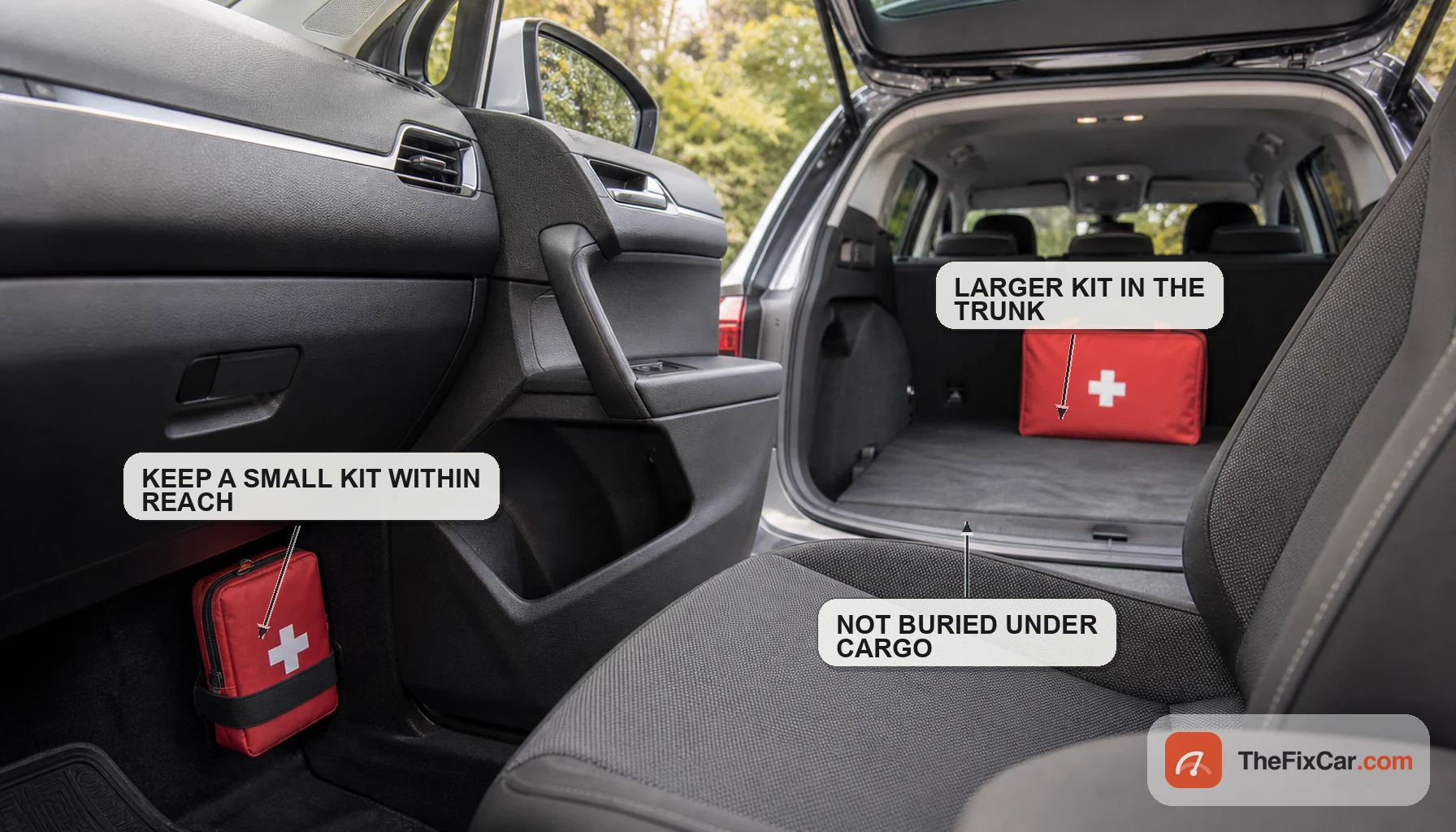
Keep a compact kit in the cabin, in a door pocket, seat-back organizer, or under a front seat, so you can reach it without leaving the car or unloading anything. A larger kit can live in the trunk for restocking and bigger jobs, as long as it sits on top and is not buried under cargo. Whatever spot you choose, use it consistently so the kit is where you expect it in a hurry.
Common Questions
What should be in a basic car first aid kit? Adhesive bandages, sterile gauze, a roller bandage, medical tape, antiseptic wipes, nitrile gloves, trauma shears, tweezers, and a foil blanket cover most minor injuries. Add personal medications your household needs.
How often should I check or replace it? Check every item twice a year and after any use. Replace anything expired, dried out, or used. Ointments, wipes, and medications are the first to go bad.
Is a store-bought kit good enough? A pre-made kit is a fine starting point, but most are light on gauze and gloves and rarely include your personal medications. Treat it as a base and add to it.
Where is the best place to store it? A small kit in the cabin within arm’s reach, and a larger kit on top of the trunk load. Keep heat-sensitive items out of a hot trunk.
Do I need a tourniquet? For everyday driving, direct pressure handles most bleeding. A tourniquet and bleeding-control dressing are worth adding for long or remote trips, but get brief training first so you can use them correctly.
This guide is written as a plain-language companion resource for driver education programs, campus and workplace safety offices, and community preparedness outreach.