Freezing rain coats the road, bridges, and your windshield with a layer of clear ice that offers almost no grip. Freezing rain is especially dangerous for drivers because the resulting ice is difficult to see and can form before crews treat the road.
This checklist is for anyone who has to decide whether to drive when freezing rain is in the forecast or already falling. It covers what to prepare before you leave, how to handle the car if you must go, and the conditions where the right call is to stay put.
Quick Safety Answer
When a freezing rain or ice storm warning is in effect, the safest choice is to delay the trip until roads are treated and temperatures rise. If you have to drive, clear all ice from the glass, lights, and roof, slow down well below the limit, and leave several car lengths of space. Avoid sudden steering, braking, or acceleration, since any quick input can break traction on ice. Treat every bridge and overpass as ice, because they freeze before the road does. If the car begins to slide, look where you want to go, ease off the accelerator, avoid abrupt steering, and let the tires regain grip. Pull over and stop once you can do so smoothly, and stop sooner if you cannot keep the windshield clear.
When to Drive, Delay, or Stop
Match the forecast or what you see on the road to the safer choice.
| Forecast or condition | Safer decision |
|---|---|
| Freezing rain possible later | Finish errands early and avoid optional evening trips |
| Freezing rain falling now | Delay non-essential travel |
| Ice storm warning active | Stay off the road unless travel is urgent |
| Windshield will not stay clear | Stop driving and wait |
| Car slides at low speed | Turn around or find a safe place to wait |
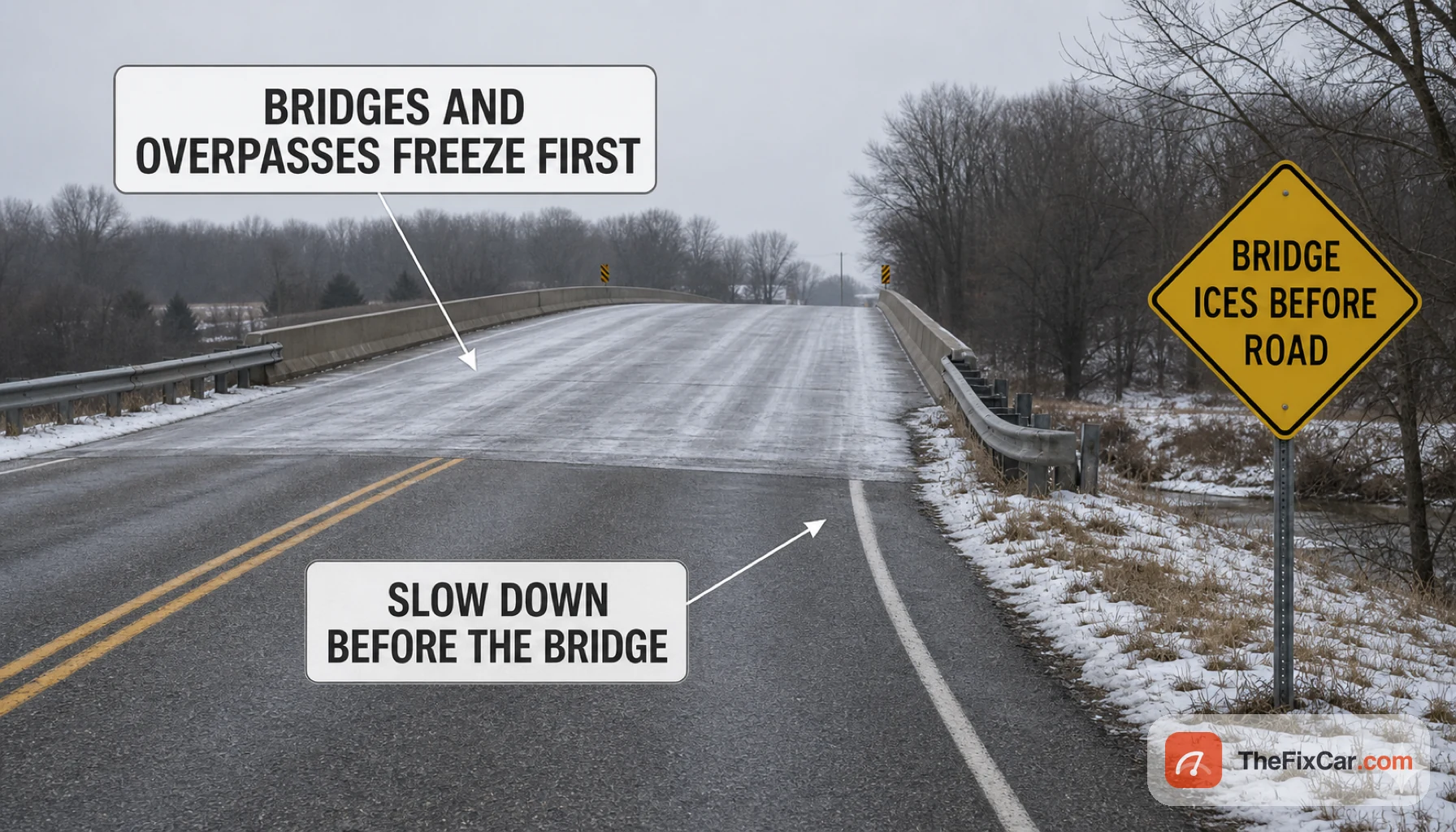
| Untreated bridge or overpass ahead | Slow before the bridge and avoid braking on it |
Why This Matters
On snow and ice, tires have far less grip and stopping distances grow well beyond what they are on dry pavement, which is why federal winter-driving guidance stresses slowing down and leaving extra space. A thin glaze of freezing rain can leave tires with so little grip that gentle braking still slides the car forward. Black ice from the same storm is nearly invisible, so a road that looks merely wet can be frozen.
Bridges, overpasses, and shaded spots freeze first because cold air reaches them from below as well as above. Drivers who keep highway speed onto an icy bridge often lose control where they least expect it.
Freezing rain is not only a driving problem; it is also a household and community preparedness issue. Climate and emergency-planning resources can explain where freezing rain risk is changing, while a driver checklist helps residents turn that risk into practical decisions before a trip: whether to delay travel, how to prepare the vehicle, and when to stop driving.
Safety Checklist
| Level | Items |
|---|---|
| Essential | Cleared glass, working defroster and wipers, winter washer fluid, good tires, fuel or charge, lights |
| Better | Charged phone, ice scraper and brush, emergency kit, traction aids, someone who knows your route |
| Optional | Small shovel, sand or cat litter, extra blanket and water for rural or long trips |
- Tires. Check tread depth and set the pressure to the door-jamb spec; cold air lowers pressure, so top up if the warning light is on. Worn or underinflated tires lose grip first on ice.
- Windshield washer fluid. Use a winter formula rated for sub-freezing temperatures with a de-icer. Summer fluid can freeze on the glass and blind you.
- Wipers. Replace blades that streak or chatter. If the owner’s manual permits it, place the wipers in their service position before a storm; do not force the arms up if they tuck under the hood edge.
- Defroster and rear defogger. Confirm both clear the glass quickly. A weak defroster leaves you driving through a fogged or iced window.
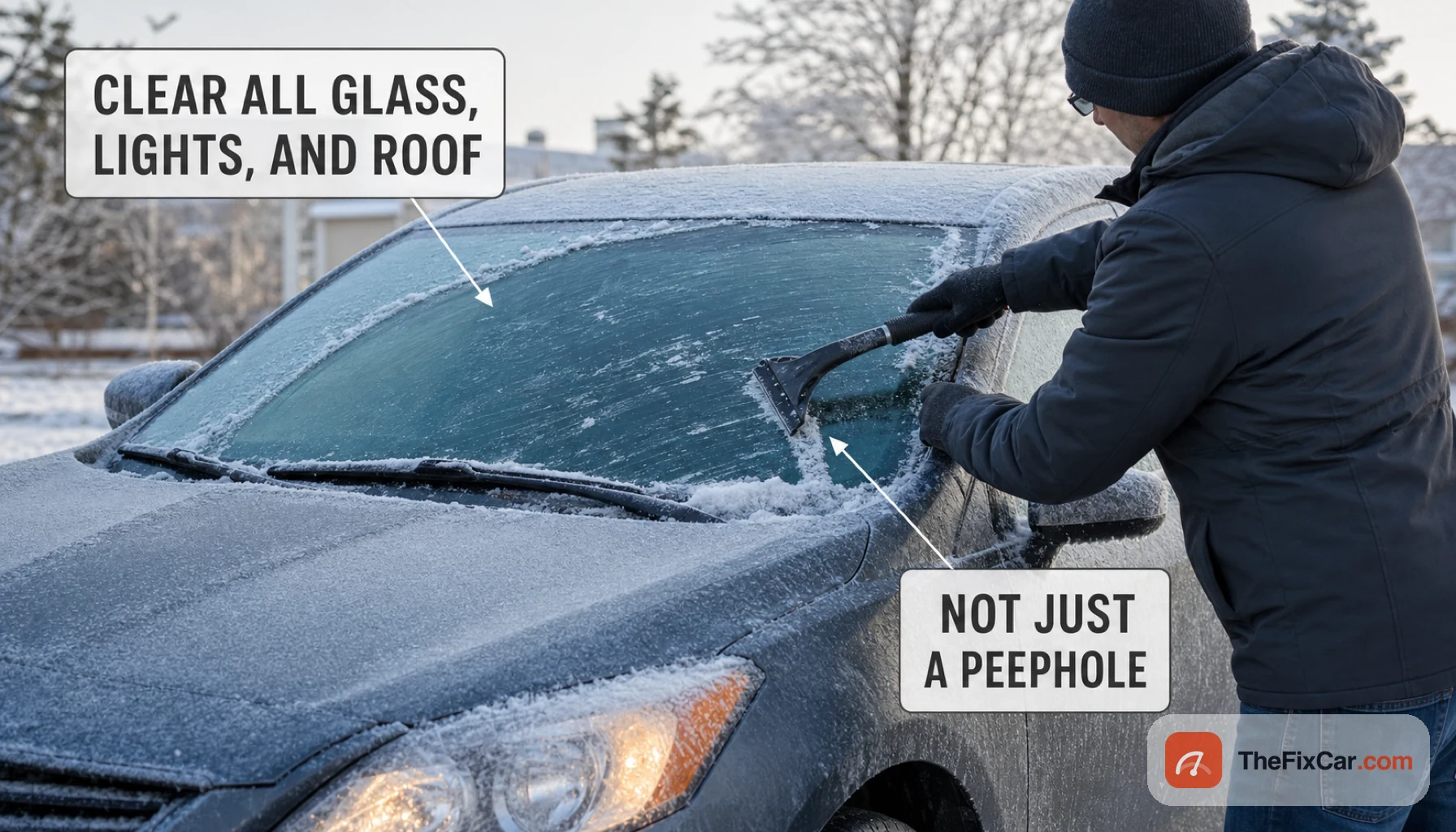
- All glass, mirrors, lights, and roof. Clear every surface, not just a peephole. Ice sliding off the roof or hood at speed can block your view or hit the car behind you.
- Fuel or charge. Keep at least half a tank, or a comfortable charge in an EV, in case you get stuck or rerouted and need to run the heater. If you are stranded in a gas or hybrid vehicle, keep the tailpipe clear of snow, run the engine only briefly as needed for heat, and never run it in an enclosed space.
- Lights. Check that headlights, taillights, and brake lights work and are wiped clear of ice so others can see you.
- Brakes. If braking already feels soft or pulls, get it checked before relying on it in the worst conditions of the year.
- Coolant. Make sure the antifreeze mix matches the manufacturer’s specification so the cooling system handles the cold.
- Phone and plan. Charge your phone, keep a charger in the car, and tell someone your route and expected arrival.
What To Do Before Driving
- Check the forecast and your state DOT road conditions. If an ice storm or freezing rain warning is active and the trip can wait, postpone it.
- Start the car and run the defroster until the windshield is fully clear, not just a patch in front of you.
- Scrape and brush ice and snow off every window, both mirrors, all lights, the hood, and the roof.
- Set your heat, defroster, and phone navigation before you move so you are not adjusting controls on ice.
- Only in a level, traffic-free area at walking speed, apply the brakes very lightly to assess traction. Skip this check if another vehicle, person, curb, ditch, or obstacle is nearby.
- Pull out slowly and smoothly, leaving extra room behind the car ahead from the start.
When Not To Drive
- Do not drive during an active ice storm warning if the trip can be delayed.
- Do not drive if you cannot fully clear and keep the windshield clear of ice.
- Do not drive on untreated roads while freezing rain is still falling and temperatures stay below freezing.
- Do not set out on worn tires or with a brake or defroster problem you already know about.
- Do not continue if the car has already slid or you have lost traction; find a safe place to stop and wait.
- Do not drive rushed, drowsy, or distracted in these conditions, when your reaction time matters most.
Common Mistakes
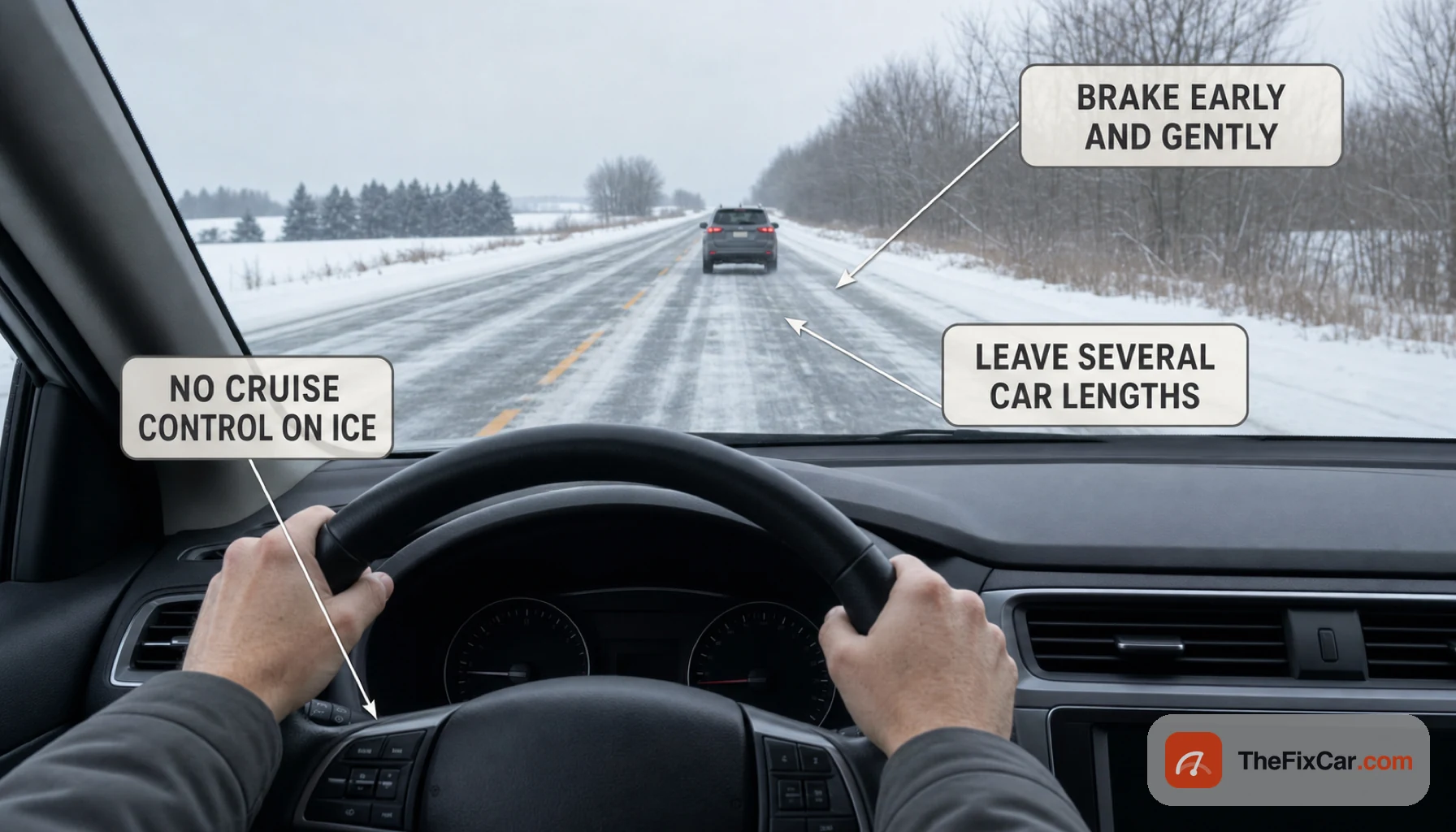
- Using cruise control. On a slick road it can spin the wheels or keep power on when you need to ease off. Safety agencies advise turning it off on snow and ice.
- Trusting all-wheel drive to stop. AWD and 4WD help you accelerate, not brake or turn, so they give a false sense of security on ice.
- Braking too hard. Brake early and smoothly. If your car has ABS and hard braking is unavoidable, press the pedal firmly and steadily and do not pump it. If it has no ABS and the wheels lock, ease off enough to steer, then reapply gently.
- Following too closely. The car ahead can stop or spin without warning. Use at least an 8 to 10 second following gap, and increase it on untreated ice or when visibility is poor.
- Clearing only a peephole. A small clear patch leaves you blind to cars and pedestrians at the sides. Clear the whole windshield and side glass.
- Speeding onto bridges. Carrying speed onto an icy overpass is a common way to lose control. Slow down before the bridge, not on it.
What To Keep In The Car
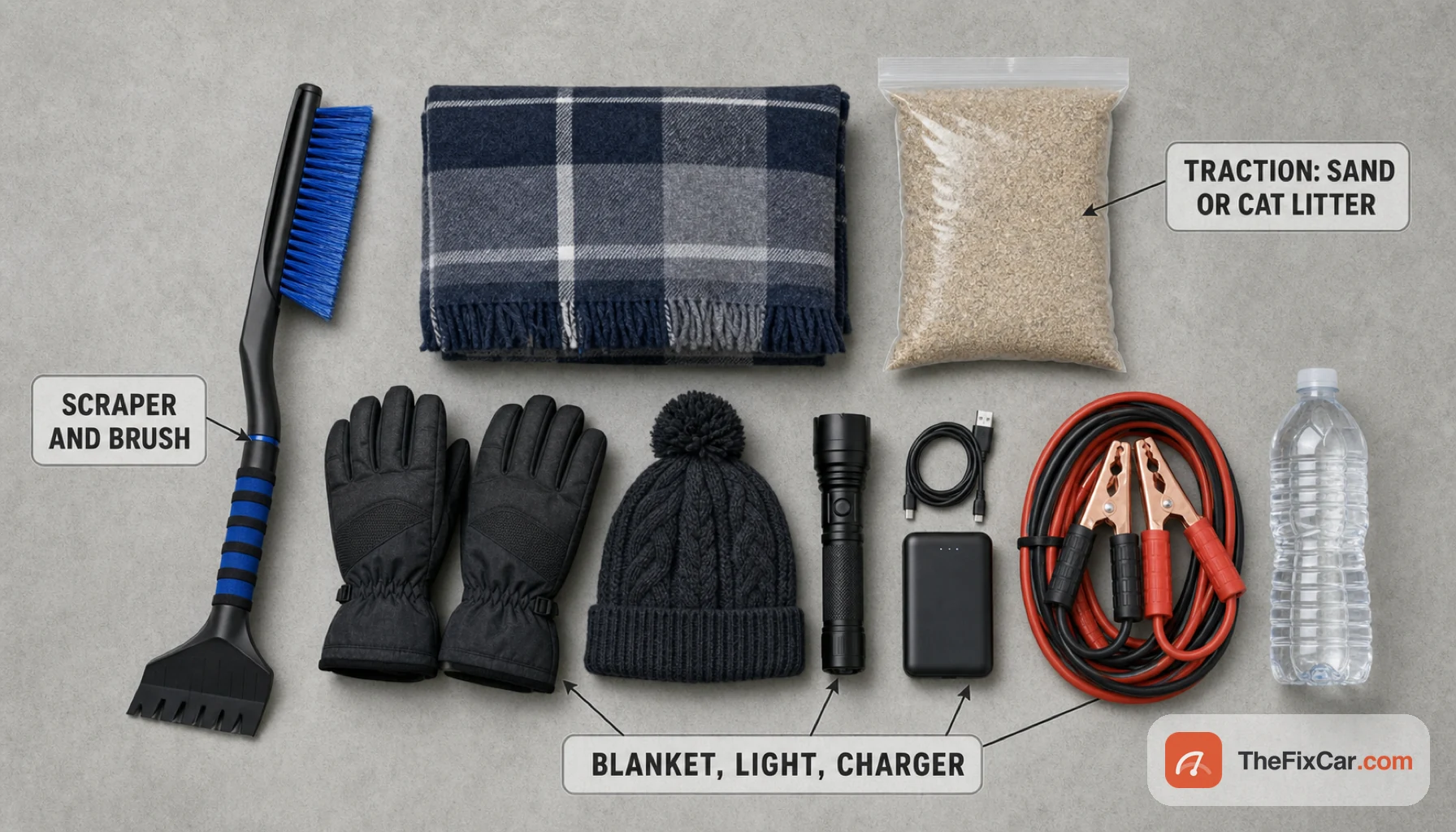
- Ice scraper and snow brush. The basic tools to clear glass and lights; keep them in the cabin, not the trunk.
- Blanket, hat, and gloves. Warmth if you are stranded and the engine is off.
- Traction aids. Sand, cat litter, or traction mats to get moving if a tire spins on ice.
- Flashlight and phone charger. Light and a way to keep your phone alive while you wait for help.
- Water and snacks. Useful on longer or rural drives where help may be slow.
- Jumper cables or a jump pack. Cold is hard on batteries, and a dead battery is common in winter.
Special Notes for EV and Hybrid Drivers
Cold weather cuts driving range, so leave with more charge than you think you need and precondition the cabin while the car is still plugged in. Abrupt regenerative deceleration can unsettle a car on ice. If your vehicle has a snow, ice, or low-regen mode, use it as the owner’s manual directs; otherwise release the accelerator gradually and avoid changing drive settings while moving.